Steps
Step 1
The plan
This office has already had a life of its own. I first built it before Covid, and when lockdowns hit it became my lifeline. You can see the original setup here: Custom desk for home office and the matching storage here: DIY home office drawers and shelves. It was functional, clean and sharp, but after a few years of staring at uniform grey walls I realised it had started to work against me. Instead of feeling energised, I often felt flat and drained.
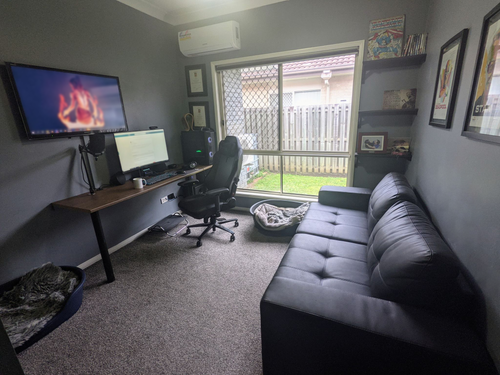
The plan for this revamp is about more than appearance. It is about psychology, wellbeing and creating a space that actively supports the way I work. Studies into workspace design show that colour and contrast affect focus, mood and productivity. To achieve this, I intend to paint the surrounding walls in Vivid White so they brighten the room and reflect light evenly. Against that backdrop, a matte black feature wall behind my screens will provide a calm anchor point that helps me zone in and cut out peripheral distractions.
Timber will bring warmth and balance. Slat panels will soften the starkness of the black wall and add texture, while floating shelves will provide both function and visual interest. These shelves will allow me to rotate in books, framed photos and greenery. Most of the greenery will be artificial for easy upkeep, but a real lucky bamboo will be included to add a living touch. Below the shelves there will be space for larger artwork, so the wall can feel curated and layered without becoming cluttered.
Health is also part of the plan. A sit stand desk will give me flexibility to change posture throughout the day, and space will be kept clear underneath for a treadmill so I can keep moving and build up steps while working. The overall intention is to create a room that feels brighter, sharper and more alive, while supporting long stretches of focus without leaving me mentally or physically drained.
Step 2
Preparation
With the plan in place, the next stage was preparing the room. The first task was removing the original desk, which had been built directly into the wall. It was still solid and useful, so instead of scrapping it I donated it to a friend’s family for their son’s bedroom. The size and undermounting suited him perfectly, and it felt good knowing the piece would continue to serve someone else. Once the desk was gone, I patched the wall where the fixings had been, sanded it back smooth, and inspected the rest of the surfaces. Old plugs and screws were removed, every hole filled, and the walls sanded until they were ready for paint.

After patching, I washed the walls with sugar soap to clear away dust and oils that could interfere with paint adhesion. I followed this with a vacuum and a wipe down using a microfibre cloth to make sure no fine particles were left behind. Drop sheets went down to protect the floor, and painter’s tape was used to mask skirtings, switches and power points. By this stage the room was clean, bare, and ready to transform.
Before lifting a roller, I mapped out where everything would sit. Because the desk is sit stand, I measured its minimum and maximum heights, added the thickness of the tabletop, and then worked out how high my monitor would sit on its arm. From there I calculated the perfect position for the television, which I use as a second screen. The aim was to have it just above eye level when seated and still natural to glance at when standing. I marked out stud positions with a finder to confirm I could secure the television bracket, slat panels, and shelves exactly where I wanted them.
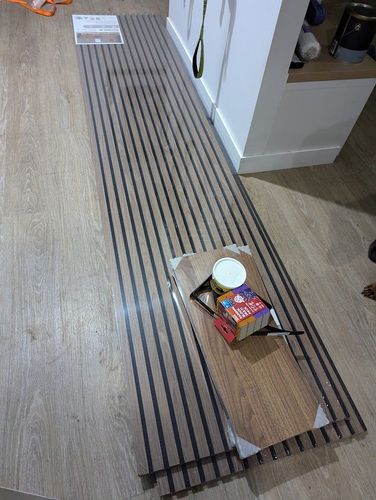
With the planning and measurements sorted, it was time to gather the materials. That meant a trip to my local Bunnings, which turned into a bit of an adventure. We loaded up the car with long timber slat panels, tins of paint, and all the supplies, and the ride home in the Sorento was interesting to say the least. At one point the slats stretched right past the front seats, and I had to drive carefully to keep everything in place. It is one of those classic DIY moments where the job feels real before you have even started.
 Made for a fun trip
For paint, I chose Dulux Vivid White for the walls to brighten the space and Porter’s Paints Aniseed for the black feature wall. For the feature itself I had timber slat panels, black screws that would blend in, and construction adhesive. The adhesive I recommend is Selleys Liquid Nails Heavy Duty. It bonds strongly to both plaster and timber, holds weight without sagging, and has just enough flexibility to cope with small wall movements over time. Using glue alongside screws meant I could be confident the panels would stay perfectly flat and secure for years to come.
The new desk setup was one of the best finds of the project. I picked up an Ikea Karlby top from the rehome section of the store for only $50, which saved me hundreds compared to buying it new. It was in excellent condition and just needed a light sand and reseal. The base was an Ikea Uppspel sit stand frame, still new in its box, which I scored from Marketplace for only $100. Considering the full retail price, that saved me a huge amount and gave me a premium sit stand desk for a fraction of the cost.
Other materials included filler, undercoat primer, floating shelves, a television and mount, and a selection of greenery, mostly artificial for easy upkeep, with a real lucky bamboo included for a touch of life.
The tools I had on hand were paint rollers, brushes and trays, a cordless drill and driver set, stud finder, spirit level, caulking gun, filler knife, circular saw, jigsaw, orbital sander, sanding block, and painter’s tape. Having everything ready meant there would be no delays once the work started.
With the built-in desk removed, the walls patched and cleaned, the layout carefully measured, and every material and tool finally piled up after that memorable Bunnings run, the room was fully prepared and ready for the next step.
Step 3
Installing the slats and the television monitor
Rather than starting with paint, I began with the timber slats. By installing them first, I could position the feature wall exactly where I wanted it and reduce the amount of black paint needed behind them. This also gave me the chance to check the proportions of the design before committing to colour.
The panels were almost a perfect fit for the wall, and I only needed to trim about 200mm from the length for them to slot in cleanly. I used a circular saw for the cut, keeping the edge neat and square so the finish would look sharp once installed. To secure them, I applied Selleys Liquid Nails Heavy Duty adhesive in firm beads across the back of each panel, then fixed them into the studs with black screws. The adhesive created a strong bond, while the screws locked everything down permanently. The black screw heads blended into the backing, leaving a seamless appearance.
Once the slats were up, I moved on to the television mount. This part was a bit awkward to manage on my own, so my father-in-law stepped in to help. Together we were able to get the bracket and the television perfectly centred and level on the wall. My son was also keen to lend a hand, love seeing him want to be involved.
 Grandfather & Grandson
One of the cleverest features of these slats is the groove system. The grooves allowed me to run the television’s power cable, and eventually an HDMI cable, neatly behind the panels. The extra foam backing included in the kit concealed the cables completely, keeping the look clean without the need for external trunking or exposed wires.
Even before painting, this step transformed the room. The slats instantly brought warmth and texture, while the television gave the feature wall presence and purpose. With the cables hidden and everything aligned perfectly, the space already felt polished and professional.
Step 4
Painting
With the slats and television secured, I moved on to painting, starting with the boldest section: the feature wall.
I painted the wall around the slats in Porter’s Paints Aniseed, a deep matte black chosen for its ability to absorb light and create a strong focal point. Two coats gave the wall a smooth, velvety finish that immediately sharpened the space. The black worked perfectly with the timber slats, making their natural tones stand out and giving the feature wall real presence.
Once the black was dry, I temporarily rehung my certificates. This wasn’t for decoration yet, but to check sightlines, scale, and how they would interact with the feature wall. By seeing them back in place, I could make sure future elements like shelves and artwork would line up neatly and not feel crowded.
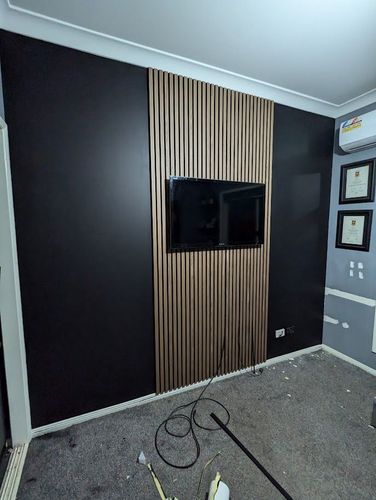
After that, I took the certificates down again and painted the surrounding walls in Dulux Vivid White. With its high light reflectance value, it instantly brightened the space, bouncing light around and making the room feel bigger and fresher. I did the bulk of this work overnight, so by morning the grey walls were gone, replaced by a clean backdrop that contrasted beautifully with the feature wall.
This stage completely changed the mood of the office. The black wall provided depth and focus, while the crisp white kept the space open and energising. Even before any shelves, plants, or décor were added, the room already felt like a brand-new environment.
Step 5
Desk installation, certificates, and shelving
With the walls finished, the next big task was installing the desk. This was the centrepiece of the office, and it needed to be practical, ergonomic, and polished while working seamlessly with the feature wall.
For the desktop, I struck gold with an Ikea Karlby benchtop I found in their rehome section for just $50. These benchtops are heavy, durable, and beautifully finished, and at that price it saved me hundreds compared to buying new. I paired it with a brand-new Ikea Uppspel sit–stand base I sourced from Marketplace for $100. Together, they created a premium sit–stand desk for a fraction of the retail price, with the timber tying perfectly into the slats on the wall.
I started with the Uppspel frame, laying out all the parts and following the assembly carefully. Using a spirit level, I checked each stage so the legs sat square and stable. Once the frame was solid, I placed the Karlby top onto it and measured the position against the feature wall. I centred it in the room and secured it firmly, ensuring the top was perfectly level.
Before tightening everything fully, I tested the ergonomics. Sitting in my chair, I checked that the desk height in its lowest position was comfortable for typing and viewing the monitor. Then I raised it to maximum height to make sure there was still good clearance between the monitor and the television above. Because I had measured these heights back in the planning stage, everything aligned exactly as expected: the desk moved smoothly, the monitor never touched the TV, and the sightlines felt natural both sitting and standing.
When it came to mounting the monitor arm, those earlier calculations paid off. I knew from the start where I wanted the television bracket, so I set the arm height to sit comfortably below it when seated while still aligning neatly when standing. At first I placed the arm on the right, but it disrupted the balance of the desk. Moving it to the left not only improved the visual flow, it also freed up the right-hand side for the PC.
I chose a monitor arm over a shelf because it keeps the surface completely clear and lets me fine-tune the screen position for posture. I used clamp fittings rather than drilling into the Karlby, keeping the top intact and leaving me with a cleaner finish. I also added a clamp-on headphone holder, keeping accessories tidy and consistent with the timber-and-black theme.
During this process, I installed floating shelves either side of the television. These create symmetry and provide space for plants and décor, while framing the feature wall. Finally, I rehung my certificates on the adjacent wall at eye level, so they feel professional but do not compete with the focal point of the room.
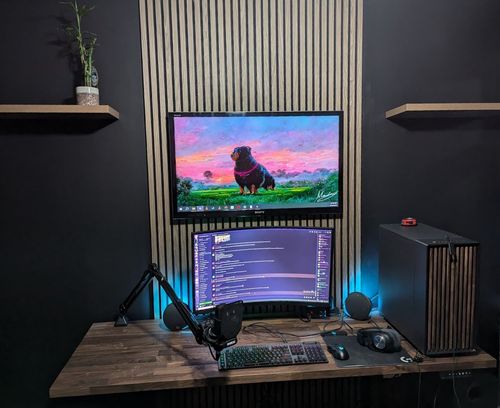
To match the office aesthetic, I rebuilt my computer into a Fractal Design North XL case, whose timber front panel mirrors the slats and the Karlby top. Initially, the PC sat on top of the desk, but it blocked my right-hand view. Moving it to a mount under the desk was a game changer. It now rises and lowers smoothly with the desk, stays out of sight, and the fans run quieter closer to the floor.
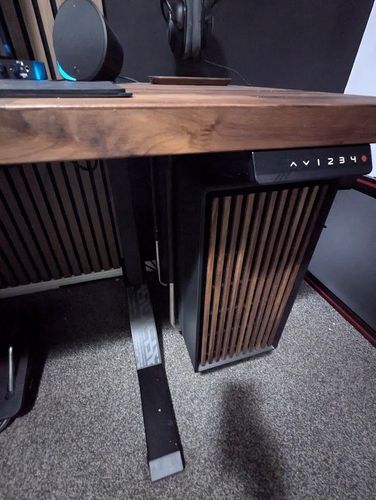
Sit–stand desks are notorious for messy wiring, so I ran all cables into tidy management channels under the Karlby. HDMI, power, and USB lines were routed with slack for movement, preventing snagging as the desk moves up and down. The result was a workstation that looks just as good underneath as it does from the front.
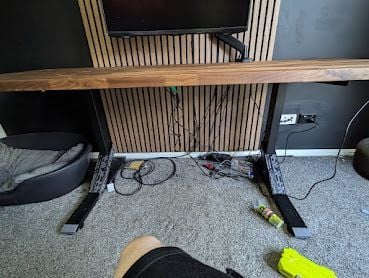
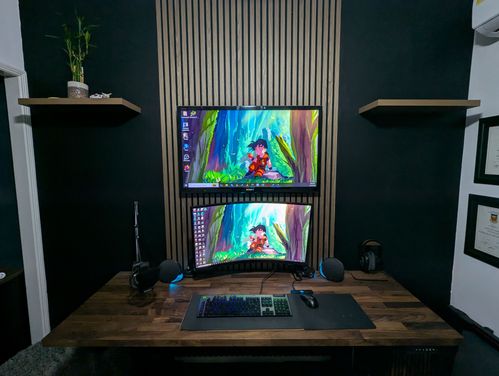
With the desk levelled, tested, and aligned exactly as planned, the space came together beautifully. The earlier measuring ensured everything worked in harmony: the desk cleared the TV, the monitor sat at the perfect height, and the setup felt like it had been designed to the millimetre.
Step 6
The Final Look
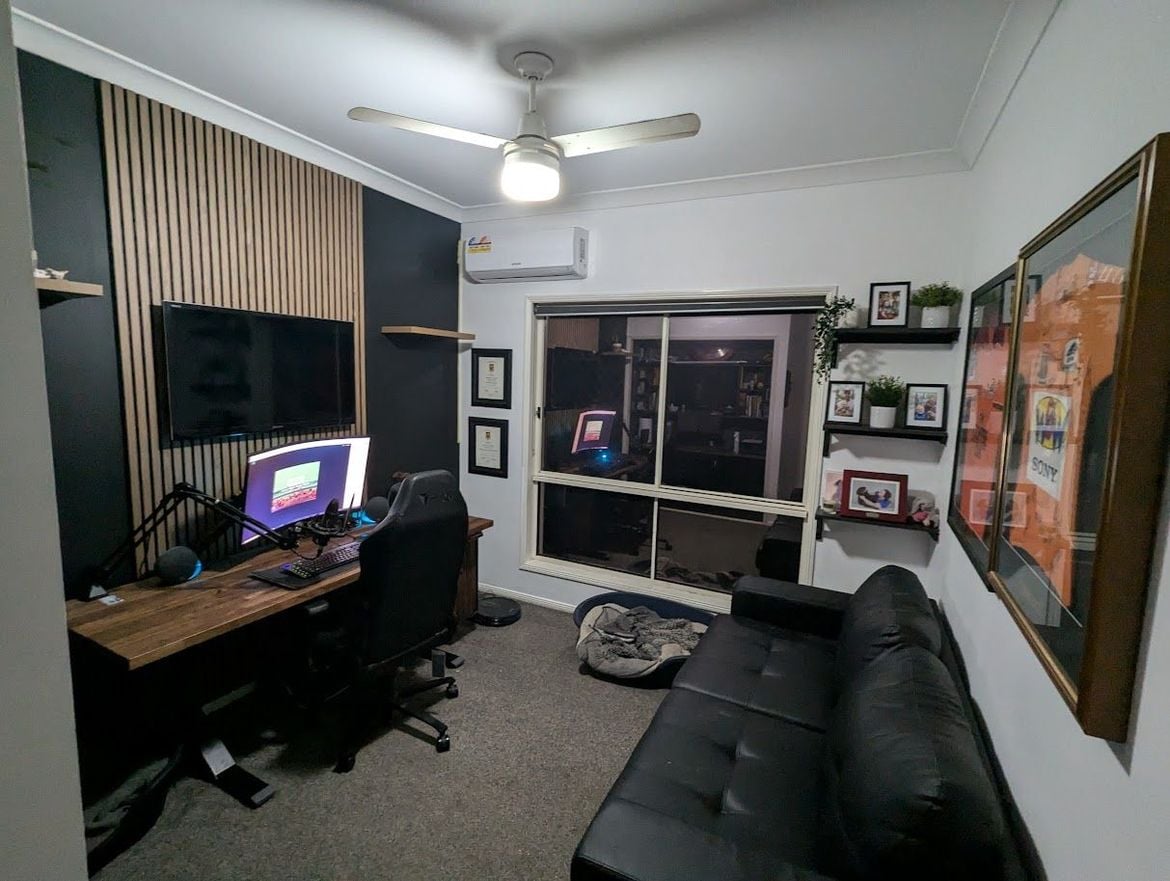
The revamp completely changed how this room feels to work in. The Vivid White walls reflect light around the space, lifting the overall brightness, while the deep Aniseed feature wall absorbs light and helps me focus by cutting out distraction. That balance of reflection and absorption creates a workspace that feels both energising and calming at the same time. The timber slats add warmth, softening the contrast so the room never feels stark.
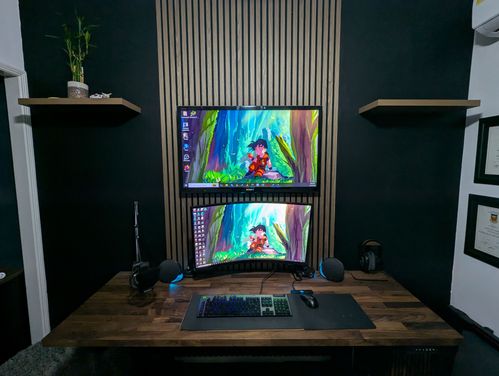
Using the sit–stand desk with the under-desk treadmill has been a real shift in my day-to-day routine. I can get thousands more steps in without breaking my workflow, which has made a difference in my energy levels outside the office as well. It feels good to know the space is supporting my health as much as my productivity.
This is a link showing me on the under desk treadmill on Youtube. For some reason, bunnings workshop doesn't recognise Youtube shorts as a valid Youtube link, perhaps something to look into? I'd still prefer to be able to upload short form videos onto Bunnings directly.
What surprised me most is how much the change has affected my mood. The old grey room drained me without me even realising it. Now the office feels alive, and I actually enjoy walking in here each morning. Clients who visit have also noticed, commenting that the room feels more welcoming and functional. Even the dogs have their spots to curl up in while I work, so the room feels like a shared space rather than just somewhere to sit at a desk.
It is no longer just a home office, it is a space that makes work feel easier, lighter, and more purposeful.
BEFORE
AFTER
 After
After