Hi everyone,
We’re hoping to get some independent opinions from those with concreting or building experience.
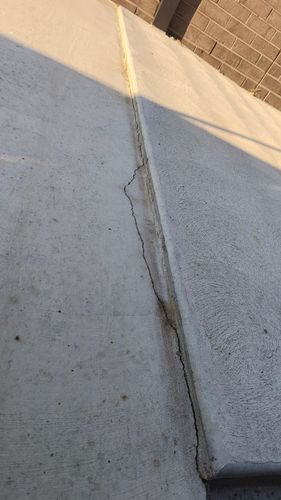
Our concrete apron was completed in September last year (approximately 5 months ago). We’ve recently noticed a few issues, including:
1- Some fine hairline cracks
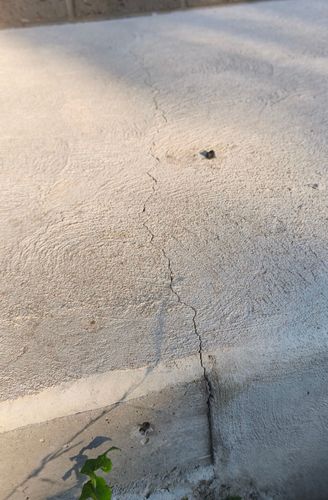
2- One more noticeable crack along a formed step-down / construction joint (intended for future paving), which has opened to approximately 1 mm
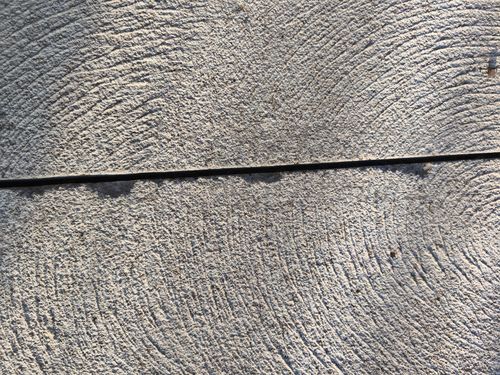
3- Minor chipping along several saw-cut / control joints
We understand that some cracking can occur as concrete cures, however we’re unsure whether what we’re seeing is considered normal shrinkage or whether it may be related to workmanship, joint detailing, base preparation, or ground movement.
We’d appreciate any guidance on:
- Possible causes for this kind of cracking and joint damage
- Whether these issues would usually fall within a concreter’s responsibility to address
Thanks in advance for any insights.
Hello @far4733
Welcome to the Bunnings Workshop community. It's sensational to have you join us, and thanks for sharing your question about your concrete apron.
Fine hairline cracks occur when the cement slab dries too fast. In order to prevent this the slab is often kept moist with water slowing down the curing process. If water runs under the slab this could also cause movement and creating cracks on the surface. Since it has only been five months, I suggest speaking to your concreter about these issues.
Can these cracks be fixed or filled? Yes, just in case you are wondering what product to use, I suggest looking at using Gripset Betta 1L Concrete Crack Filler to fill in the cracks. However, I suggest speaking to your concreter first before you apply any type of repair on the surface.
Let me call on our experienced members @Dave-1, @AlanM52 and @Nailbag for their recommendations.
If you need further assistance, please let us know.
Eric
Hi @far4733
I am far from any expert here other than a few things I know such as what @EricL has mentioned being drying to fast. This would only occur though during either extreme heat, or typically from too much curing accelerant. The other is issues with the preparation such as reinforcing mesh and ties.
My first point of call would be with the concreter as the correct method of addressing the issue prior to any escalation. In the meantime, I highly recommend you don't accept or attempt yourself temp fixes as this will only complicate the process. Plus anything you do will not be long lasting structurally, simply cosmetic.
Nailbag
Hi @far4733,
This question has been asked before and here is one that generated lots of discussion.
That was my response and while you are reading I'll wait for responses to come in...
Cheers
Thanks all for your replies. Just to clarify, our main concern is not only the fine hairline cracks, but also a more noticeable crack (approximately 1 mm wide) that has opened along the formed step-down / construction joint intended for future paving (second photo). Could this be due to absence of appropriate expansion material (for example, compressible foam at the step-down) to accommodate movement?
We have contacted the concreter to inspect the work; however, he is pushing back and has advised that, per his "terms and conditions", he is not liable for any cracking, chipping, or shrinkage, attributing this to ground movement outside his control. He has said this without an inspection.
From an industry perspective, would cracking and chipping at control / construction joints within only five months be as the result of ground movement?
Hi @far4733
You will need to discuss this with an engineering consulting service similar to this one in QLD/NSW.
Nailbag
Hi @far4733,
In your first image, the chipping of the edge at a control joint and along the edges is not unexpected and is generally accepted industry-wide. Unless, of course, you've paid for additional work, a high level of finish in those areas.
The real issue is the cracks across the slab. Once again, hairline cracks are acceptable, but larger open cracks may indicate that additional control joints could have been used there. As @Nailbag mentioned, you would need to enlist a consulting service. They would be able to let you know whether the slab has been built to construction code standards.
Mitchell
Good Morning @far4733
I would be heading towards a professional response along the lines of @Nailbag at this point. By the concrete company not willing to come out and assess your concerns it tends to make me think they are not interested in any remedial work.
So the question comes down to
How much are you willing to put into an engineering assesment and once that is done who to contact/where to go from there?
Department of Fair Trading is the first place I would have a wander through NSW Fair Trading It may give you pathways to follow.
The report could come back saying the job is ok, just not the nicest (due to the fine cracks) I would prepare myself for that. Then your next step will be repair or continue with your paving.
Its a hard call on where and how much do you spend when you have concerns over a job. Each case is different from how you handle it.
Dave
Workshop is a friendly place to learn, get ideas and find inspiration for your home improvement projects
We would love to help with your project.
Join the Bunnings Workshop community today to ask questions and get advice.