The Bunnings Workshop community can help with your home improvement projects.
Hi Team - The side alley of our house has a colorbond gate that was installed after the concrete slab was completed. Hence, the pole of the gate is above the concrete and not secured by it. The whole pole is free standing with just 3 simple screws holding it secure to our neighbors (extruded) brick garage wall. Recently, the gate was left open and due to the wind the screws gave way and the pole was ripped out from its side securing screws.
I'm looking for guidance on how to permanently secure the pole to the concrete slab below and also to the side wall. The size of the pole (colorbond channel) holding the gate is 65mm x 65mm and the total span of the gate (width) is 1070mm. your expert inputs are highly appreciated.
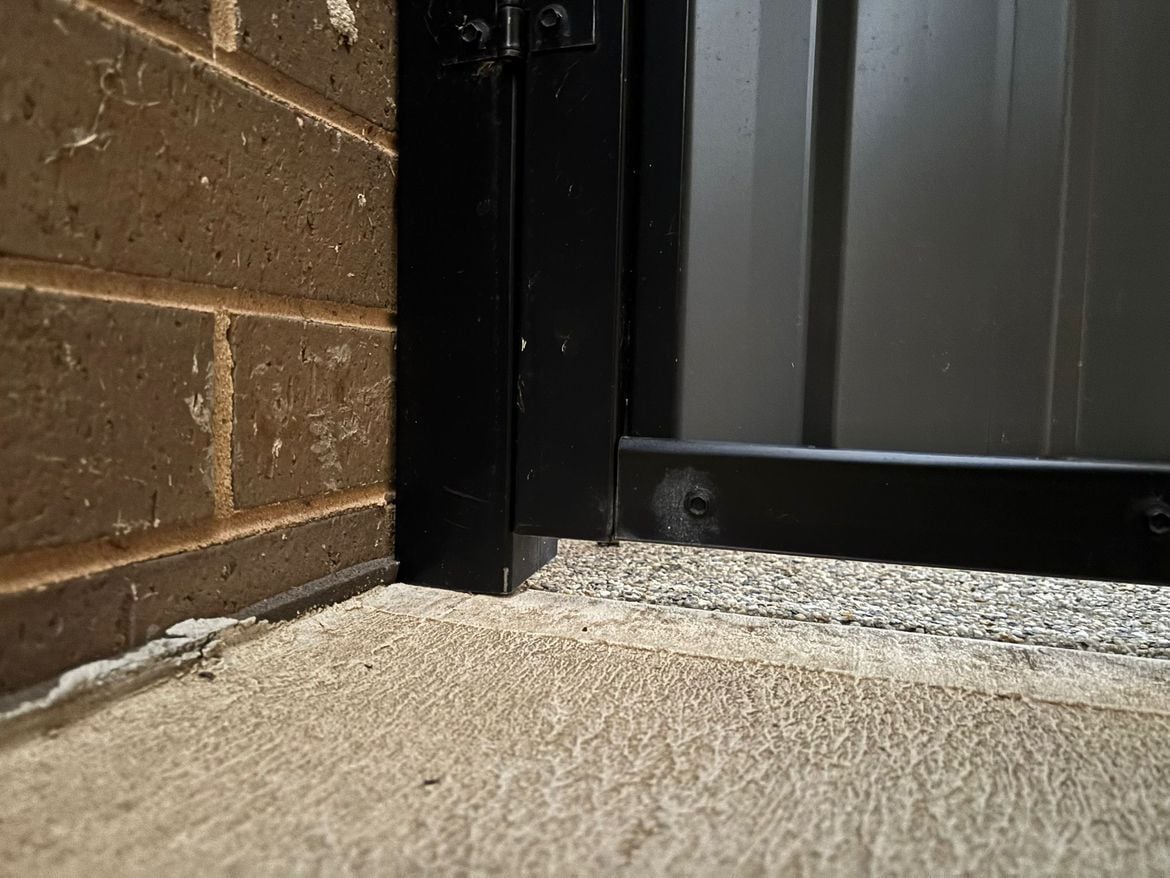
Pole Bottom
Pole Secured to wall 1
Pole secured to wall 2
Full view
In your situation, @syhsb, the main issue is that the gate post is essentially freestanding, and the previous wall fixings weren’t strong enough to resist wind loads. There are a couple of ways to permanently secure it. If the original wall plugs were just standard plastic plugs, one simple improvement is to drill slightly deeper into the brick, being careful not to go all the way through, and fit longer wall plugs with longer screws. That often gives enough extra grip to hold the post in position, assuming the plugs themselves weren’t the reason it failed.
A more robust solution is to use Dynabolts, which have much better holding power than standard plugs. Because your post is hollow, you’ll need to drill a larger hole (around 25 mm) on the front face of the post so the Dynabolt can pass through, then drill a corresponding but smaller hole in the rear wall of the post. You'd then drill out the wall with a masonry bit sized to suit your Dynabolt. Once the bolt is through, you can tighten it on the rear side of the post using a socket set and extension. You can also add a couple of extra fixings, particularly near the top and bottom of the post, to improve stability.
For extra rigidity, you could also fix the post to the concrete slab at its base. Small L-brackets bolted into the concrete and screwed into the bottom of the post can prevent any rocking and take some of the load off the wall fixings. In most cases, a combination of deeper or stronger wall fixings plus a base bracket is enough to permanently secure the post. This approach avoids having to disturb the brickwork too much while making the gate far more stable.
Obviously, before starting work, check in with your neighbour to ensure they are fine with you drilling into their wall.
Please let me know if you have any questions.
Mitchell
Thanks Mitchell. This is very helpful. I will try with the longer wall plugs and the L-brackets. Are there any recommendations on
1. What concrete anchoring bolts should I use to anchor the L-bracket to the concrete below AND
2. The screws I should use to secure the p[ole to the L-bracket
Cheers!
Hi @syhsb and @MitchellMc
Just a curious observer - but it looks like all the screws above seem to be entering the mortar?
I personally would avoid that.
These plugs (name?) are very good - just make sure you drill the full length.
I had some grand homemade bracket ideas.
But too elaborate methinks - plus you would loose space where the gates meet.
Cheers and good luck.
Thanks Noyade. 2 of the 3 screws do go through the mortar and this is a good reminder to ensure the new ones I install go through the bricks instead. Cheers!
I'd use an Ankascrew into the concrete as you are close to the edge @syhsb. A 6mm should be sufficient. Then, to attach the bracket to the post, self-drilling metal Tek screws.
Mitchell
Good Afternoon @syhsb
I like the idea of using Ankascrews that @MitchellMc has mentioned, I would make three or four new holes to suit and not reuse the existing holes. I wouldnt go into Mortar. I would also use some large washes for the screws. Just to be sure and provide a better securing of the post.
Dave
Workshop is a friendly place to learn, get ideas and find inspiration for your home improvement projects
We would love to help with your project.
Join the Bunnings Workshop community today to ask questions and get advice.