The Bunnings Workshop community can help with your home improvement projects.
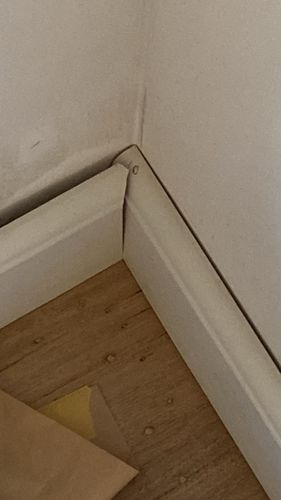
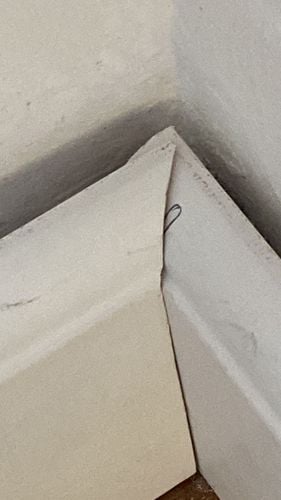
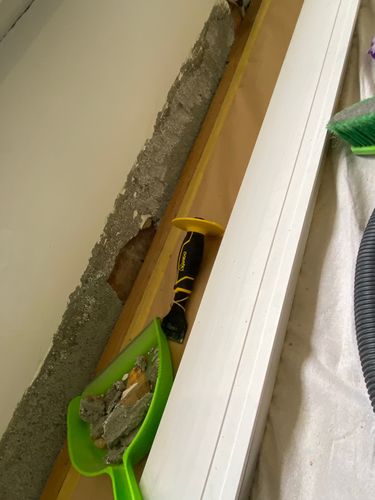
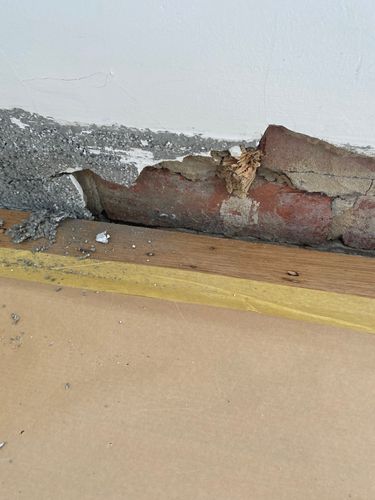
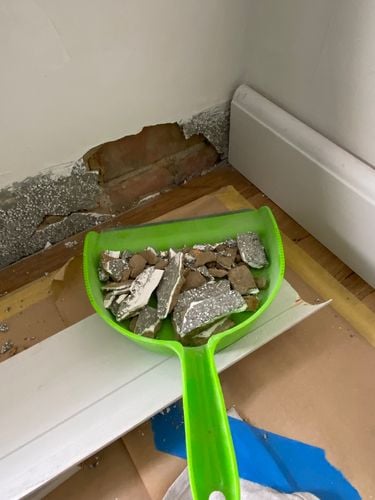
I was wondering if someone could help please. a few months ago I ripped out my old skirting boards and then hired a plasterer to come and fill in the gaps in the sand and cement render walls. He was supposed to fill the gaps with sand and cement Render, but I have since been told what he used with something called pop. And what he did was he just plastered it on over the existing white Plaster. so when the carpenter came to fit the board, he couldn’t do it and he made a mess of my custom-made boards. Now I’m trying to hire someone to fix the whole mess but I’m a little bit confused because one company is telling me it will take three days to fix. I was under the impression that what they’re going to do is remove all the grey pop which you should be able to see in the photos. And then basically start from scratch with the sand and cement render fill all the gaps with sand and cement render go over it with white Plaster. Then fit the skirting boards. they’re saying this will take three days. But I thought sand and cement Render takes some time to dry doesn’t it? And doesn’t it need to be applied in layers and with drying time between the application? And then won’t we need to wait for sometime for the sand and cement Render to dry before actually applying the skirting boards? I’m just wondering whether everyone just wants to make a quick buck. What would be the correct way to fix this mess?
in the photos you can see the grey pop which has been applied by the “plasterer” over the existing white plaster (and sand and cement behind that) making the walls kick out so that the carpenter cut the boards in à way that would leave gaps of at least 1cm needing caulking, which is too much. Where you can see holes in the plaster , that’s where I took a chisel to the pop trying to trim down the wall but what ended up happening was the existing plaster behind it was coming off too.
Thank you for your kindness ❤️
Hello @maro
I'm in the same boat as @Noyade, what exactly is POP and what is it made of that it is not the right material for your wall? It's possible that the person who did the plastering for you was not considering re-attaching the kickboards and therefore did not level the surface causing a bit of strife for your builder. I'm in agreement with your plan to remove all the high sections of the rendered wall and any section that had a pop in it. Once you've removed all the high sections, give the wall surface a thorough clean before you start to render.
I suggest using the Dunlop 20kg Multipurpose Acrylic Render in combination with a spirit level to make sure that the render is straight and not moving forward or tilted. This will help you install the skirting boar wiktkout incident.
Here is a handy step-by-step guide: How To Render
If you need further assistance, please let us know.
Eric
Thanks Eric for your reply. Unfortunately the plasterer knew that the intention was for new skirting to be attached. I was told the grey stuff is called pop by another plasterer. Apparently it’s made of recycled material and is cheap and probably just what he has on hand, so he used that even though I had asked for sand and cement render. It does not seem to be suitable because it crumbles off easily in parts.
I was wondering about wait times. I’ve been told solid plaster on brick walls needs to be applied in layers and that there should be a waiting period in between layers, and also a waiting period before putting on the skirting boards. Is that correct? Do you know what the recommended wait periods would be? Thank you 🙏🏼
Hello @maro
According to the Dunlop information sheet - The render surface is touch dry in 2-4 hours @ 23ºC. A second coat may be applied after 6-8 hours, and the surface will reach full cure after 7 days. Before application of a decorative finish (i.e. paint) allow the render to cure for a minimum of 1 day for each 2mm thickness of the render. Depending on the weather if it is too humid it will extend the drying time of the rendered wall.
If you need further assistance, please let us know.
Eric
Thank you so much for ear @EricL @Actually I do have another few question, I hope that’s ok. The Dunlop acrylic render, is that suitable to use on my walls because the rest of the plaster is sand and cement. Will this acrylic gender attach ok to the existing sand and cement render?
Will white plaster still need to be applied to top of acrylic render? I think with sand and cement, it needs a layer of white plaster as well, but I am not sure about acrylic plaster.
Will drying times be similar for sand and cement render?
do you think acrylic plaster is better, or just easier?
thank you again!
Maro
Hello @maro
The render will anchor to your brick wall and will come together with your existing rendered wall. If the surface of the render is finished in a fine manner using a flat steel trowel, it will not be necessary to put a white plaster finish on the surface. Please have a look at the drying times I've indicated in my last post. I suspect that you'll get the same drying time with sand and cement. Acrylic plaster is much better and much easier as it is pre-mixed, you just need to add water and mix well. My best advice is to make sure to mix the bag with the correct amount of water and to mix it very well to properly activate it.
If you need further assistance, please let us know.
Eric
Thank you Eric 😊 have a good night
Workshop is a friendly place to learn, get ideas and find inspiration for your home improvement projects
We would love to help with your project.
Join the Bunnings Workshop community today to ask questions and get advice.