Steps
Step 1
I had finally gotten to the pile of old hardwood timber I had collected and purchased from a recycling yard. I was going to use Merbau but my dollars are being saved for the patio handrails, so I thought, "Why not give it a go?" I'm happy to say it worked beautifully.
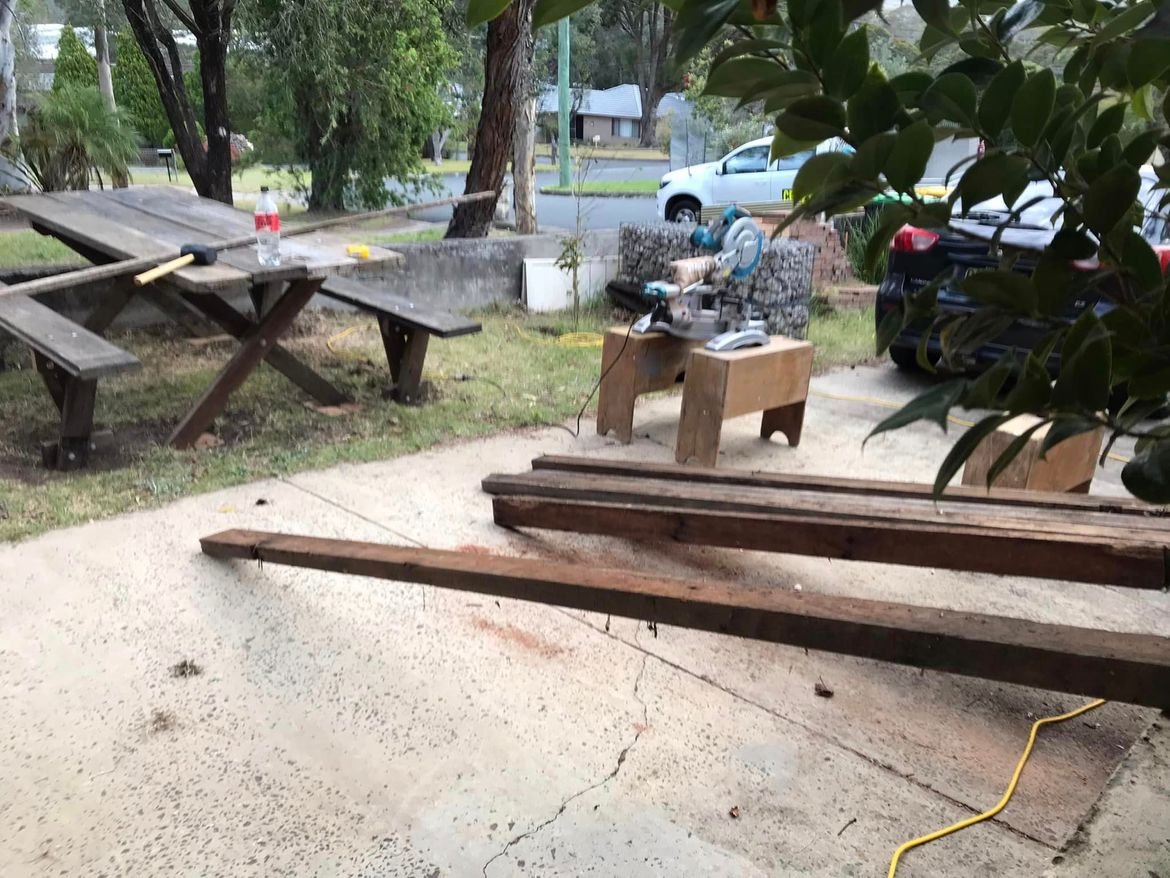
Cutting the timber after removing nails from the old timber. Removing the nails was a pain. I made sure I used timber strips - 100mm timber, 20mm timber strip, 100mm and 100mm strips on both seats so they would match.
Spot the odd one out. Shows that you should not do things when you are tired and it's the end of the day.
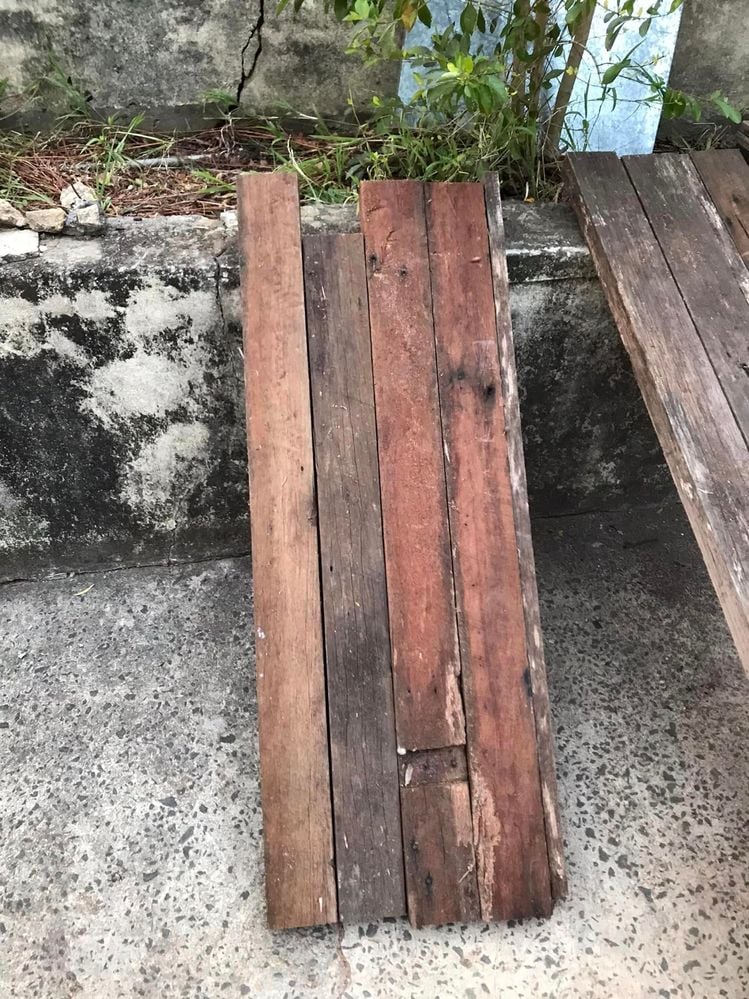
The width of the basket was about the same as three pieces of timber (300mm). So, I included a "spacer" that was an old rafting strut. It added 20mm to the width and was perfect.
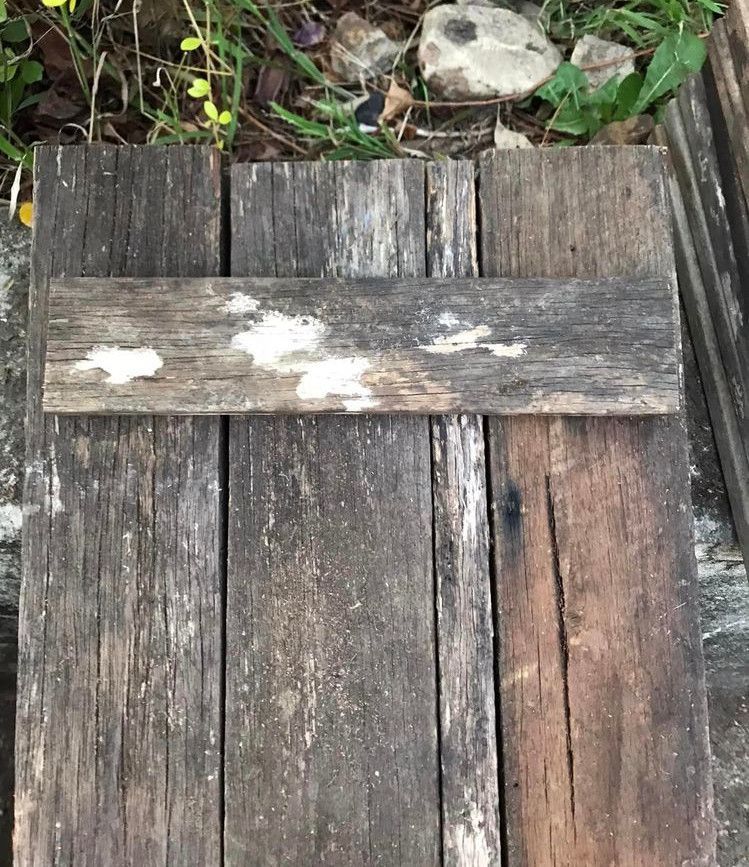
Laying out the timber to make sure I had cut it properly.
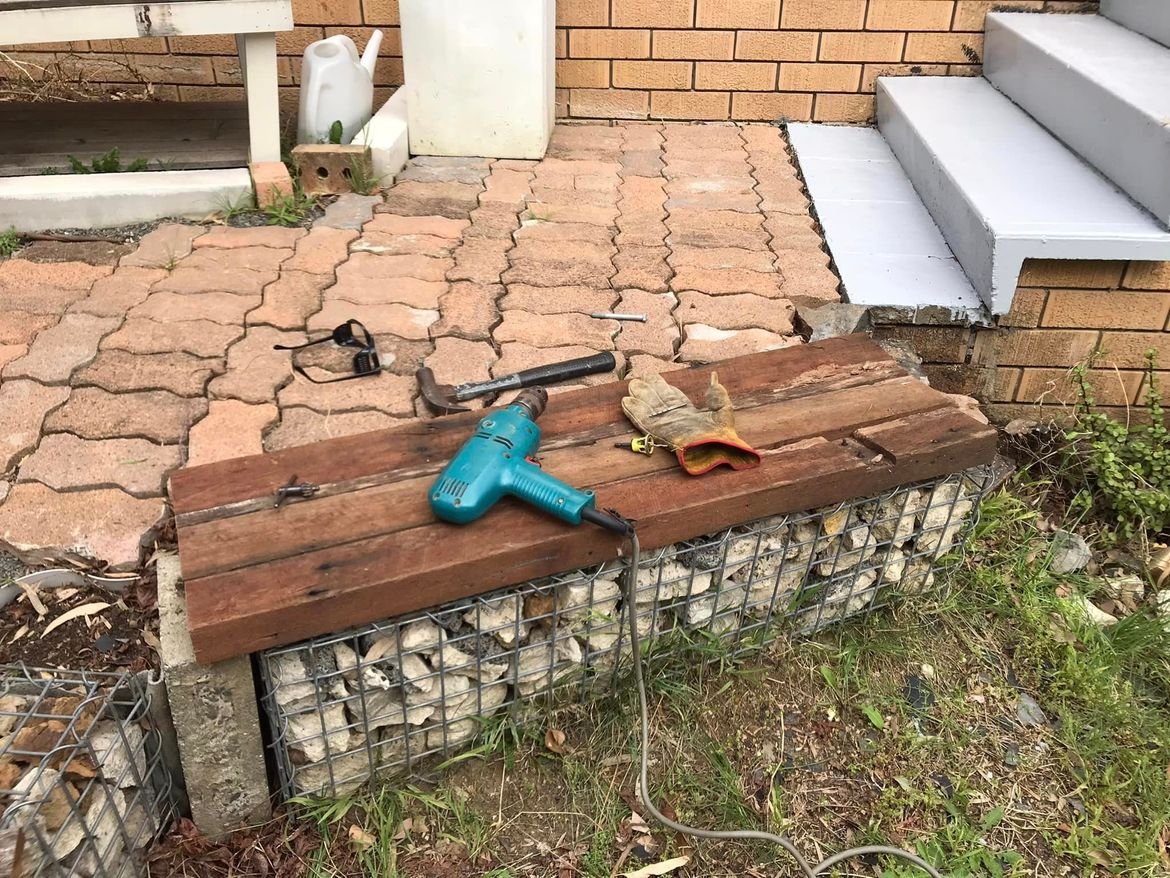
I screwed two pieces across the four pieces. This is what I used to keep them all in line. Taking off the lid was easy as it was just unwinding the wire screws.
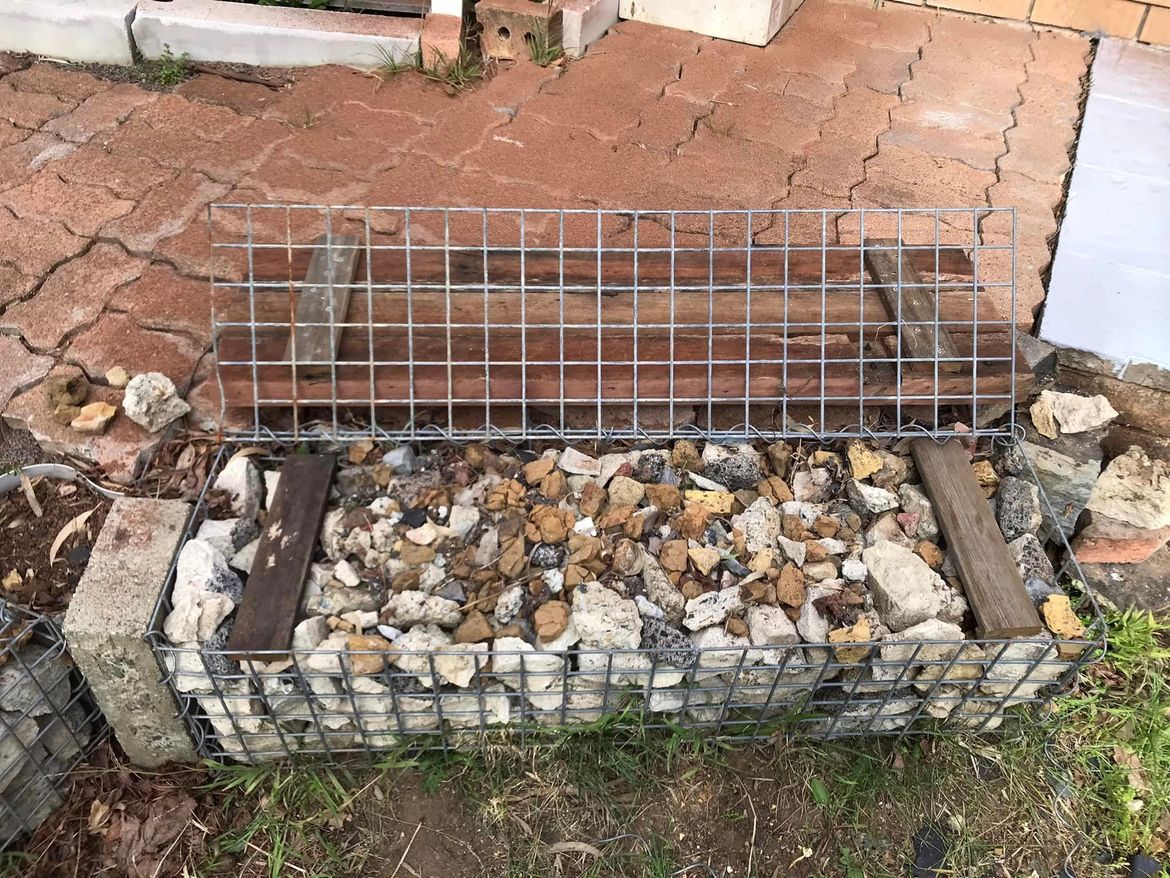
Then I screwed through another piece of timber, through the mesh to lock it to the cage's lid. I removed a few rocks to make space for the timber strip of Merbau on the underside of the cage lid.
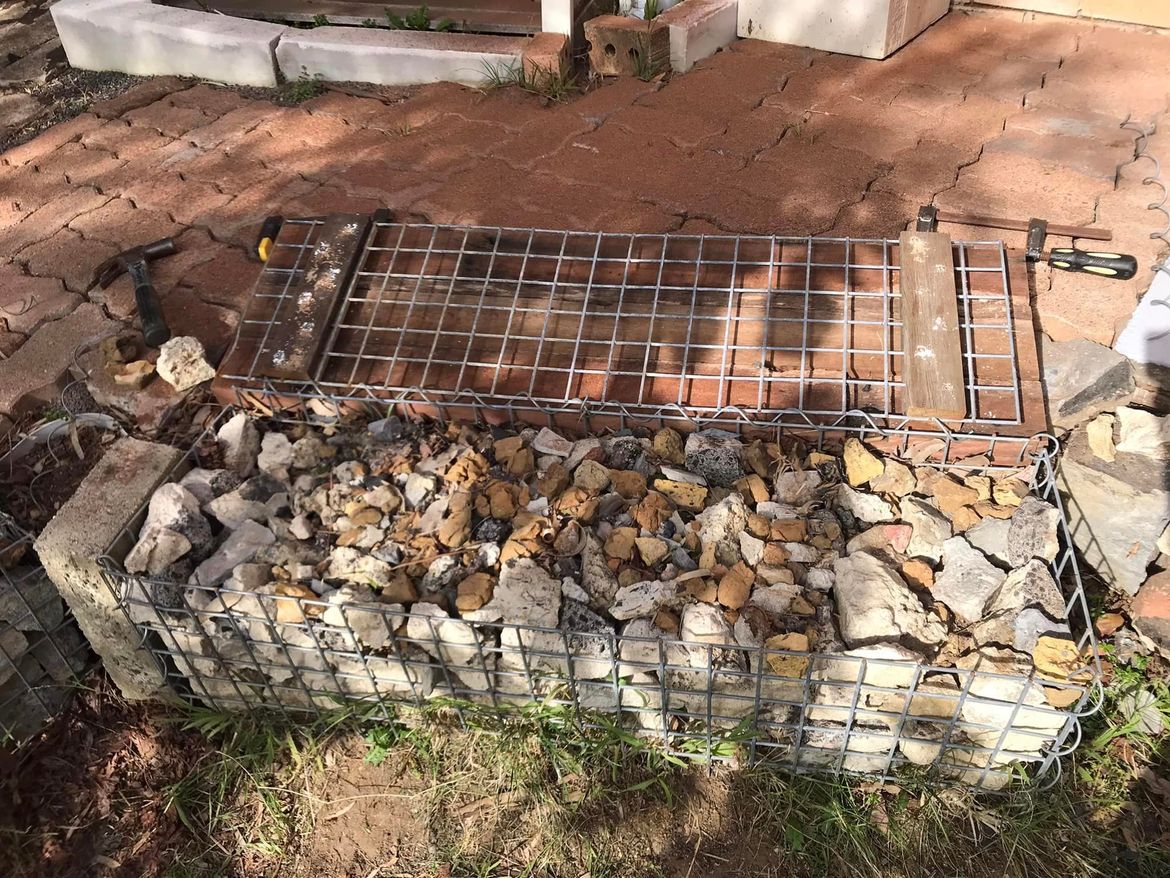
I had planed the timber before I attached it to the lid. I gave it a bevelled edge as well. For the small cage, the screws went back in easily.
Step 2
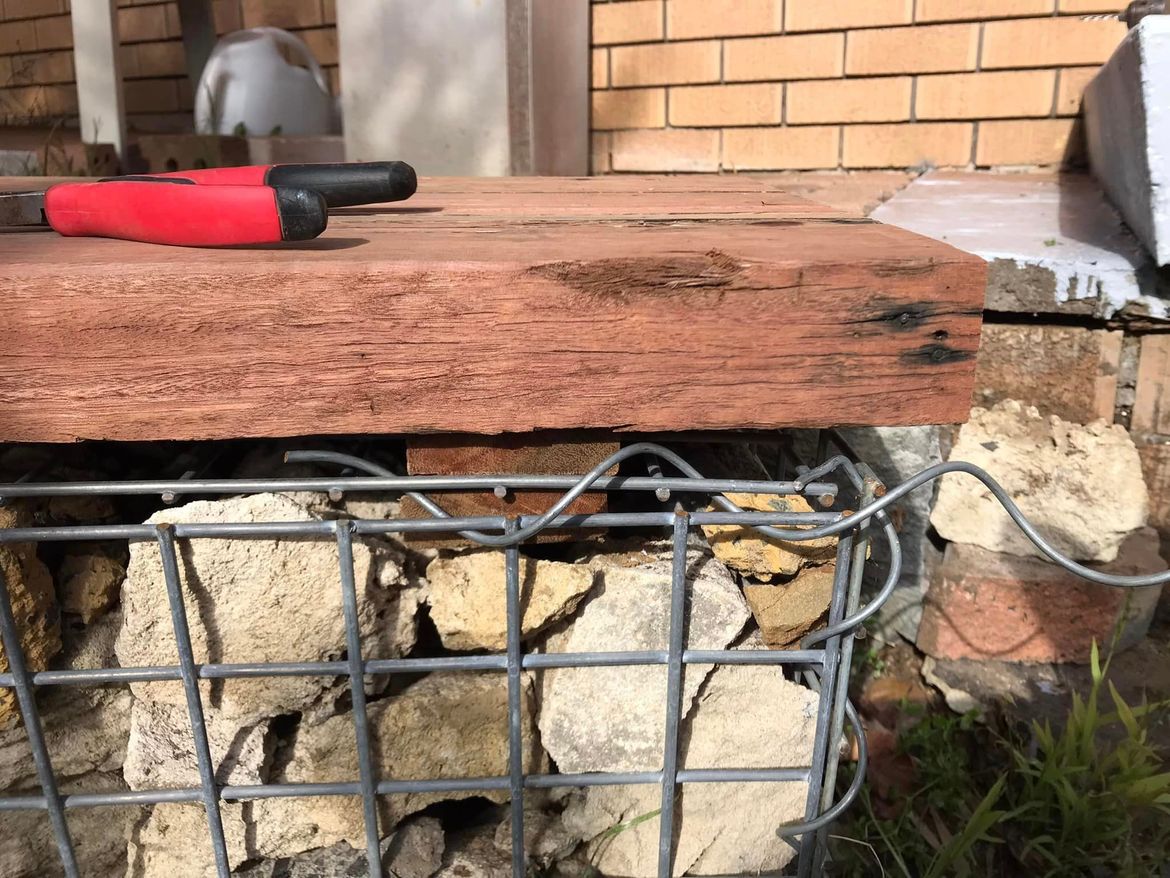
It was the large cage's turn now. I was more concerned about removing the corkscrews, as the cage may want to splay outwards. That didn't really happen but the small distance between the timber underside and the rocks inside made it hard to wind the spirals back on. They would hit the rocks within the cage and not want to turn.
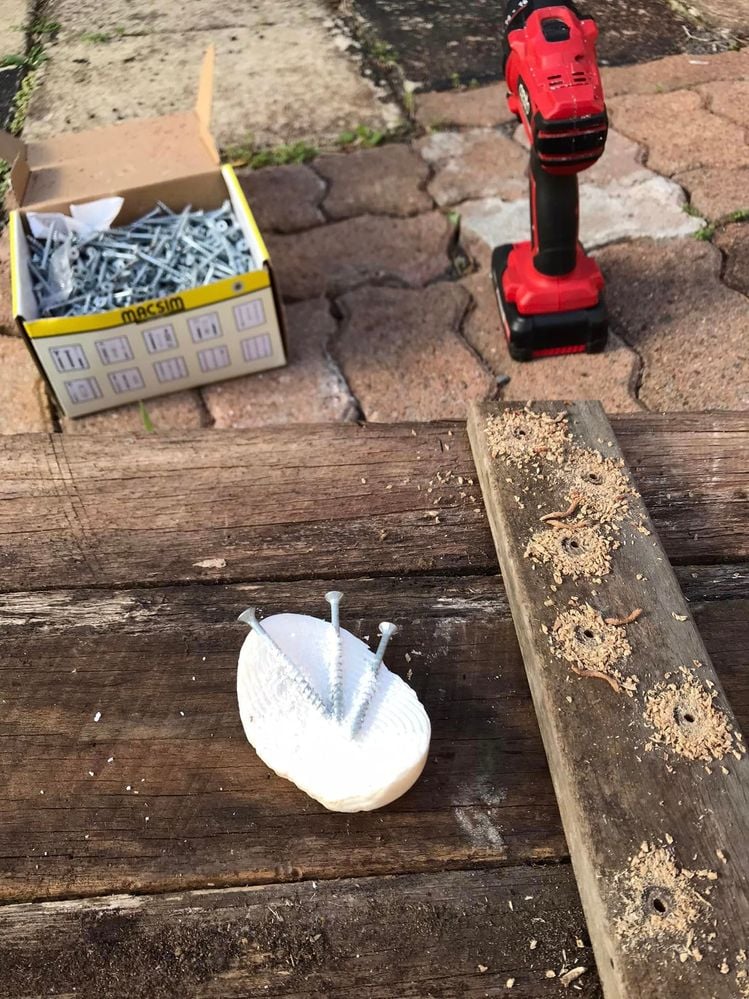
The Bunnings guy told me about rolling the timber screw in soap before screwing into the pre-drilled hole. Makes life so much easier. I used my decking screws to attach the base plate to the four-piece lid and then more decking screws to attach the timber to the lid with the mesh in between.
I used four pieces this time as I didn't want any flex. Not that old hardwood will flex a lot, lol.
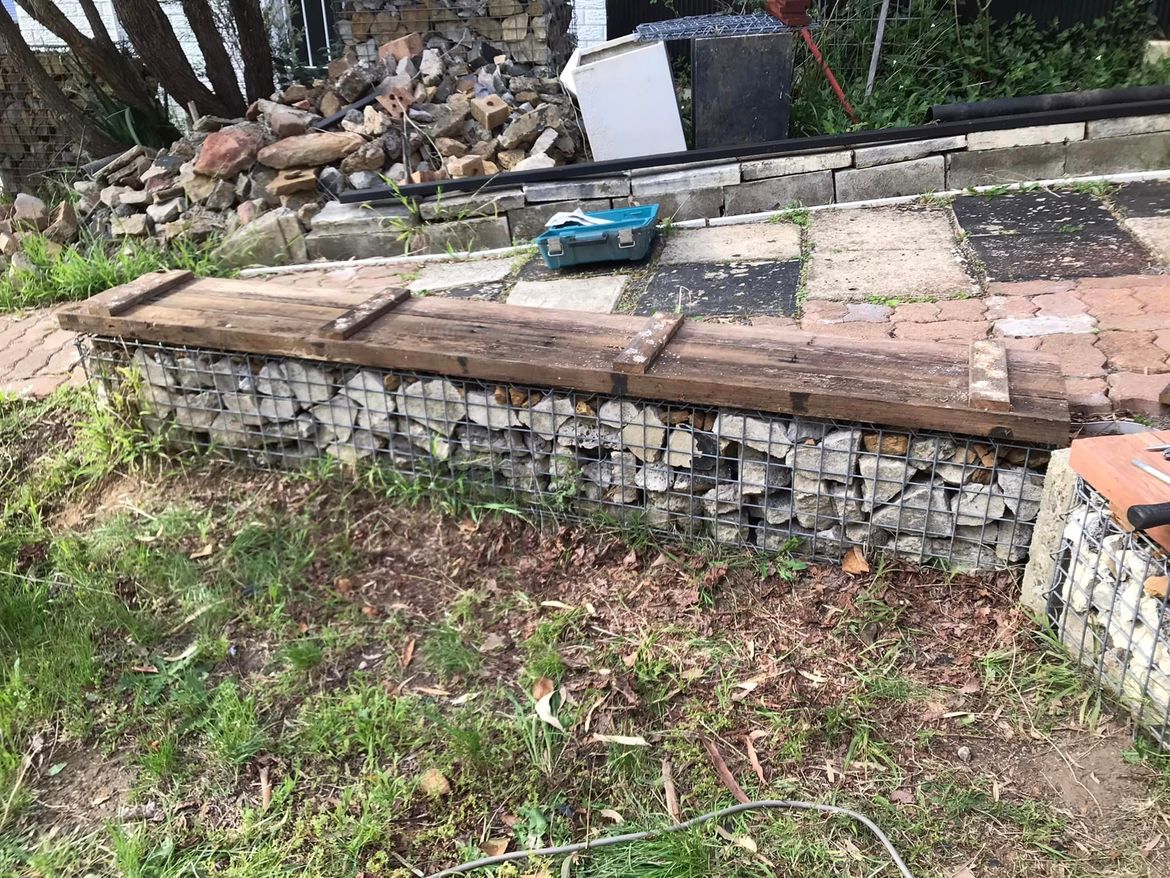
Planed the edge.
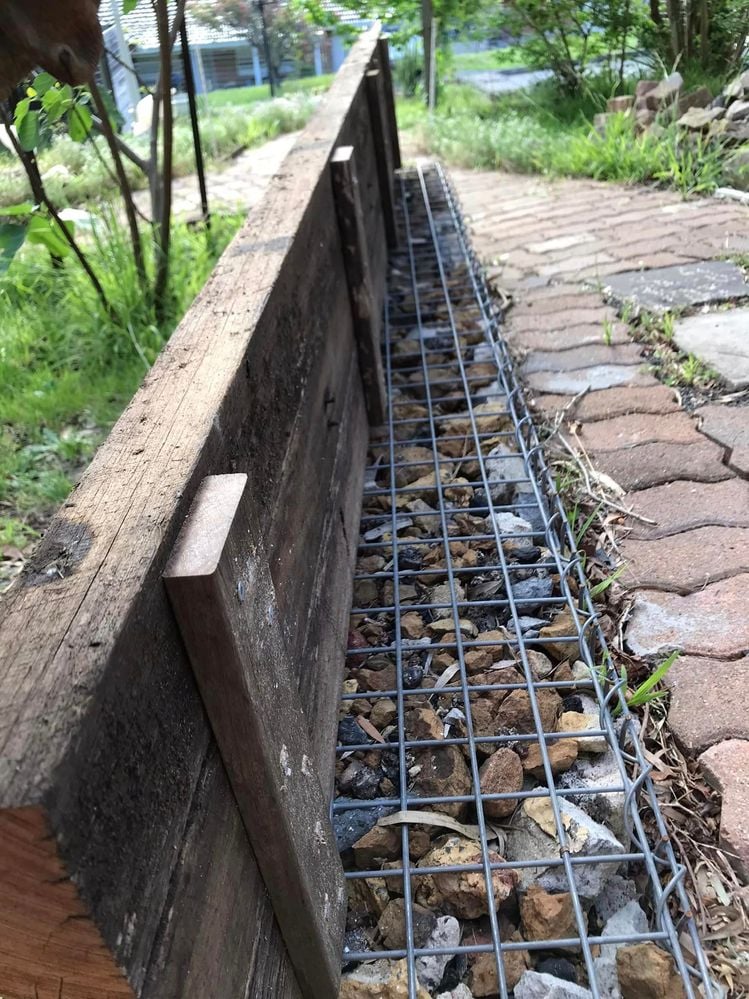
Lining it up. Really happy with the look as is.
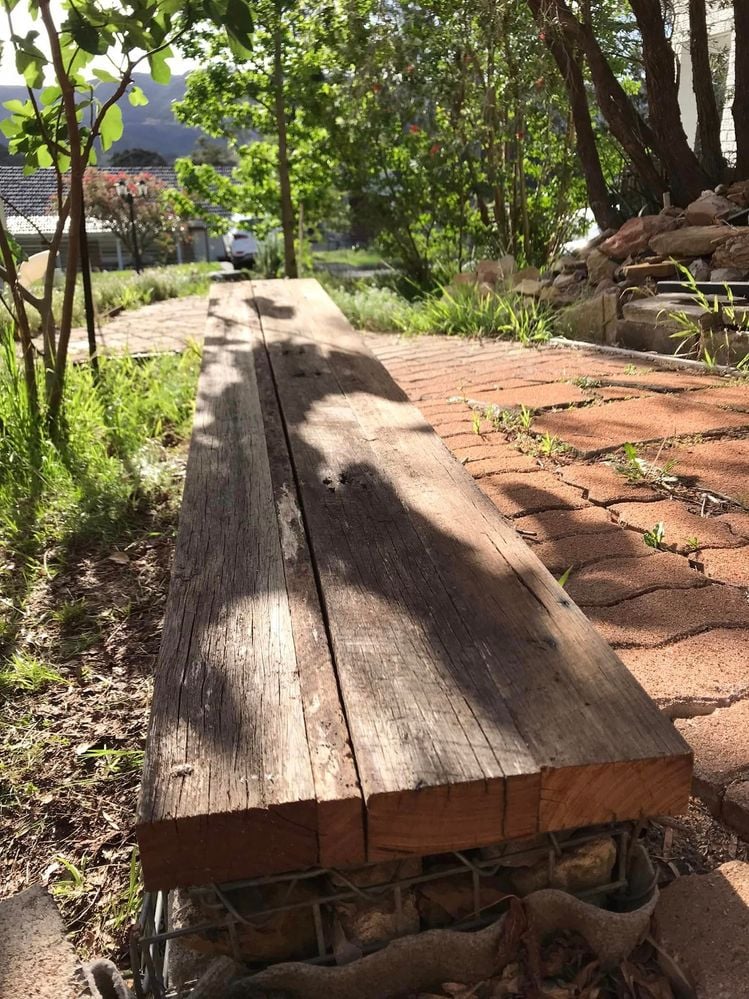
After planing. I love my electric planer. It really works a dream. Before I planed, I made sure all nails were gone or punched down further into the timber. I used a small end of a bolt to punch down.
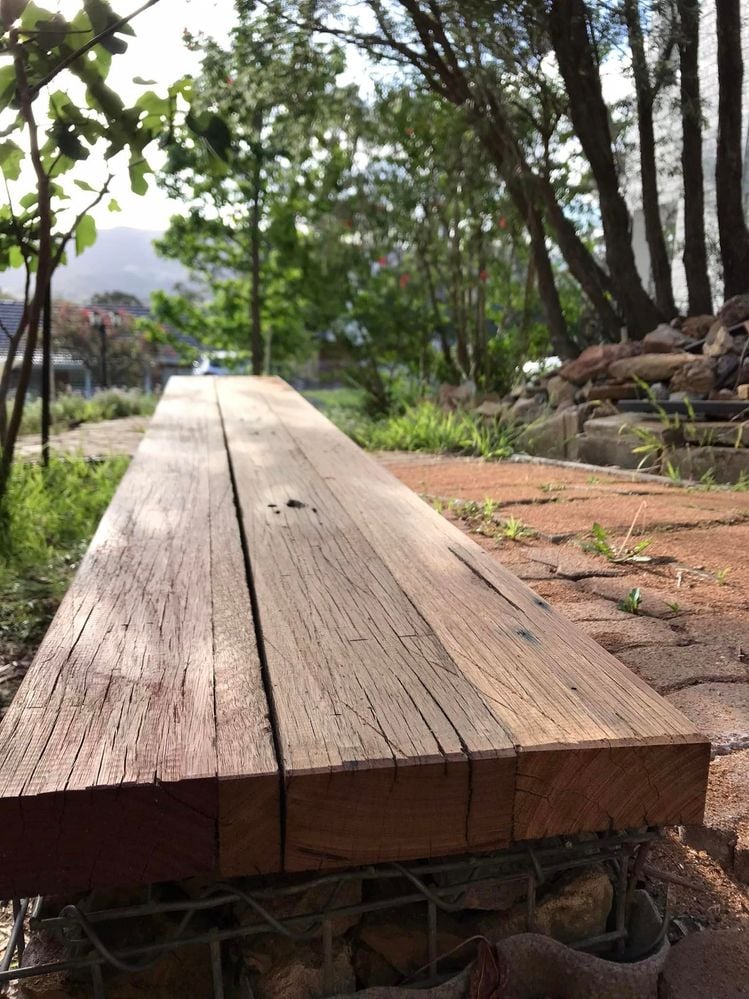
Attaching the base strips, also removing the stones where the timber strips would rest.
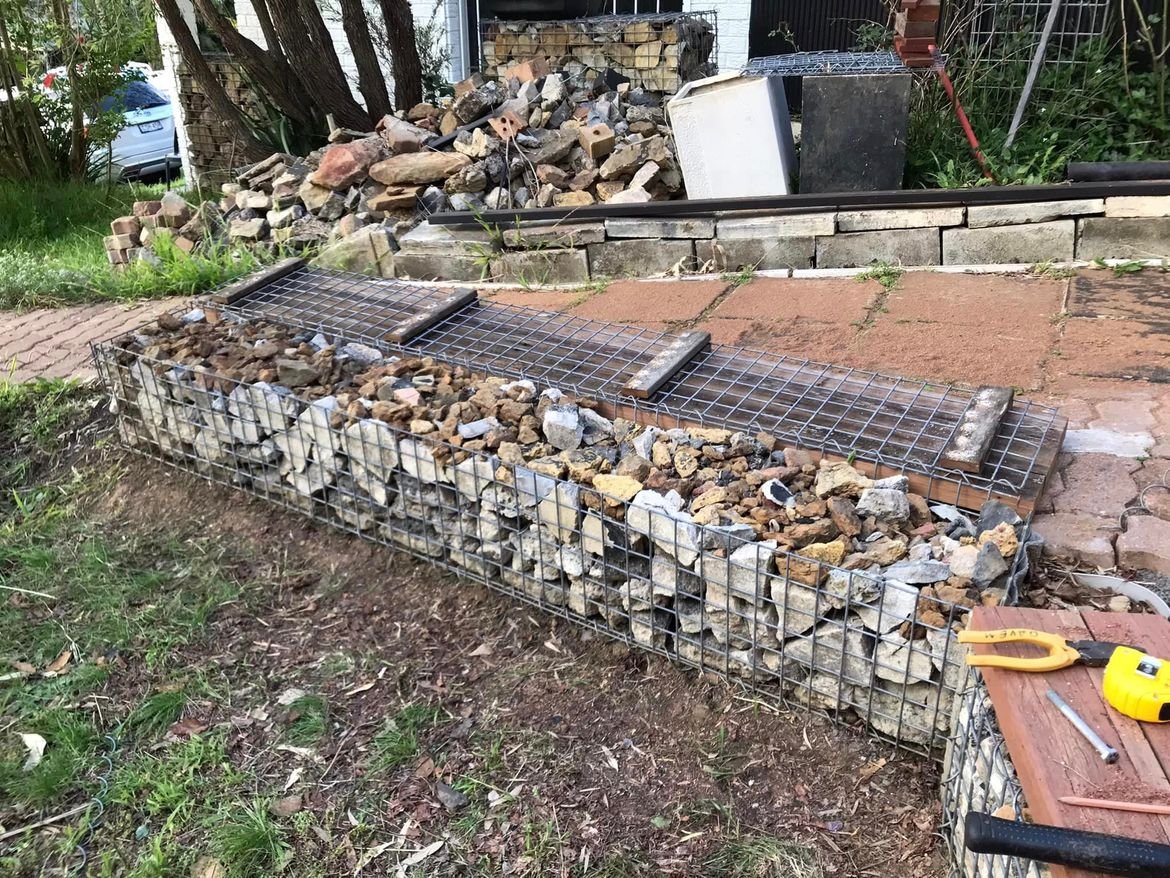
The ratchet straps are what I use to bring the side of the cage towards the top of the cage.
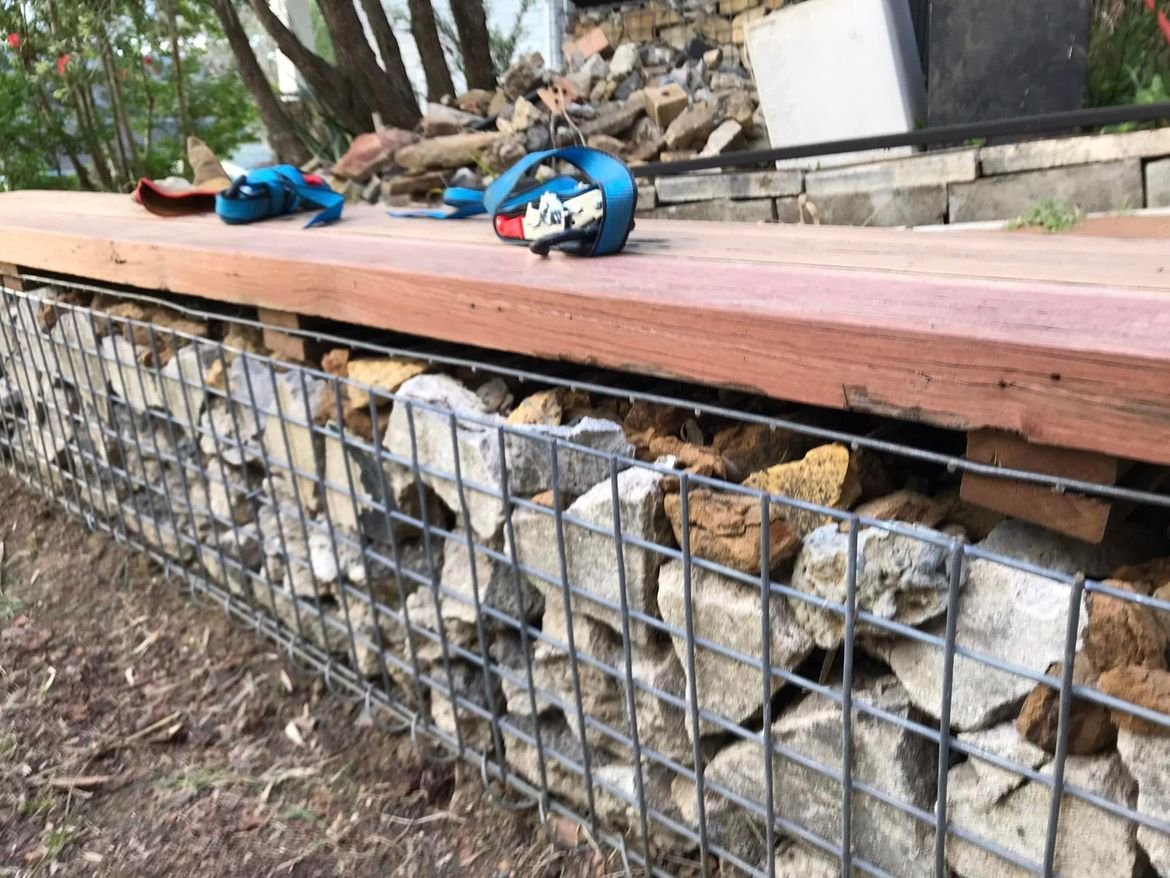
There was a fairly big gap, and man, it was painful to do. Too full of rocks and too tight a spiral made life difficult.
Step 3
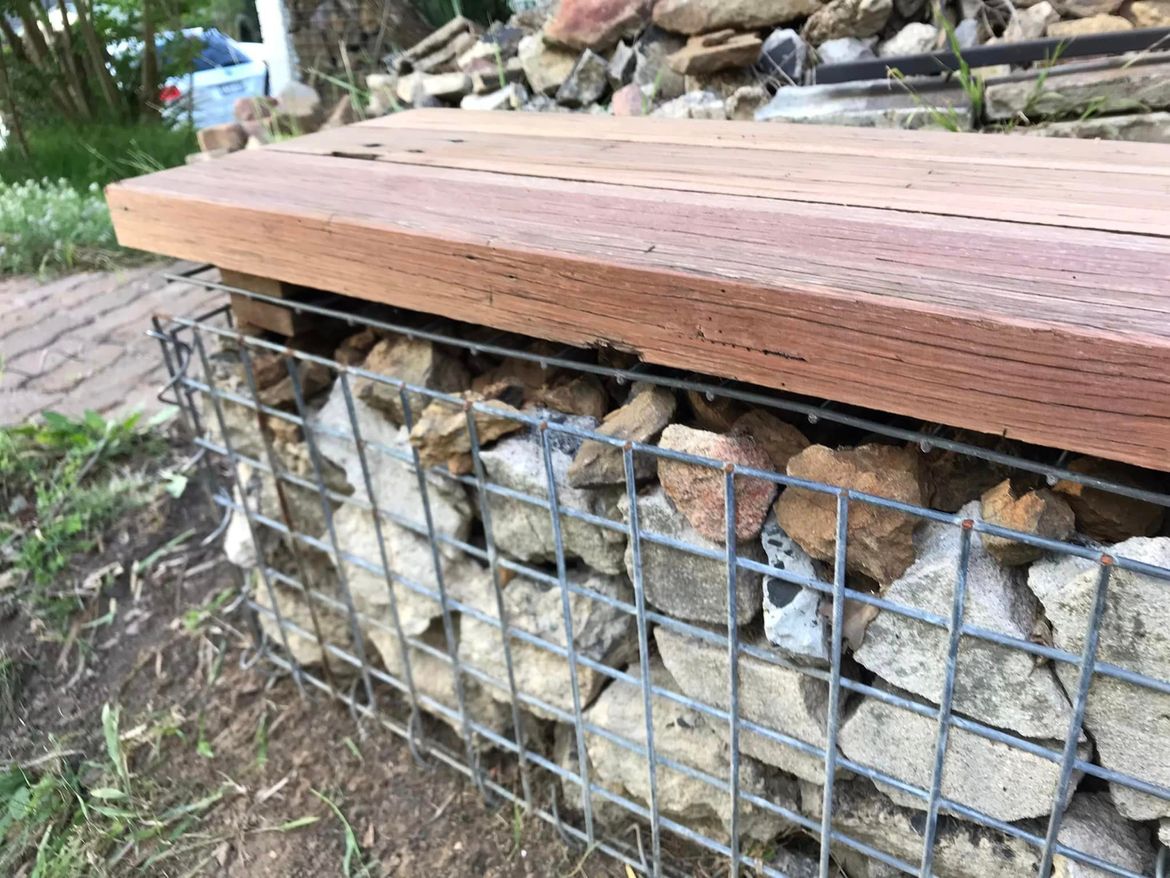
The gap was larger than I expected and by all rights, I should have removed some of the rocks alongside the edge that would require the corkscrews. I made it in the end, but consistency in the spiral would have made it easier. The next step was to oil them.
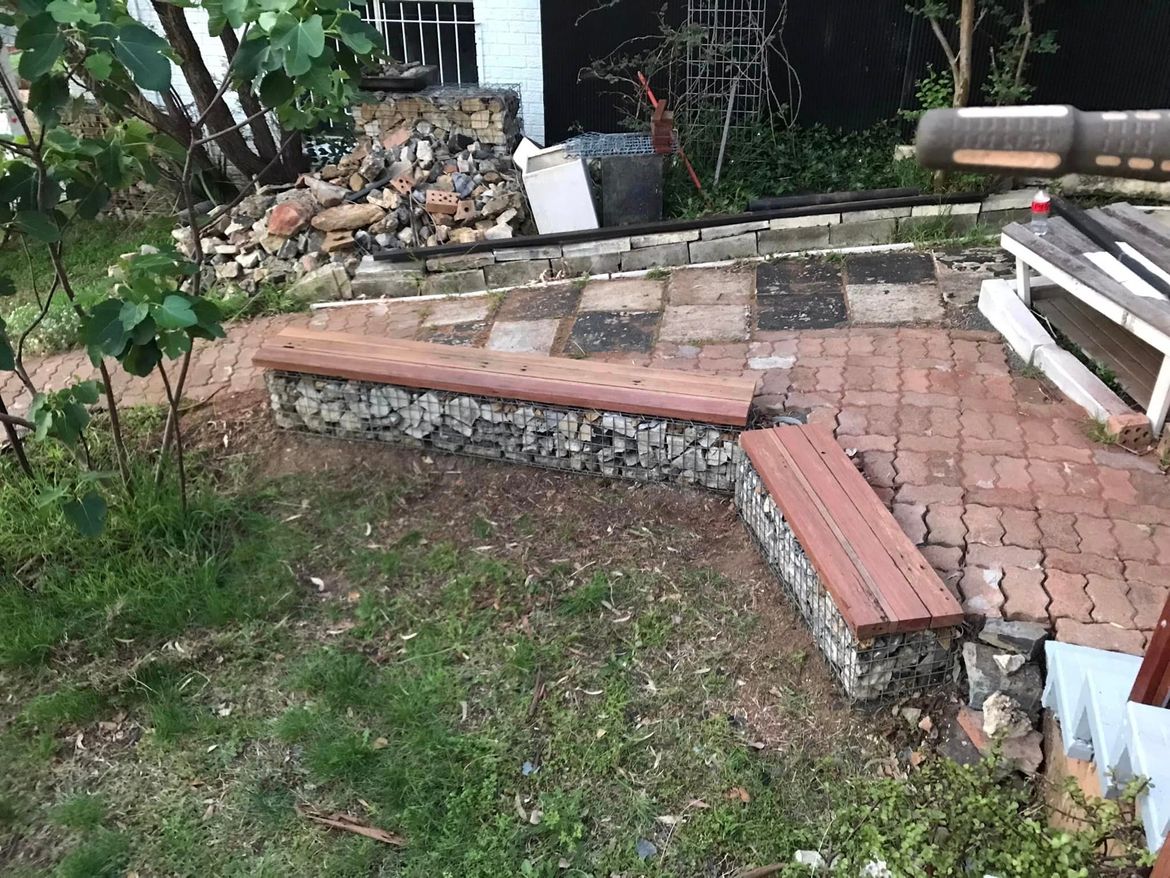
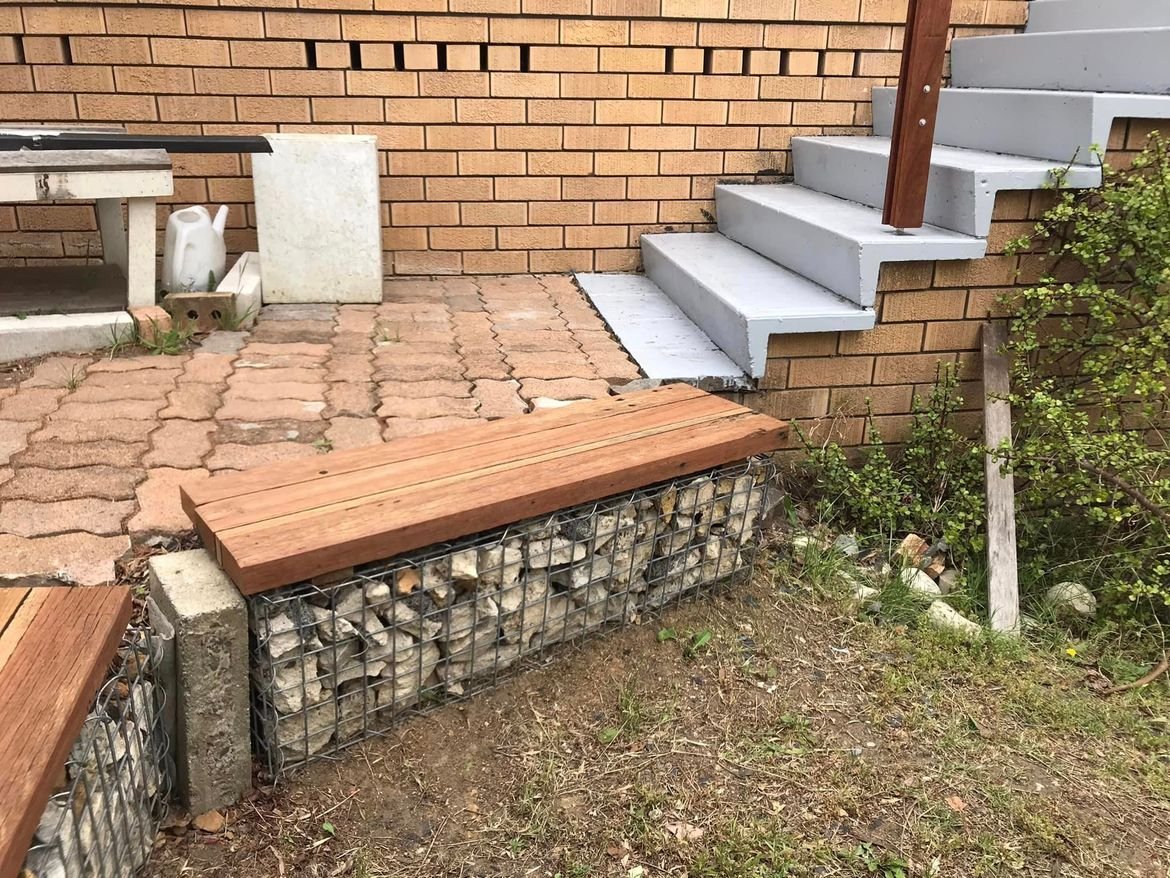
They really bring the area together. And yes, I was stirred by my friends about my many weeds, lol.
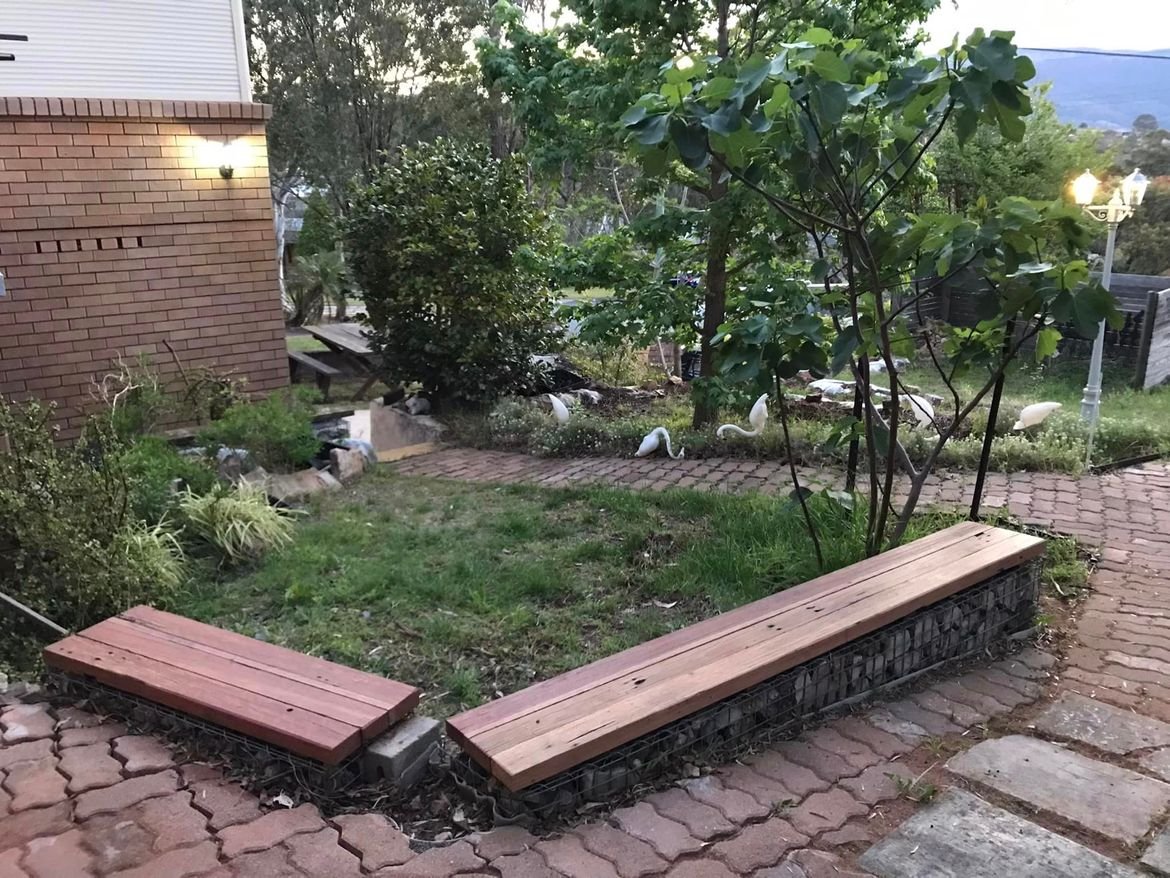
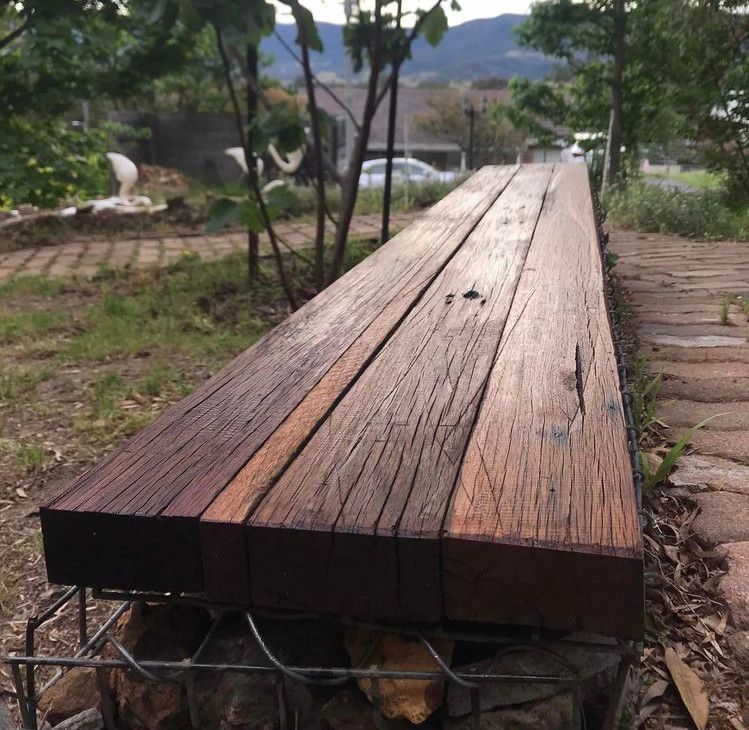
The timber had beautiful colours. With the extra spacer in the lid, it worked well.
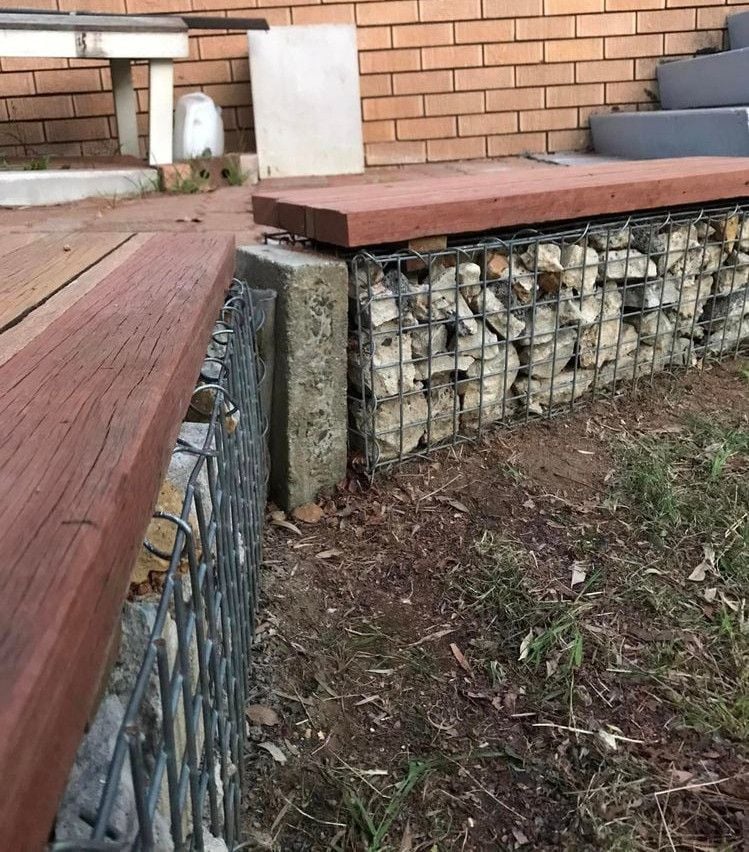
Normally the spirals would look a lot tidier, but the physical space I had left and not removing some rocks made the job harder to wind them back on. In the end, I went for a shorter spiral length but more of them.
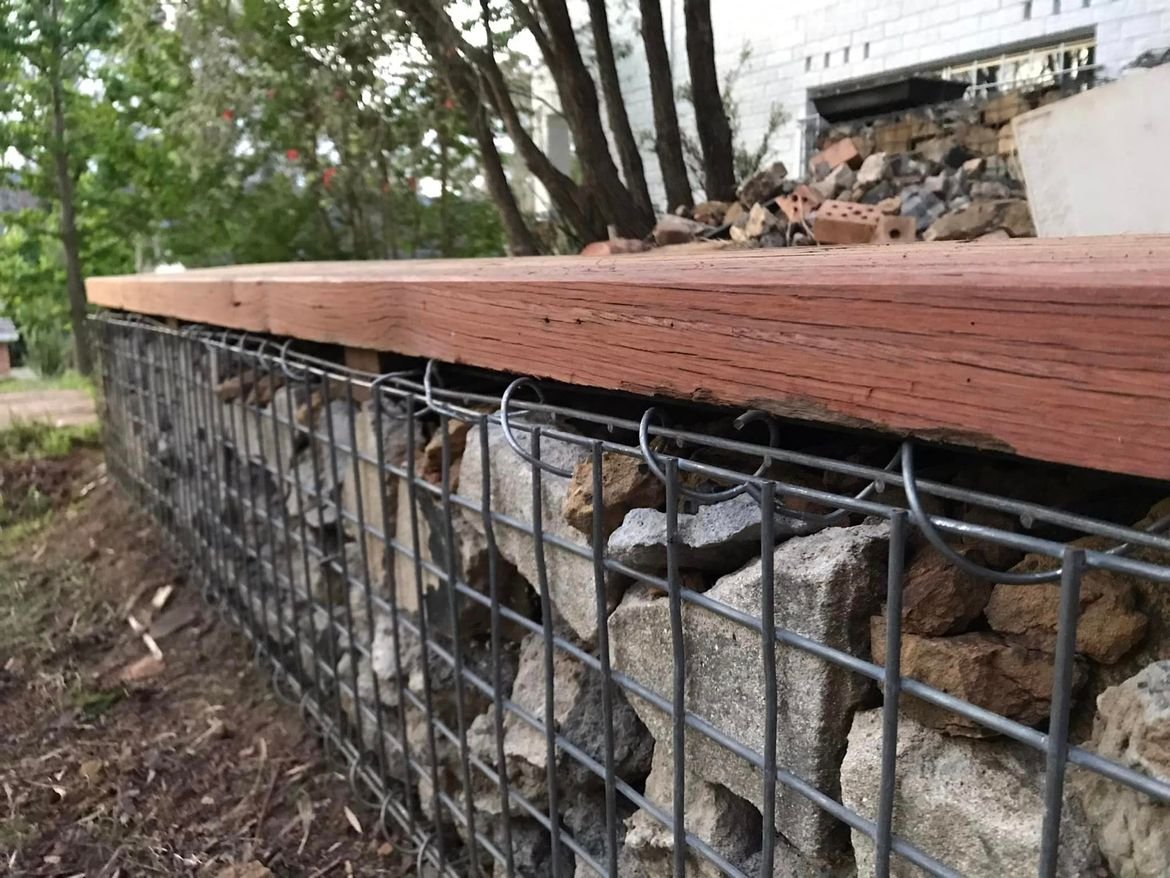
The planed timber made it shine.
Step 4
The last step was to oil the timbers. I remember seeing some timber oil under the house. I thought I'd have a look and sure enough had around half a can.
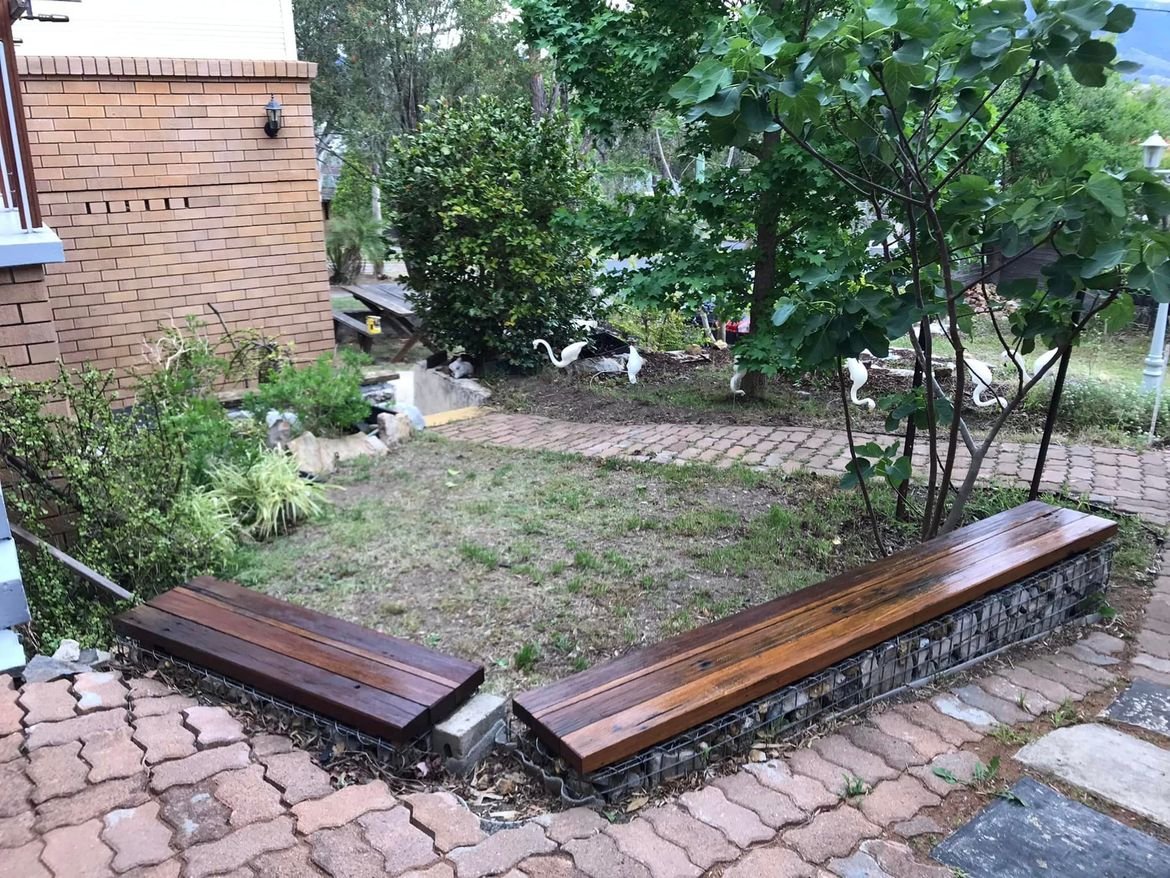
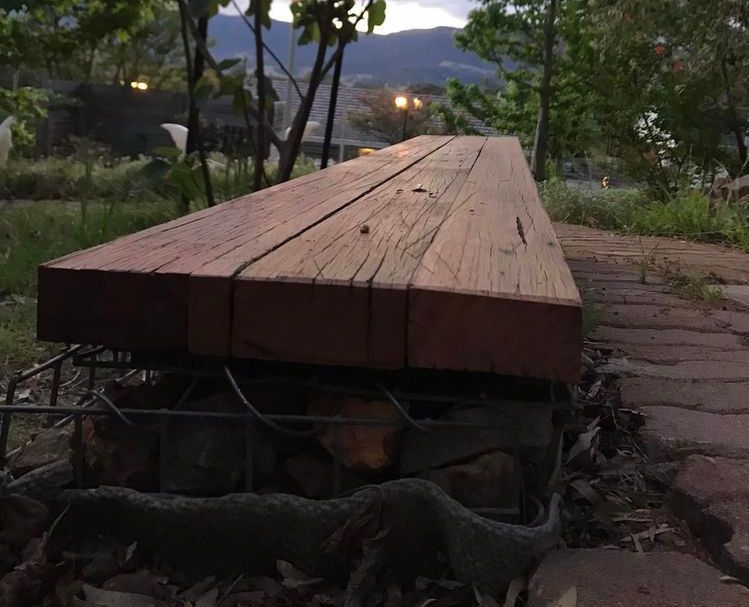
The timber drank the oil, though not as much as the non-planed timber for the table setting. It really didn't take long to oil the timber, though I did not do the underside of it.
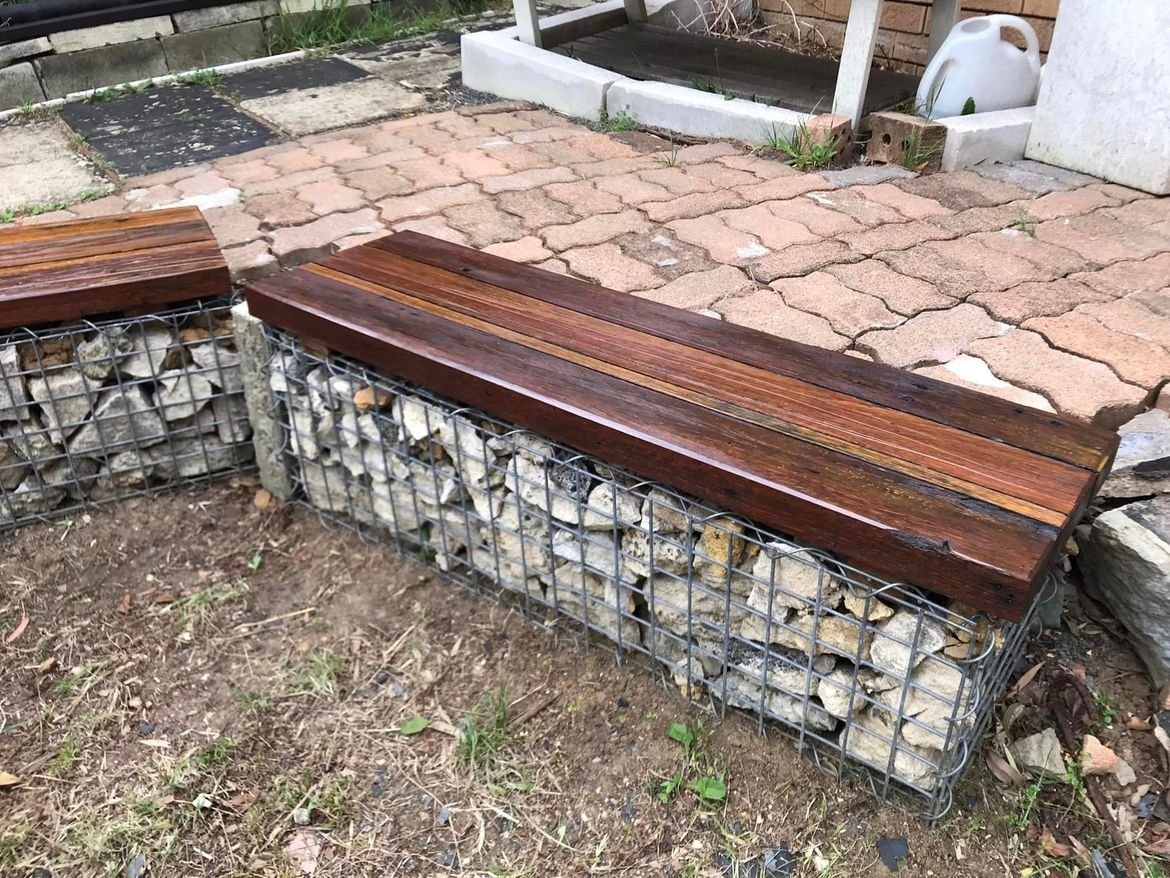
It came up really nice and I did two coats.
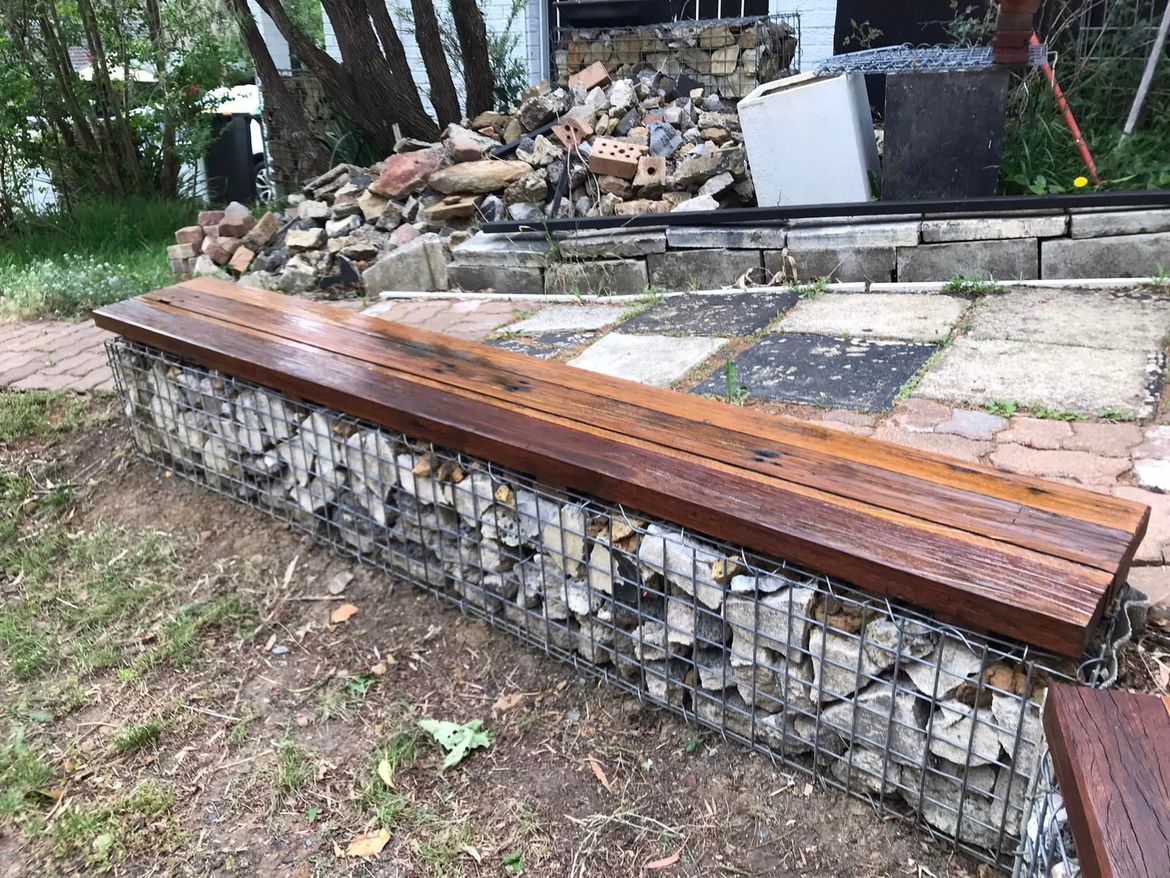
All done, and they turned out a treat.
Tool and materials
Materials used in the project:
Tools used in the project: