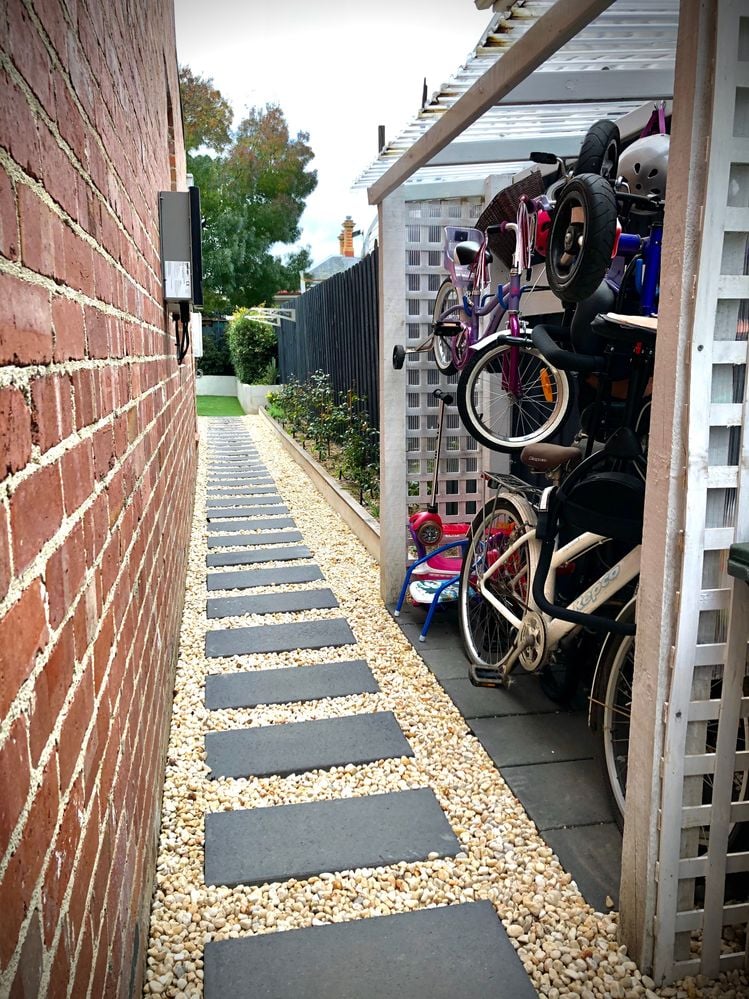
Building a bike shelter and laying pavers created a more functional and attractive area in this side access project.
The project
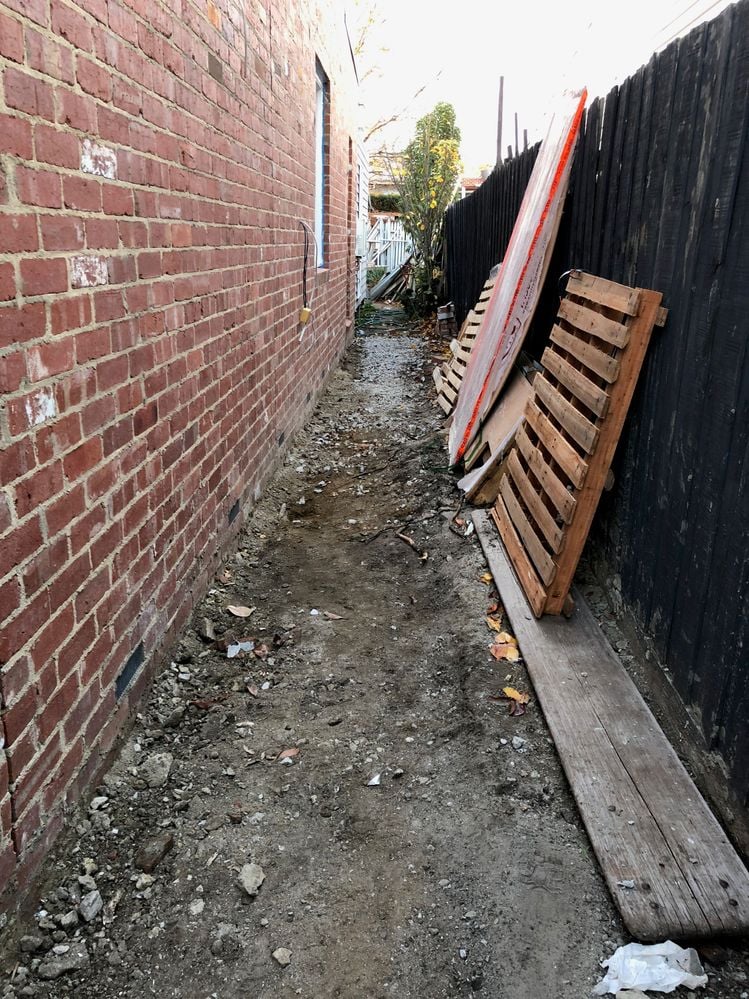
The path down the side of our house needed some sprucing up. We wanted to add a storage shelter for our bikes so we could have easier access to them rather than storing them in the garden shed where they were never used.
I also wanted to allow space for the rubbish and recycling bins to try and keep them out of sight from the windows down the side of the house.
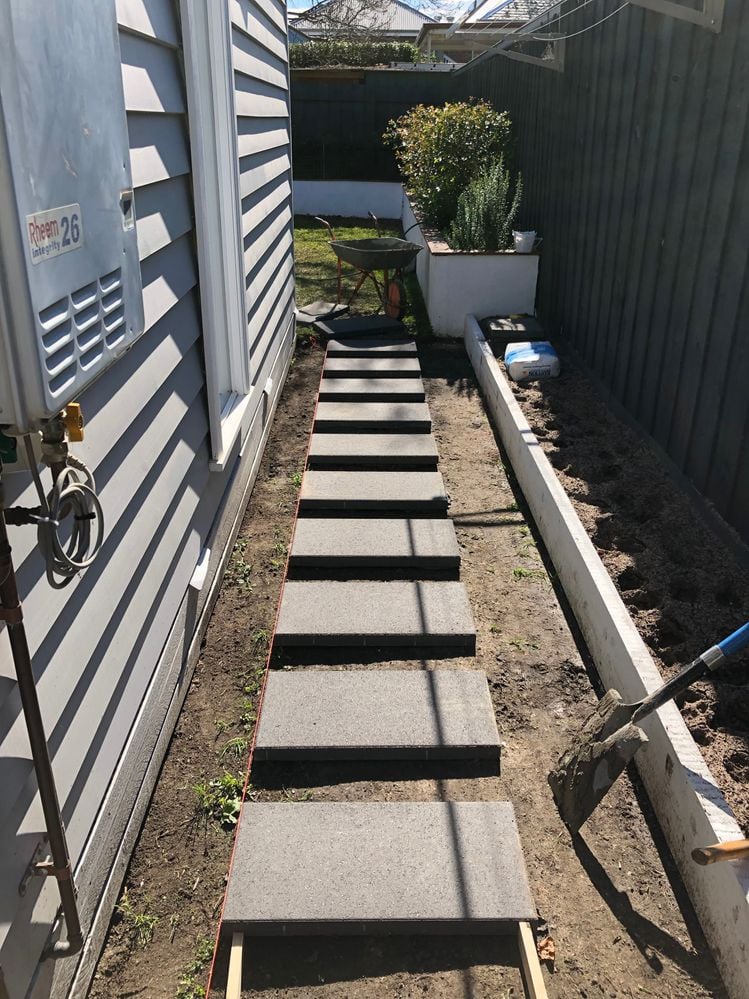
We went with a charcoal paver from Bunnings, 600 x 300 x 40mm in size. If I had my time again, I would have spaced them out a little further to create a larger step between pavers. I used treated Pine sleepers topped with a length of Merbau to tie into the decking we have in the backyard.
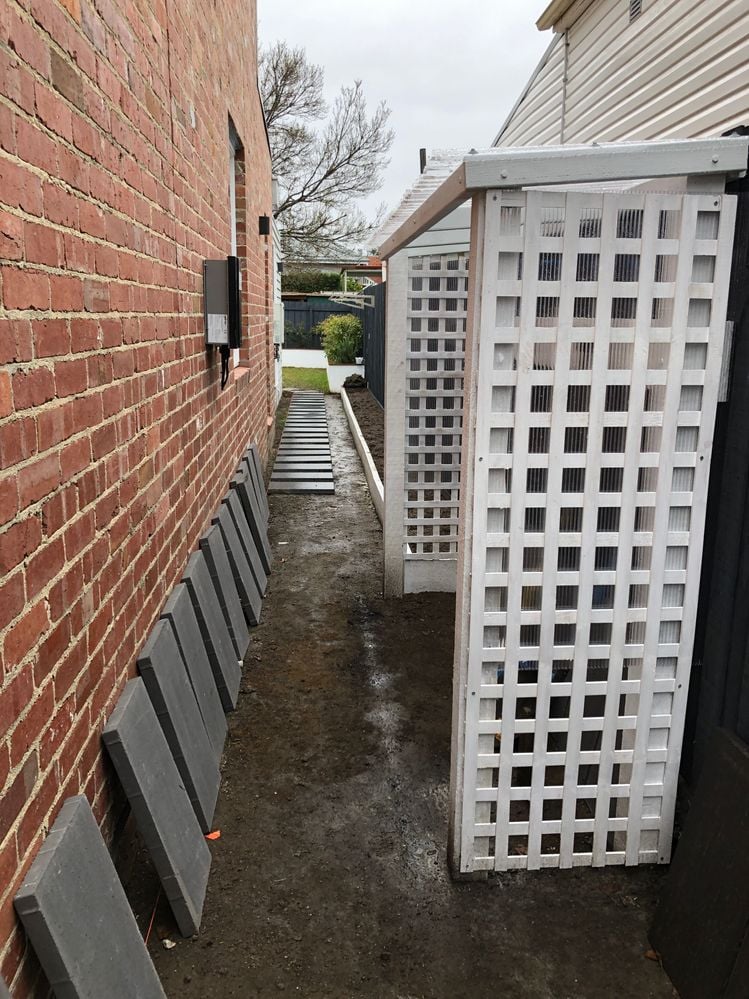
The pavers were laid directly onto the soil beneath as it was pretty solid. All the top soil was removed by machine when my builder levelled the yard, so it was down to clay.
I used a sand and cement mix and then placed the pavers on top of that and that holds them in place. The timber you can see in the photo was just two off cuts I used as spacers when laying the pavers for an even gap. Saved me measuring them each time.
The bike shed has clear polycarbonate roofing behind the lattice to create shelter from the rain, along with a corrugated perspex roof. I hung the kids' bikes from a rail I strung between two rear posts to create better access using a bike hook.
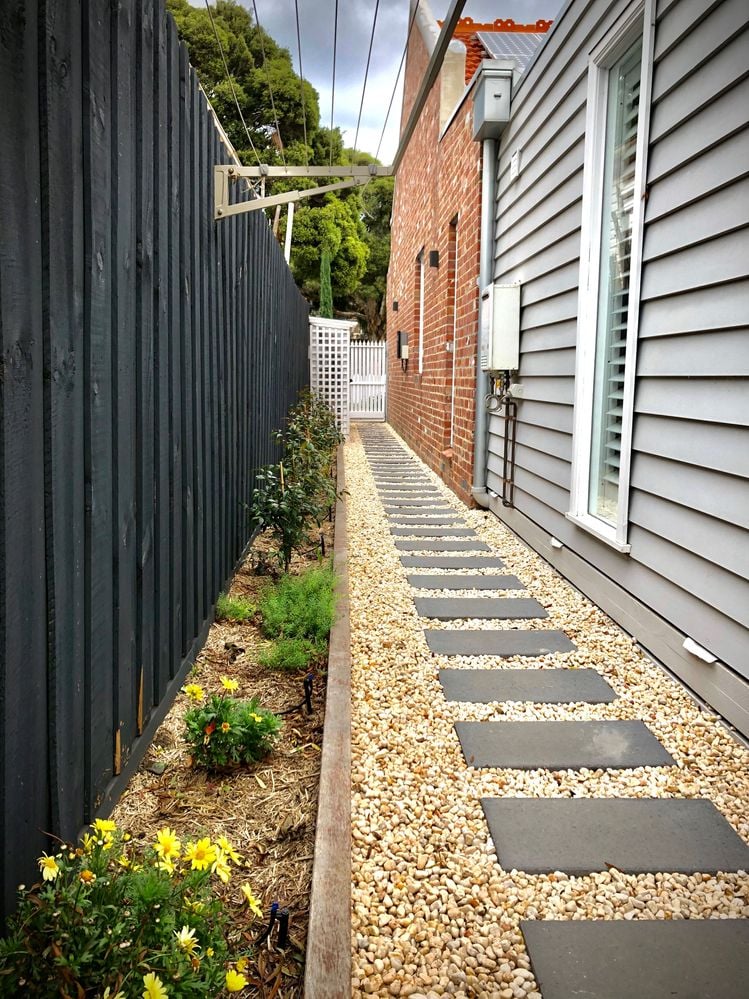
I didn’t keep track of the budget, but it would have been about $1000–1500. The pavers were the most expensive at $400, but I could have done with less. The pebbles were around $200 from memory. I had to get top soil for the garden at probably the same cost. The bike shed materials were around $200. Pine sleepers wouldn’t have been more than $100. It’s a 25m stretch of garden space, so anything that length will always add up.
Before and after
How to lay pavers
Workshop member weekenddiyer found this video helpful when laying pavers for this side yard. Learn how to lay pavers in an even, straight line with this step-by-step guide: How To Lay Pavers.