The project
We were sick of tripping over food and water bowls so we made a cat feeding station. We started with two metal pet bowls from the new Bunnings pet selection, and drew up a design that sits flush against the skirting boards and attaches with renter-friendly velcro strips.
It has a lower shelf with adorable cat face cut-outs for the bowls, an upper shelf for kitchen storage and display, and a splashguard to safeguard the walls from messy eating.
We finished by painting it a fun sage colour, and topping it with cat-friendly kitchen herbs. Kitty approves and it looks great.
Steps
Step 1
We started by finding a pair of metal pet feeding bowls from the new Bunnings pet selection. Based on the size of the bowls, we drew up a design and bought a 1800 x 185 x 19mm piece of DAR Tasmanian Oak and a 1200 x 25.4mm dowel to form shelves and legs.
Step 2
We cut the Tasmanian Oak board into 750mm long upper and lower shelves using an Ozito circular saw. Since it will live in the kitchen and we don’t want sharp edges, we rounded off the edges with an Ozito laminate trimmer.
Using an Ozito mitre saw, we then trimmed the dowels down to size to function as legs, keeping the back legs shorter than the front legs to account for our skirting boards.
Step 3
We wanted the bowl cut-outs to have finger holes for easy feeding and cleaning, and thought doing them in the shape of cat ears would be super cute. We used a Ryobi jigsaw to cut a 130mm diameter for the bowls to sit in and little triangular ears for the finger holes.
Dora wanted to make sure we got her head just right.
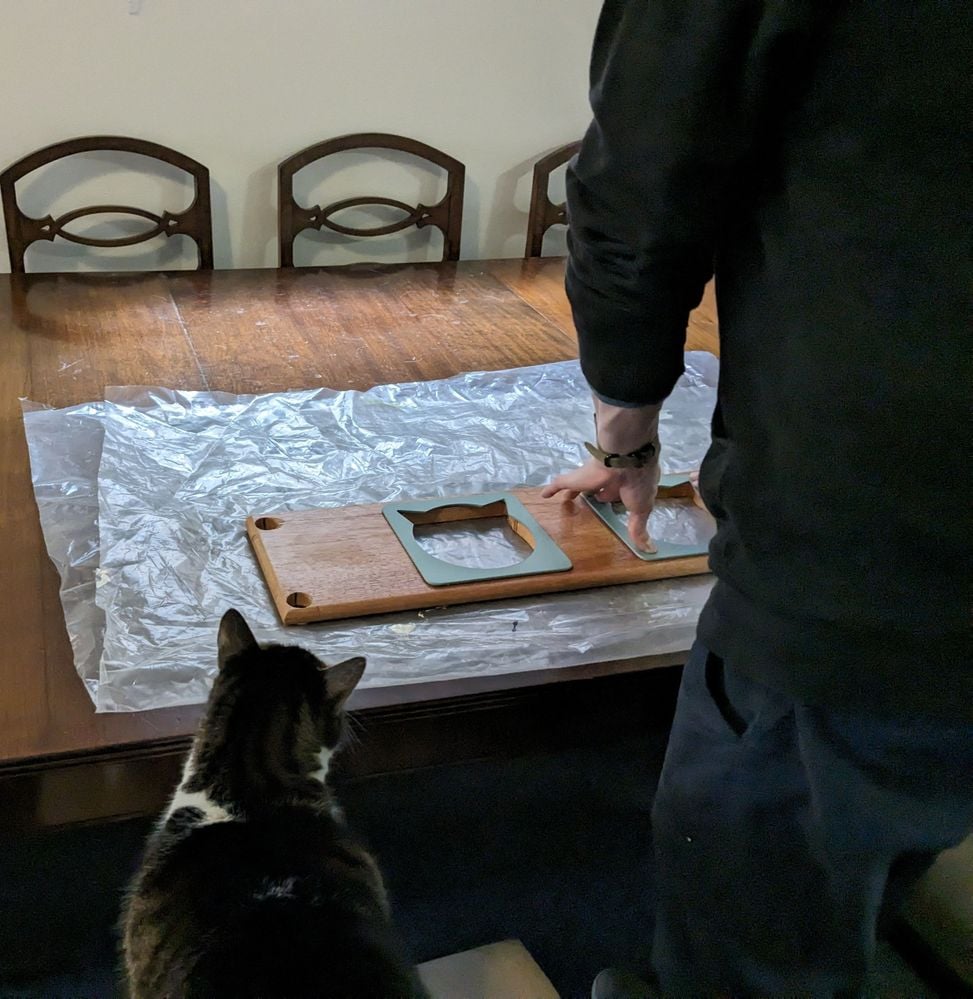
Dora likes to inspect every step of assembly.
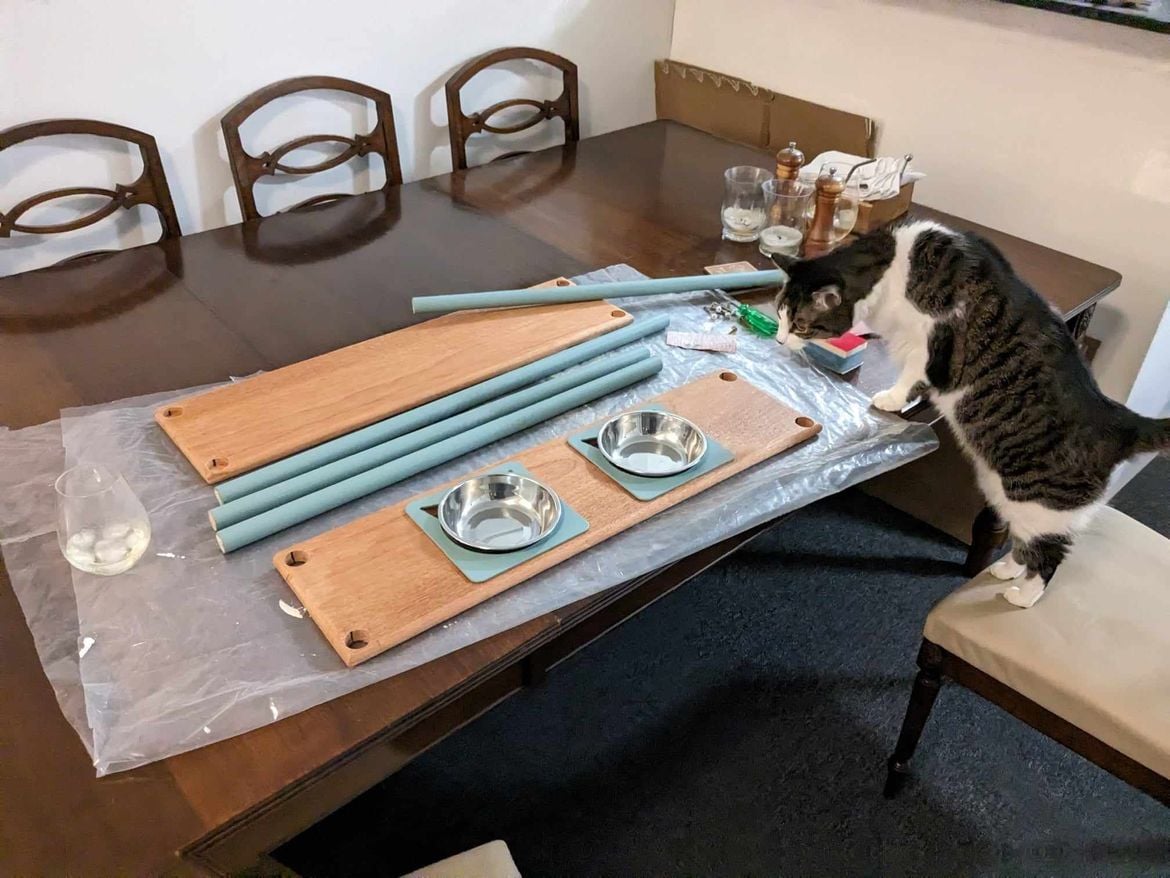
Step 4
To attach the shelves to the legs, we used a 25.4mm IRWIN Forstner bit to drill pockets in the underside of the top shelf, and through holes in the bottom shelf. We then pushed the dowels through to form legs and glued them in place using Gorilla wood glue.
Step 5
Since our cat is a messy eater and we wanted to avoid getting cat food on the wall, we decided to include a splashback. We cut a piece of 3mm clear PVC sheeting using a circular saw and attached it by screwing it to the back of the bottom shelf.
Step 6
To finish up, we painted the cat faces and legs in a fun shade of sage (Classic Calm by Dulux) and attached the top shelf to the wall using 3M adhesive hanging strips.
Step 7
To complete the look, we topped it off with cat-friendly kitchen herbs from the Bunnings garden selection. We chose basil, thyme and rosemary. We use one bowl for food and one bowl for water, keeping the mess off the floor and the wall. Dora the cat loves her new feeding station.
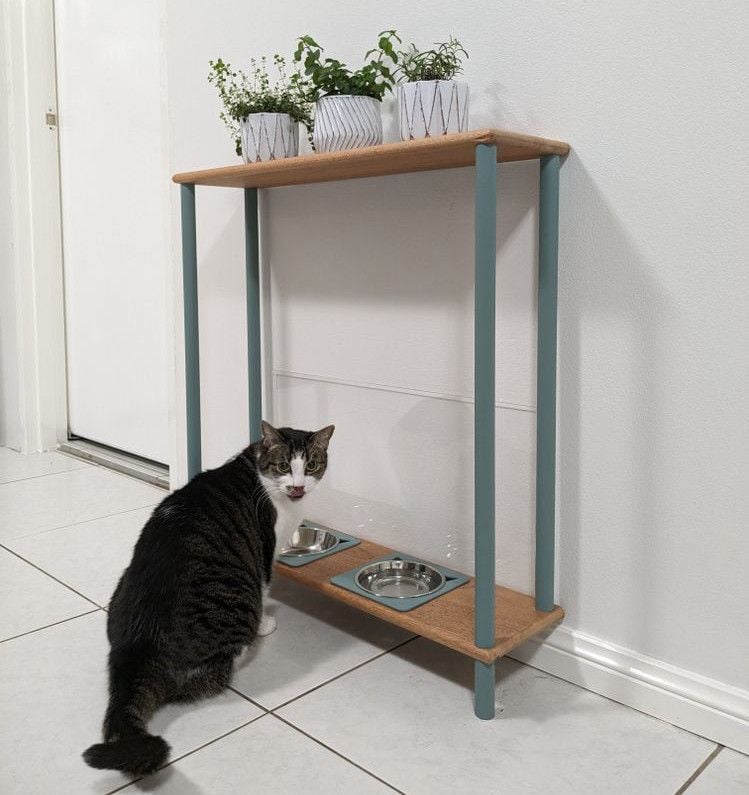
We hope to inspire other pet owners to do something similar, since it works so well. Our advice is to draw up a proper design with accurate measurements before you go shopping and cut anything. And of course, to let your kitty help with/inspect the process as you go. From Lauren and Rob (the owners of/slaves to Dora the cat).