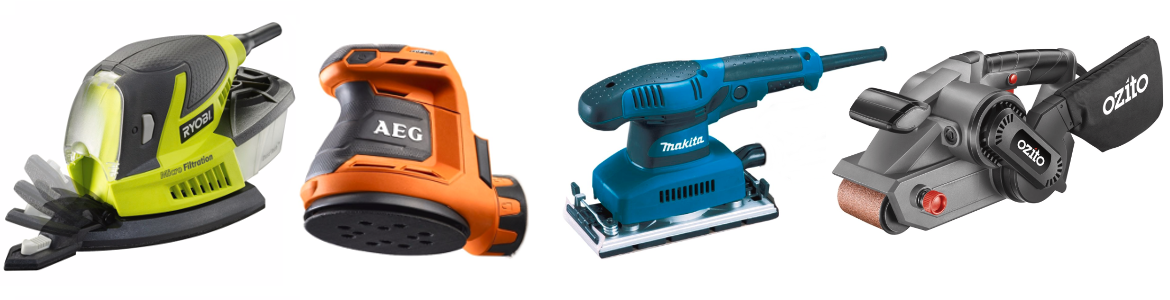
Sanding is an integral part of many D.I.Y. projects, and the right tool for the job is essential for getting a great result.
Our guide shows you how to choose the right sander for your home improvement project. If you need further advice, please don’t hesitate to ask for a hand.
Detail sander
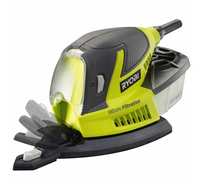
What: A detail sander is a lightweight, compact tool with an iron-shaped base that operates via a vibrating mechanism. It typically uses interchangeable sanding pads for versatility.
Why: The compact design of detail sanders allows for controlled use in confined spaces, making them ideal for intricate work. The one-handed operation frees the other hand for guiding or holding the project securely, enhancing precision.
Perfect for: Tasks like sanding furniture, bannisters, inlaid doors, window frames, fine edges, and tight corners - anywhere a larger sander can't manoeuvre effectively.
They say: “My detail sander is so nice and light - used recently to sand down an outdoor setting, and sand some tile prior to painting." @Ari
"You can get into those corners with a light touch from a detail sander." @Itai
"I love my detail sander. It's great for quick small jobs and tight little spots!" @DIYgals
"I love the detail sander for getting into those small corners. The perfectionist in me hates having small patches of rough left untouched." @Peggers
Finishing sander
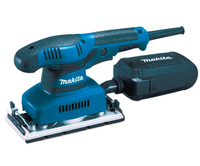
What: A finishing sander features rectangular or square sanding pads that vibrate in a circular motion, offering a smooth finish.
Why: With a larger surface area than detail sanders, finishing sanders allow for faster completion of jobs while still providing a fine finish. They accommodate 1/4, 1/3, and 1/2-size sanding sheets, often equipped with clips for secure attachment.
Perfect for: Smoothing out large surfaces such as walls and floors, as well as for refinishing paint, varnish, and plaster.
They say: "I've used a finishing sander in between coats of varnish on a vanity I built out of a laminated beech panel to achieve a really smooth finish." @Itai
"Definitely one of my most used tools, saves so much time compared to hand sanding and gives a better finish to a project." @prettyliving
Random orbital sander
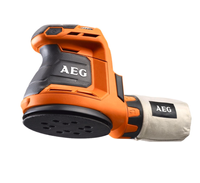
What: A random orbital sander is a versatile tool featuring a round pad that spins and oscillates, which helps minimise swirl marks while sanding.
Why: Random orbital sanders remove material at a faster rate than orbital sanders while offering more control than belt sanders. Often featuring variable speed control, they allow for a slow speed for fine work and faster speeds for heavier jobs. Velcro-backed sanding discs enable quick changes between grits.
Perfect for: Large pieces of furniture, floors, doors, walls, or when sanding through multiple layers.
They say: "My random orbital sander has saved me hours of work that I used to do by hand." @tom_builds
"I've used my random orbital sander for a whole range of projects, both big and small. From rounding off edges to sanding back furniture and even walls. It's a great tool." @prettyliving
"Our random orbital sander is just perfect, easy to handle with a small footprint for storage." @Nham
Belt sander

What: A belt sander is a powerful tool featuring a continuous loop of sanding belt that moves over two rollers, allowing for heavy material removal.
Why: Belt sanders are ideal for heavy-duty work where significant material needs to be removed quickly, and a fine finish is not the primary concern. They often include quick-release mechanisms for easy belt changes, enhancing usability.
Perfect for: Removing bulk material before transitioning to finer sanding with an orbital sander, making them ideal for floors, decks, flat panels, and large furniture pieces.
They say: “Buying a belt sander was such a game-changer for my D.I.Y. projects. I do a lot of furniture flipping, and having the belt sander really saves me time." @lifestylebymari
"My belt sander is my favourite tool at the moment! It's so versatile!" @hazesnow
Belt floor sander
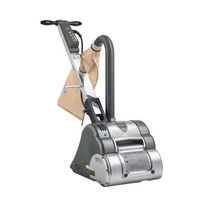
What: A belt floor sander is a large tool specifically designed for sanding wooden floors, often featuring a drum or belt system.
Why: Belt floor sanders are built to efficiently remove imperfections and old finishes, preparing the surface for varnishing and polishing. Their design ensures a smooth, even finish across large areas.
Perfect for: Sanding hardwood and engineered wood floors to achieve a flawless surface before refinishing, crucial for achieving a professional look.
They say: "While there's a bit of extra skill, time and effort involved, sanding back floors is essential before refinishing/resealing them." @Project_Pete
Orbital floor sander
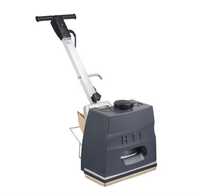
What: Orbital floor sanders feature a round sanding disc that moves in an orbital motion.
Why: Orbital floor sanders are effective for a variety of floor types and are easier to handle than traditional floor sanders, reducing the risk of gouging the wood.
Perfect for: Refinishing hardwood floors and smoothing large surfaces with less risk of damaging the wood.
They say: "They are heavy beasts but surprisingly easy to use. It's a job anyone can do - even those with limited skills like me!" @Jason