This paling gate rebuild kept things simple and economical by reusing the existing hinges and latch.
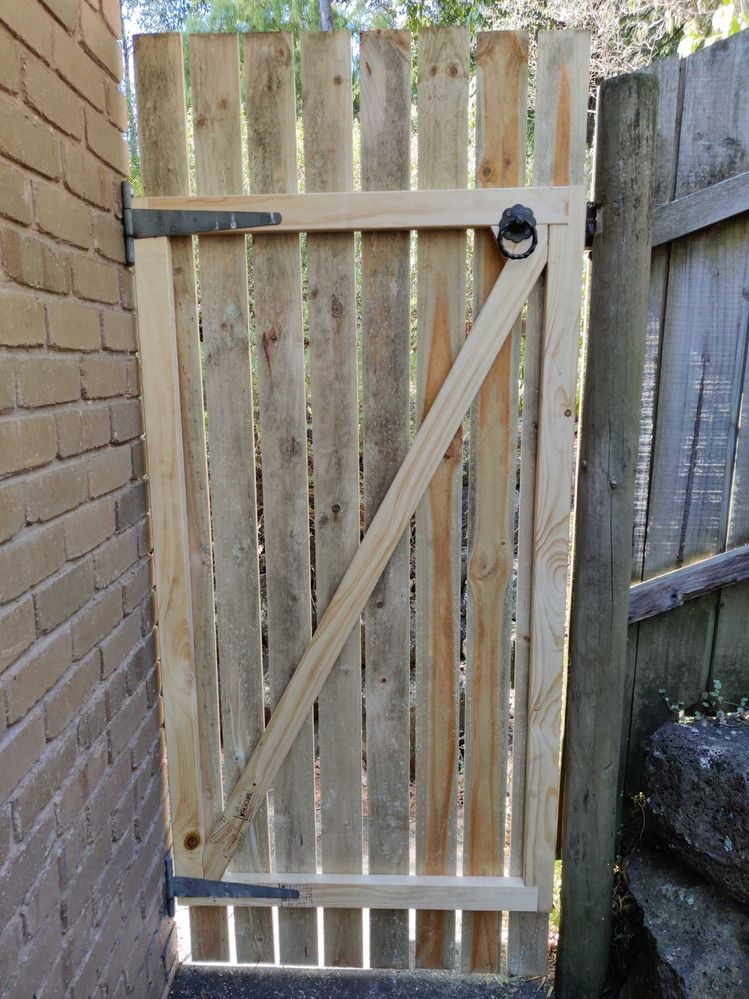
The project
My old garden gate had seen better days and was no longer capable of keeping pets on one side of it. It was time for a rebuild!
The first step was to pull out the old gate and take some measurements.
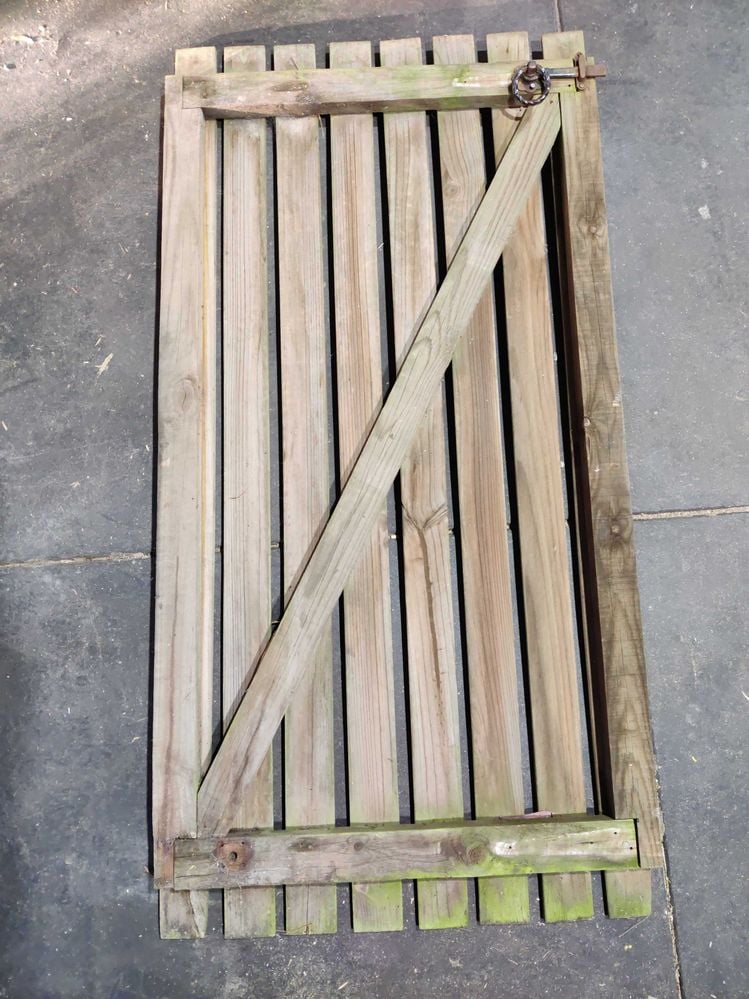
The bottom of the wood was pretty green, and all the timber was old and loose.
You can see in the picture above that the latch is on the top right and the hinges were on the left. But at the bottom of the frame on the right is a clear imprint of a hinge, and on the left is what I suspect is an old latch mount point. In other words, the gate had been there so long it had been taken out and flipped upside down!
Once I knew what I was building, the first step was to rebuild the frame. It's fairly simple construction: a rectangle with a diagonal brace.
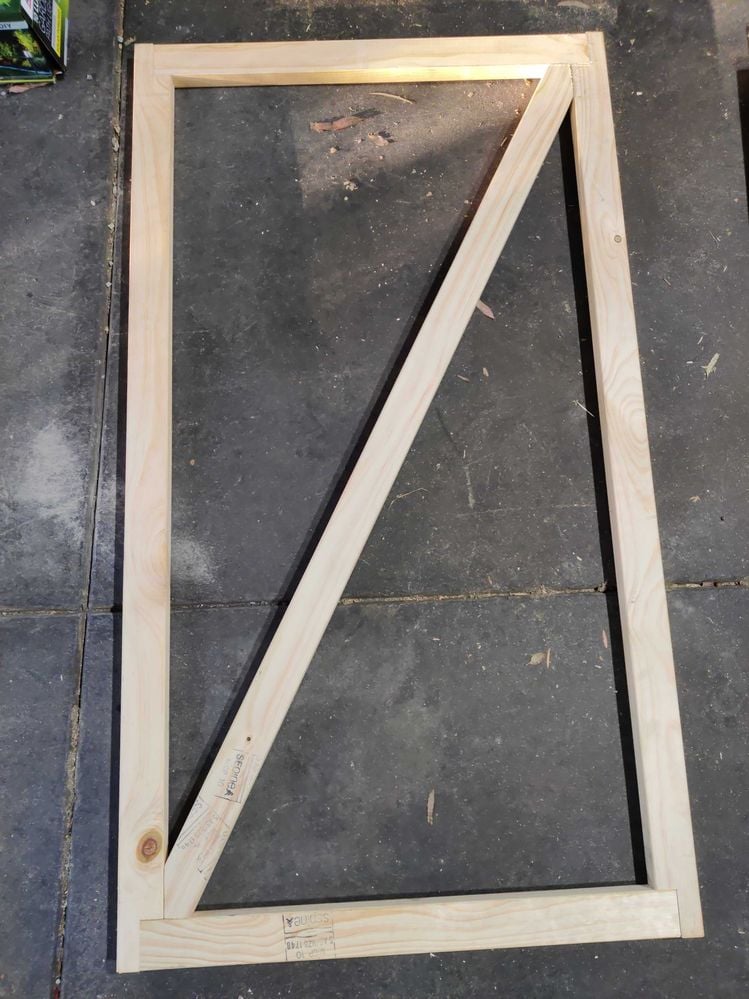
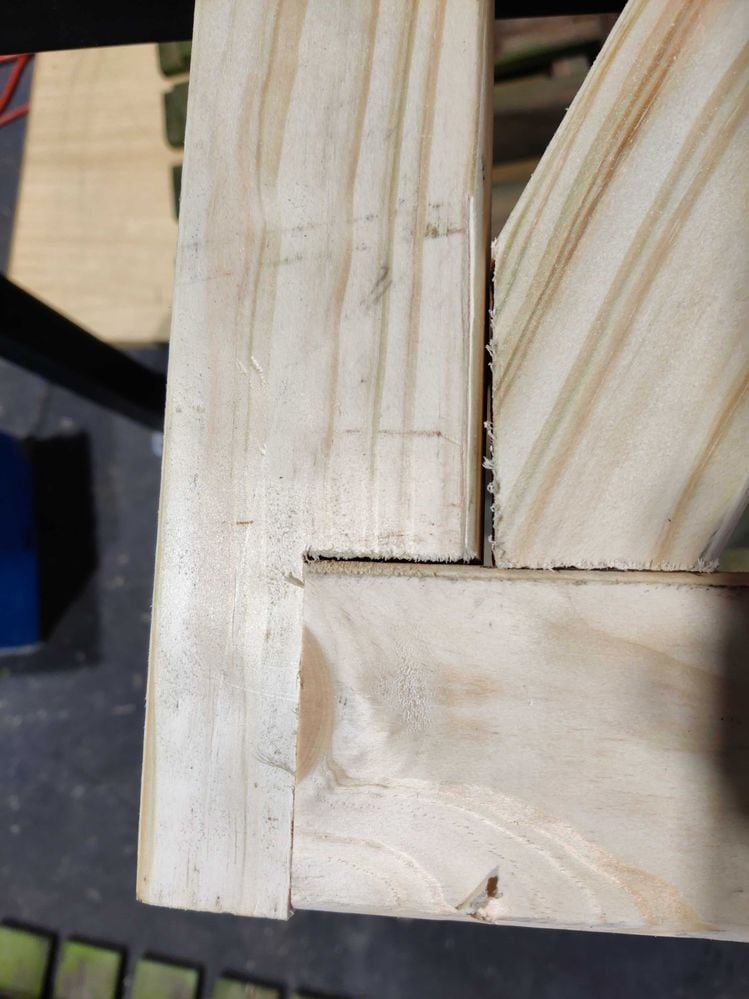
I started by building a square frame, notching out the uprights to provide support. I used treated Pine screws, two per corner, screwed in from right to left in the following picture.
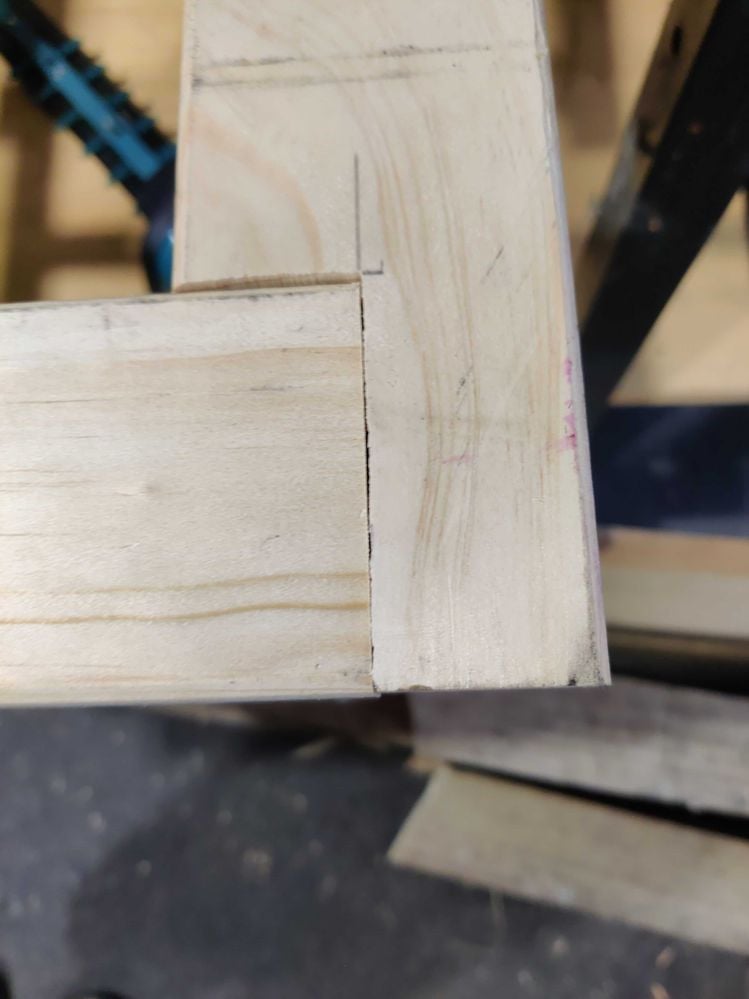
Then, with the outer rectangle complete, I placed the brace piece over it and traced the inside angles. This allowed me to get a good fit without careful measurement or complex calculation of angles. I used a mitre saw and band saw to do my cuts, but a jigsaw would also work perfectly.
I added two more screws, one from the left and one from the underside, to hold the brace in place.
After building the frame, it was time to hang it. Typically you'd make the entire gate and hang it at the end, as it's much easier to add the palings when it's lying down (and not swinging on its hinges).
Because it was going onto existing hinges, I decided to mount the frame first and then add my palings so they were a precise distance from the ground. Again, this saved careful measuring.
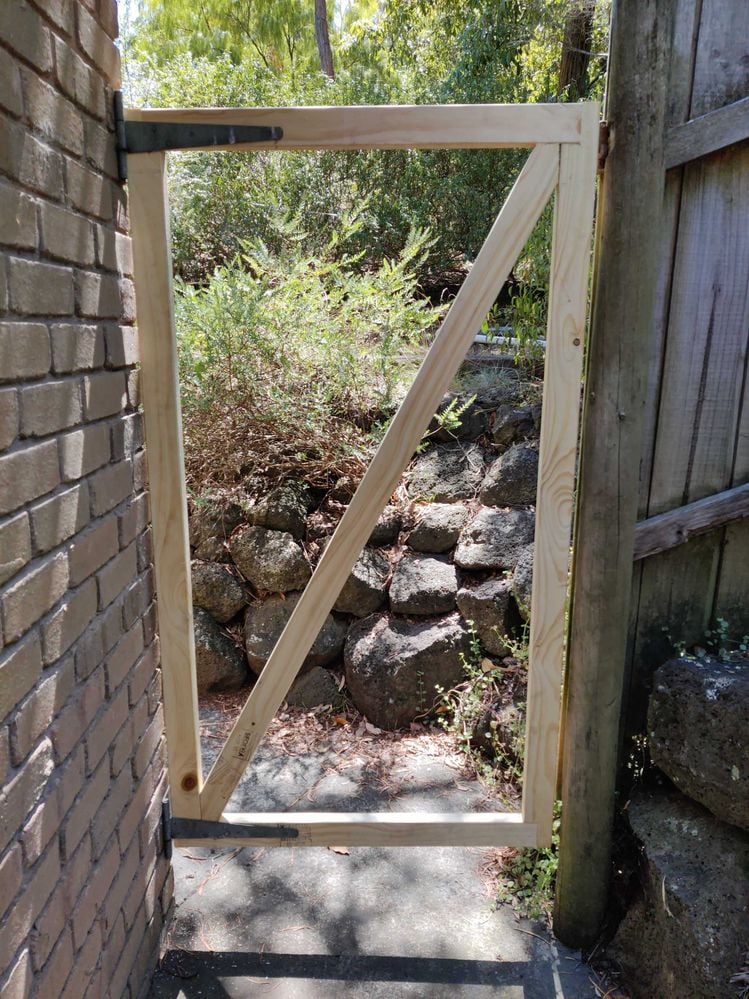
Note that the top of the diagonal is away from the hinges. Think of it like the diagonal of a bookshelf – you want it to hold up the top of the frame, as this is where most of the pressure will be.
After mounting, I added the palings. My gate was about 900mm wide, and I used eight 100mm palings.
To figure out the spacing, I simply took the width of the gate (900mm), subtracted the total width of the palings (800mm) and then divided the remaining width by the number of spaces (eight palings so seven spaces): 900mm - 800mm = 100mm. 100mm / 7 = 14mm per gap.
I cut some offcuts to serve as 14mm spacers. I clamped each paling in place with spacers top and bottom before fixing it with screws. I used three screws for each paling – one in the top of the frame, one in the bottom and one in the brace.
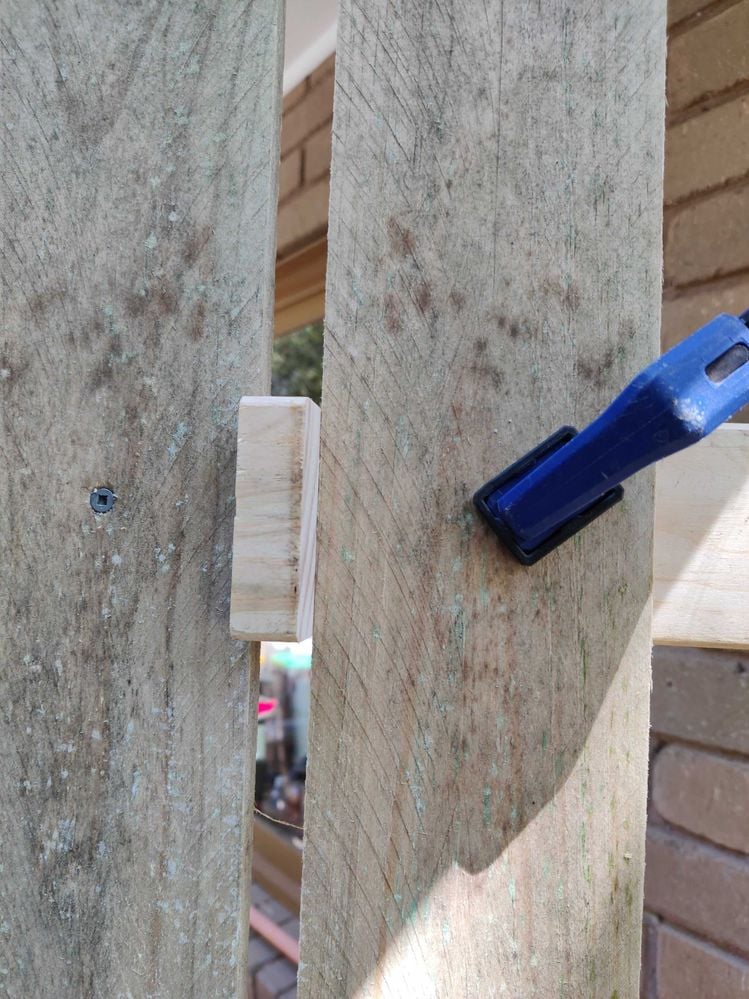
It's far more common to use a nail gun than screws for this, but I didn't have one available and the screws worked perfectly.
When fixing the palings, I started at the latch side – this is the side that everyone will look at, so it's the one you want to line up perfectly. On the hinge side (which no one will ever look at) I was about 10mm short of perfectly lining up, likely because not all the palings were perfectly 100mm, or perfectly straight.
The last step was to mount the latch. Again, I reused the existing one. Installation was simple – I drilled a hole for the shaft, then screwed the handles on each side and the support in a rough position.
It's more common to put the main part of the latch on the frame side (and if you look at the picture of the old gate, that is where it is). But because the fence had moved over time, the gate closed much more evenly with the fence with the latch on the paling side.
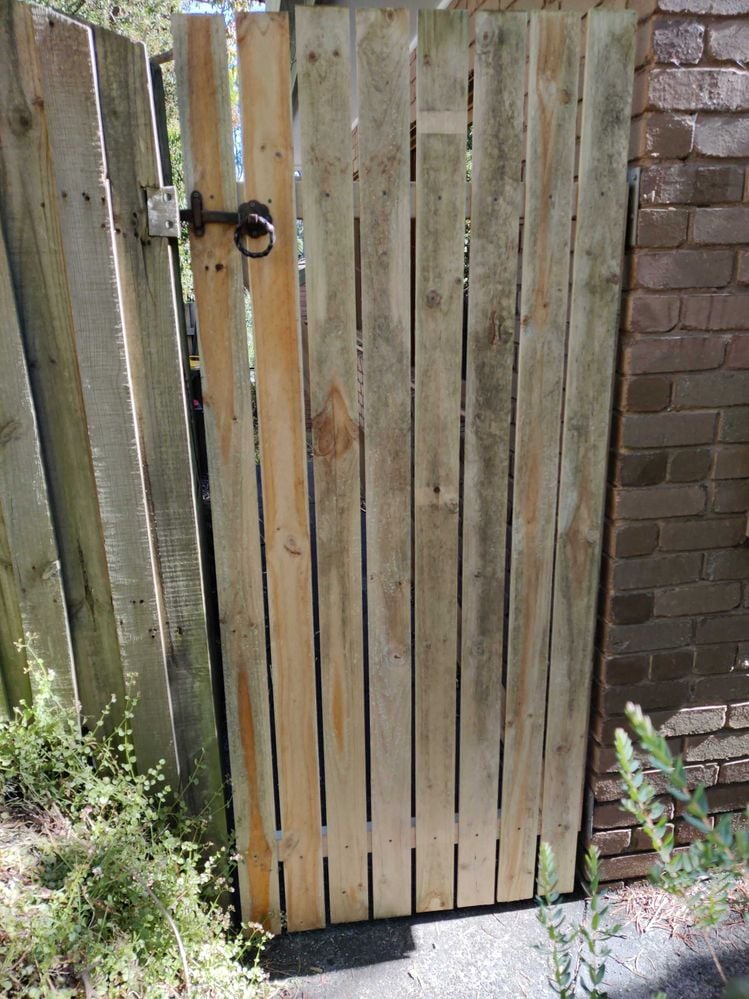
I will probably paint the gate to extend its life. I may even rebuild it (along with the fence it connects to!) with a nicer exterior timber, such as Merbau.
How to build a gate
The Bunnings team has shared a helpful video guide to building a wooden gate that shows how to build the frame, how to add bracing to keep the gate square and how to attach the front panels.
More gate projects from our community
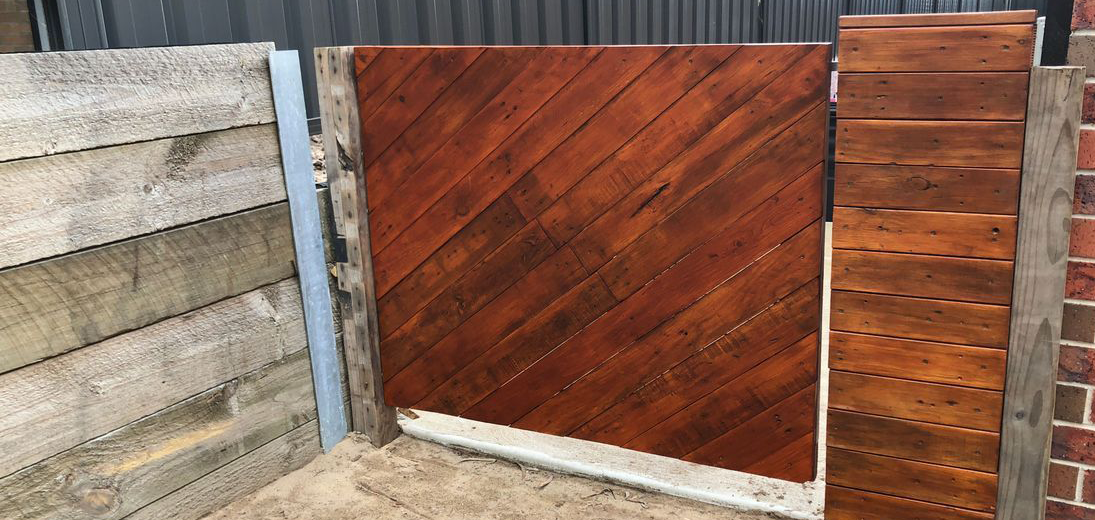
Bunnings Workshop member Tara built this sturdy gate by following the Bunnings video tutorial above. She used recycled pallet timber to save some money.
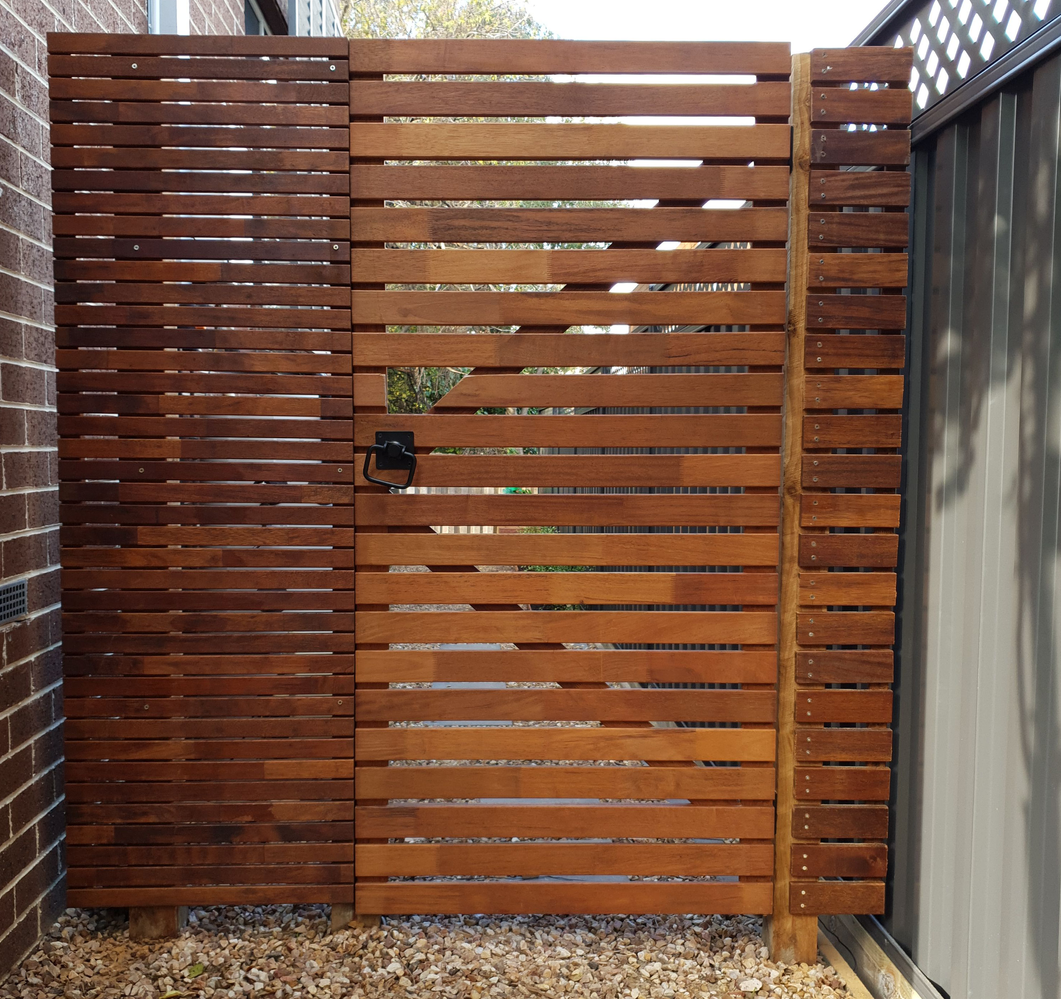
Workshop member Rufaro found that building a side gate can be an easy D.I.Y. project. He built this great-looking gate for a quarter of the price quoted by a professional.
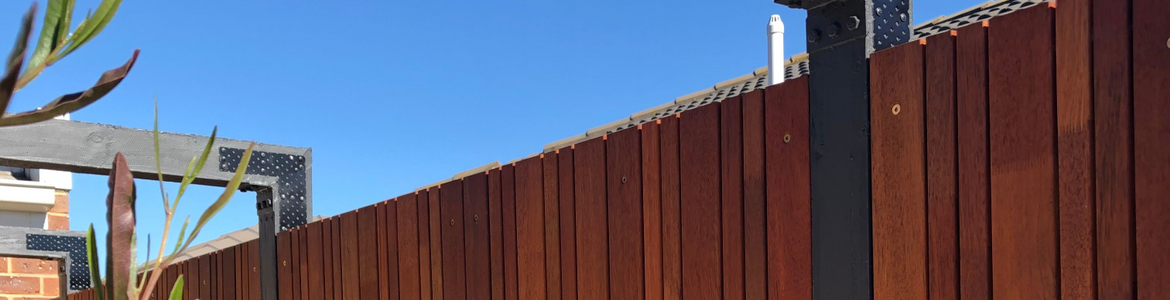
There are also plenty of great ideas in our Top 10 most popular fence projects and our collection of 10 screening ideas for outdoor areas.
Let us know if you need a hand with your project – we're here to help.