Steps
Step 1
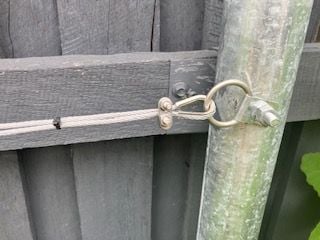
I fed the round rings onto the panel fix clips. Removed the nuts on the bolts that support the fence to the posts and attached the Jack mesh panel fix clips at either end. Then I secured the nuts back onto the bolts. Fed the wire rope thimble through the ring at one end.
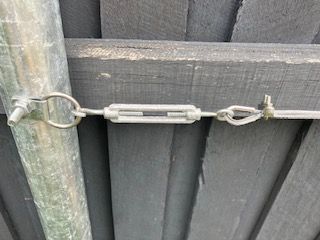
I hooked the turnbuckle through the ring at the other end and connected a rope thimble to the turnbuckle.
Then I attached mesh panel clips to the middle posts as added support for the wire.
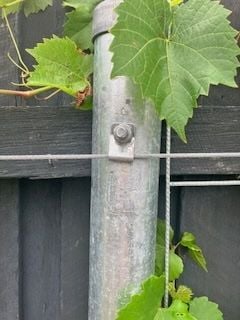
I fed the wire rope through the clips and around both thimbles, then I secured both ends with wire rope grips using an adjustable wrench to tighten with a small amount of slack in the wire rope. I then secured the surplus wire rope with cable ties along itself to make it neat and tidy.
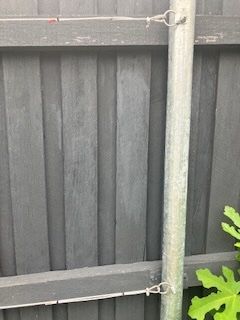
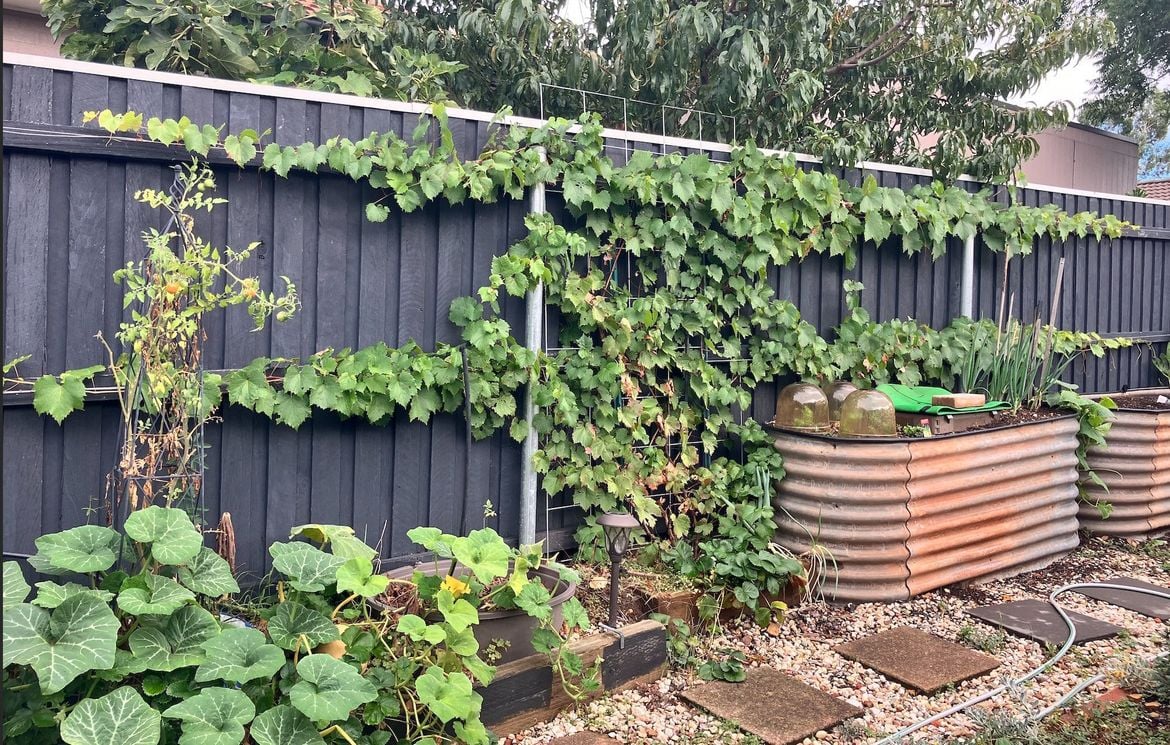
I painted the fence first using Walpamur Charcoal Fence Paint as I find the green vine leaves or any green leaved plant really pop in front of the charcoal coloured fence. Also, in winter the grapevine loses its leaves and the painted fence looks nicer than boring, aged, hardwood palings.
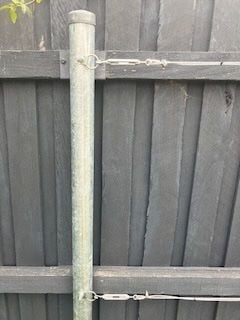
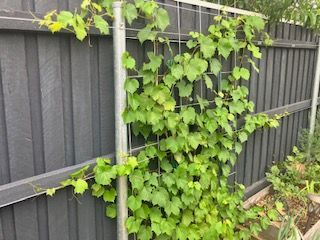
Rotate the turnbuckle to tighten the slack. All that is left is to train the vine along the wire, gently tighten the turnbuckle if the vine weight causes wire to drop, and prune as necessary. Then just wait a few seasons for the grapes to grow.
The grapevine is now two years old but I have noticed that since I have started training it along the horizontal wires, it has started to speed up its growth. I'm not sure whether this is caused by the horizontal support or the abundance of rain and sun we have had. The fence is on my western boundary so the vine faces east and gets in excess of six hours of sunlight a day. Grapevines do need a bit of water and their root system needs some space to spread out, so pots are not ideal unless you intend to keep the water up to it and give it a regular haircut.
Tools and materials
Materials used in the project:
Tools used in the project: