The Bunnings Workshop community can help with your home improvement projects.
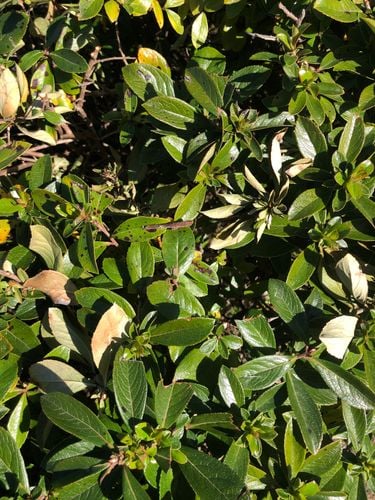
I have been struggling to get the this disease spread under control in my used to be beautiful hedge. Have tried several Anti-fungal sprays , Anti-fungal to the soil , eco oil etc. also have been applying fertiliser etc to help with good nutrition. Need help before I completely loose them.
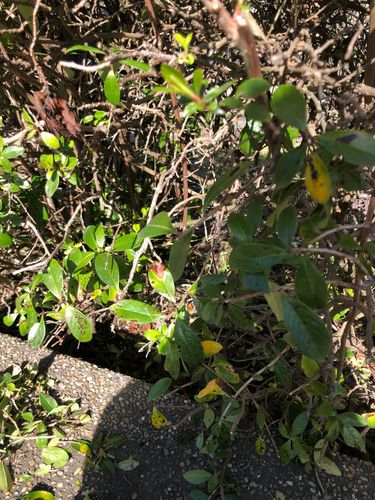
I believe the plant is escallonia
Hello @Fahim
Welcome to the Bunnings Workshop community. It's sensational to have you join us, and thanks for sharing your question about your hedge.
Escallonia hedges are prone to a fungal disease called Escallonia leaf spot, usually caused by Mycosphaerella. The symptoms you are seeing, with patchy yellowing, browning, and defoliation, are consistent with this disease. It is very persistent once established because it survives on old leaves and stems, making reinfection almost inevitable unless cultural and chemical controls are used together. Fungicides work best as a preventative measure, which is why spraying alone has not been successful.
The first and most important step is pruning. Diseased leaves and stems should be cut away thoroughly, making sure to go back into clean wood. All the removed material should be bagged and disposed of rather than composted, as the fungus will otherwise recycle into the plant. At the same time, shaping the hedge to be slightly narrower at the top than at the base and opening up internal growth will help airflow. This is critical because the fungus thrives in damp, stagnant conditions. After pruning, cleaning up the soil surface under the hedge and applying a layer of fresh mulch will reduce the risk of fungal spores splashing back up onto the new leaves.
Nutrition should be steady and balanced, but avoid high nitrogen feeds as they encourage soft, fast growth that is more vulnerable to infection. A slow-release balanced fertiliser will be sufficient to support recovery without over-stimulating new growth.
To strengthen this cultural management, fungicides from Bunnings that can help include Yates Liquid Copper Fungicide, which is a broad-spectrum copper-based product well suited to controlling leaf spot on ornamental hedges. It is applied as a foliar spray and works best when used preventatively on new growth, with care taken to cover both surfaces of the leaves. Another useful option is Richgro Black Spot & Fungus Killa, which is a systemic granular fungicide that is applied to the soil and absorbed into the plant, providing up to two months of protection while also supplying iron and zeolite for plant strength. Using a combination of these products, one as a surface protectant and the other as a systemic safeguard, gives the hedge its best chance of stabilising and producing healthy new foliage.
If you continue to follow a cycle of pruning, cleaning, feeding, and spraying through the growing season, there is a good chance your escallonia hedge can recover. However, if the disease persists year after year and the hedge continues to decline despite your efforts, you may need to consider gradually replacing sections with more resistant hedge species such as Viburnum Quick Fence - Viburnum odoratissimum, viburnum tinus, or photinia.
Please remember to wear personal protection such as gloves, goggles and a mask when spraying your plants.
If you need further assistance, please let us know.
Eric
Workshop is a friendly place to learn, get ideas and find inspiration for your home improvement projects
We would love to help with your project.
Join the Bunnings Workshop community today to ask questions and get advice.