
The Bunnings Workshop community can help with your home improvement projects.
- Bunnings Workshop
- >
- Discussion
- >
- Garden
- >
- Re: Red Robin Powdery Mildew
How to treat Red Robin powdery mildew?
- Subscribe to RSS Feed
- Mark Topic as New
- Mark Topic as Read
- Float this Topic for Current User
- Bookmark
- Subscribe
- Mute
- Printer Friendly Page
Share


- Mark as New
- Bookmark
- Subscribe
- Mute
- Subscribe to RSS Feed
- Highlight
- Report Inappropriate Content
How to treat Red Robin powdery mildew?
Hi Guys,
I have Powdery Mildew on my Red Robins.
I've attached a picture showing this on the stems.
It also appears to be on most of the new growth.
With regards to cutting back the affected areas, is it just the badly affected areas that need removing or do I need to remove any areas lightly effected as shown in the picture?
I have some liquid copper I will apply, does this application help the affected areas or just prevent new powdery mildew from forming?
Thanks,
Lee

- Labels:
-
Gardening
-
Planting and Growing
- Mark as New
- Bookmark
- Subscribe
- Mute
- Subscribe to RSS Feed
- Highlight
- Report Inappropriate Content
- Mark as New
- Bookmark
- Subscribe
- Mute
- Subscribe to RSS Feed
- Highlight
- Report Inappropriate Content
Re: Red Robin Powdery Mildew
I can't see any sign of powdery mildew either - it is usually clearly visible as mich1972 has described. This fungal disease is usually more common on soft-leaved plants like some vegies and berries, although there are forms that infect shrubs and trees. Photinias are not usually susceptible to this particular type of disease.
I do not think this is an issue on your Red Robin and I wouldn't be spraying with a fungicide unnecessarily.


- Mark as New
- Bookmark
- Subscribe
- Mute
- Subscribe to RSS Feed
- Highlight
- Report Inappropriate Content
Re: Red Robin Powdery Mildew
Hello @Lee777
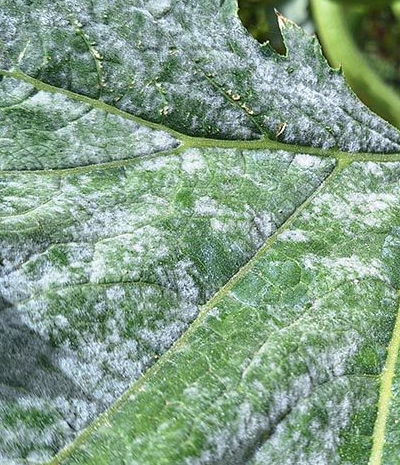
I'm in agreement with @mich1972 and @Noelle in regards to not seeing the powdery mildew on the surface of your leaves. I've placed a sample image of a leaf with powdery mildew. This is what its suppose to look like when it is infected. Would it be possible for you to please take a close-up photo of the leaves of your Red Robbin so that we can analyse what is infecting it?
If you have any other questions we can help with, please let us know.
Eric

- Mark as New
- Bookmark
- Subscribe
- Mute
- Subscribe to RSS Feed
- Highlight
- Report Inappropriate Content
Re: Red Robin Powdery Mildew
Thanks Guys,
Please see attached a clearer picture showing the leaves and spots on the stem.

- Mark as New
- Bookmark
- Subscribe
- Mute
- Subscribe to RSS Feed
- Highlight
- Report Inappropriate Content
Re: Red Robin Powdery Mildew
Hello @Lee777
My apologies, it does appear that your Red Robbin is infected with powdery mildew.
In regards to your question about liquid copper, it works both to protect new growth and to help stop powdery mildew from spreading, but there are a few important nuances about what it can and cannot do once the disease is already visible.
When powdery mildew is already present on leaves, liquid copper does not reverse the damage or completely eliminate the mildew from infected tissue. Instead, it slows the existing infection significantly and stops it from progressing further. The copper creates an environment on the leaf surface that inhibits fungal activity, meaning the affected areas can stabilise rather than continue deteriorating. Existing white patches will not disappear immediately, and severely infected leaves may still decline over time, but the spread will usually stop.
Where liquid copper is most effective is in preventing new powdery mildew from forming. Once applied, any fresh or uninfected growth receives a protective coating that greatly reduces the chance of new spores germinating. This is why gardeners often use copper sprays early in the season or at the first sign of trouble.
If the infection is already heavy, removing the worst-affected leaves and improving airflow around the plant will help the copper do its job more effectively. If the case is mild to moderate, regular applications according to the label will usually bring it under control.
If you need further assistance, please let us know.
Eric

Why join the Bunnings Workshop community?
Workshop is a friendly place to learn, get ideas and find inspiration for your home improvement projects
You might also like


We would love to help with your project.
Join the Bunnings Workshop community today to ask questions and get advice.