The Bunnings Workshop community can help with your home improvement projects.
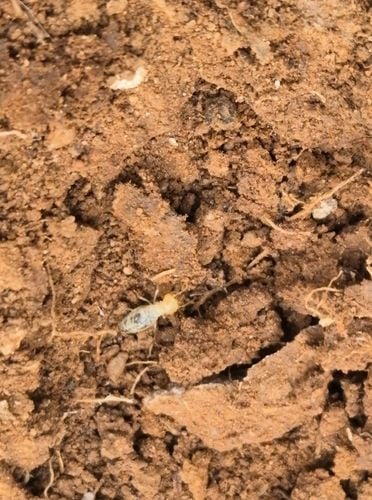
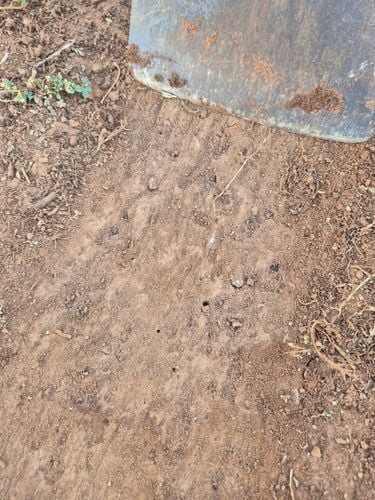
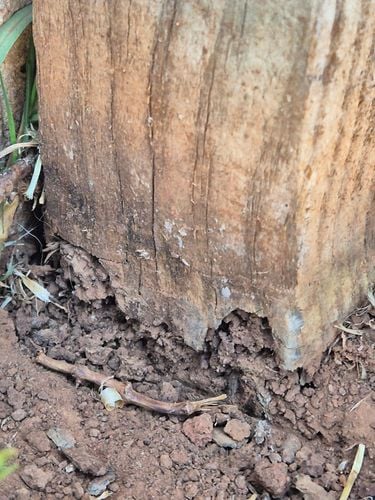
So im trying to determine if i have termites tunnelling through the dirt in my back yard,dont know alot about them so hear me out I'll give some context. We had found abit of wood that had termite damage a few months ago but termites weren't present, that lead me to spotting the bottom of this post which to me looks like termite damage(it is only below surface level tho) but I thought it was weird that they hadn't made there way into the rest of the picket fence. My partner then spotted this white bug while transplanting some grass months later(which im sure is a termite) then after some reading we have found out they tunnel under dirt which i didnt really know, then we have spotted these little holes. From what ive read there tunnels should be deeper then just below surface level, is that correct? And is there a way to tell the difference between these holes in the dirt (which is in the area the termite was) whether they are termite holes or standard ants? Would a bait station help? Or would getting an expert out be recommended?or any other solutions? Dont have Photos of the wood found but pictures are in order of the post, the termite found? And the holes in the dirt in that area.Thanks in advance.
Hello @SGlacken92
Welcome to the Bunnings Workshop community. It's sensational to have you join us, and thanks for sharing your question about termites.
It does look very possible that you are dealing with termite activity. The damage on the bottom of the post has the soft, uneven, hollowed-out appearance that termites typically create when they’ve been feeding below the soil line. Termites often start at ground level because the underground environment lets them stay moist and hidden, so it’s not unusual for the visible parts of a fence or post above soil to appear untouched even when the base is compromised. That pattern alone fits what you’re seeing.
The white insect your partner found also resembles a termite worker. Worker termites are pale, soft-bodied and avoid light, which is why they’re often only noticed when soil or timber is disturbed. You generally won’t see them crawling around in the open like ants, so finding one in loose soil in an area already showing wood damage is a strong additional clue.
The small holes in the soil are a bit harder to interpret. Termites usually travel inside covered mud tubes or within the soil itself rather than leaving open surface holes. These tubes can be deeper than just below the surface, but in loose soils or disturbed areas you can sometimes see small break-through points or ventilation holes. Ants, on the other hand, tend to leave more defined entrance holes, sometimes with small piles of excavated soil. If the holes appear clean, round and more structured, ants are more likely. If they are irregular, collapse easily and appear in an area where you’ve already found termite workers, it certainly doesn’t rule termites out.
Given that you have confirmed wood damage, an actual termite sighting, and signs of soil disturbance around timber, a bait station could help but only as part of a broader plan. Bait stations take time and require monitoring, so they are best used when you are confident about where the activity is and want to suppress or eliminate a colony over weeks or months. Because termites can cause structural damage and because identifying the exact species and level of infestation really matters for choosing the right treatment, having a licensed pest professional inspect the site is a very good idea. They can confirm the species, locate nests or moisture sources, and recommend whether baits, chemical soil treatments or post replacement is appropriate.
If you need further assistance, please let us know.
Eric
Workshop is a friendly place to learn, get ideas and find inspiration for your home improvement projects
We would love to help with your project.
Join the Bunnings Workshop community today to ask questions and get advice.