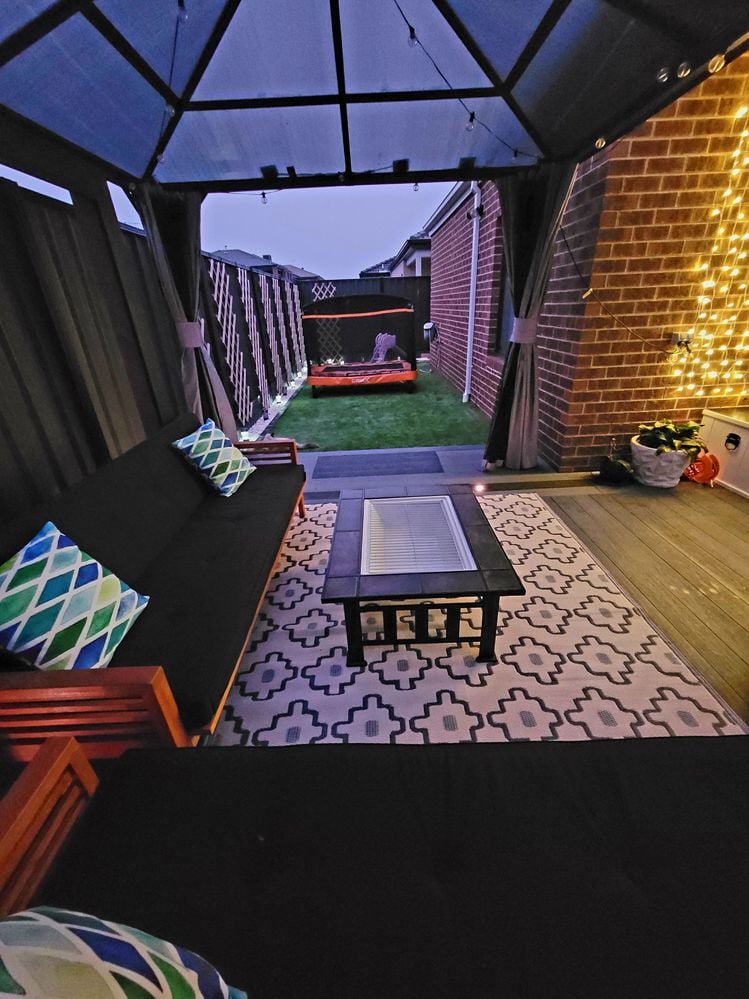
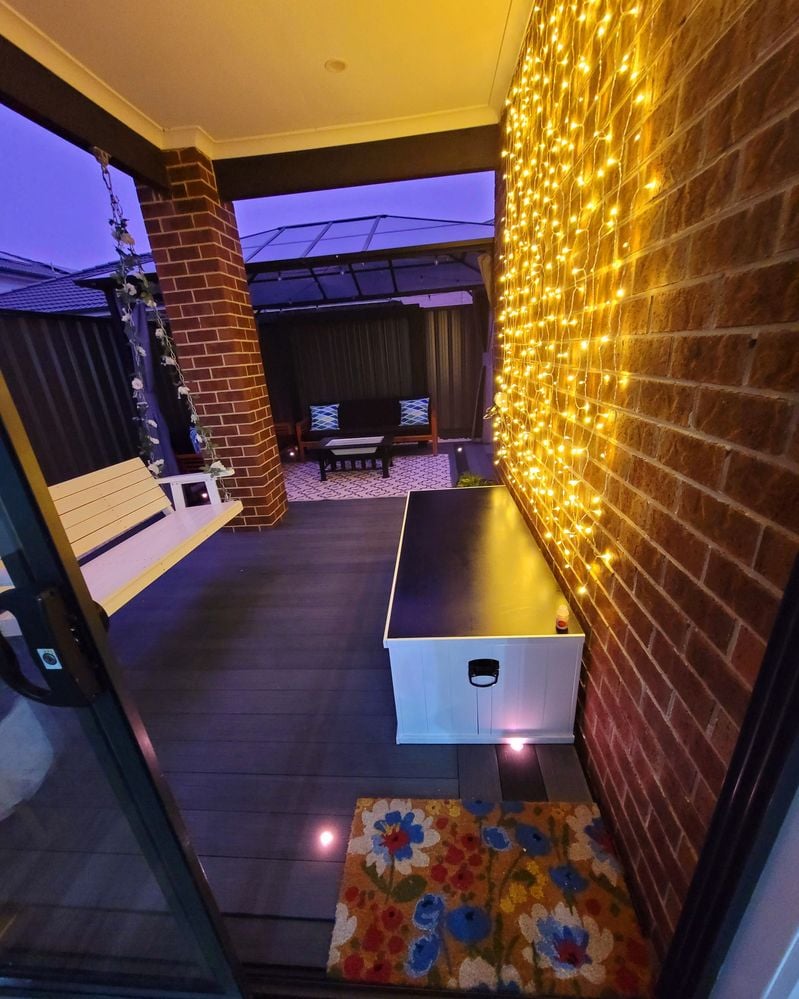
The project
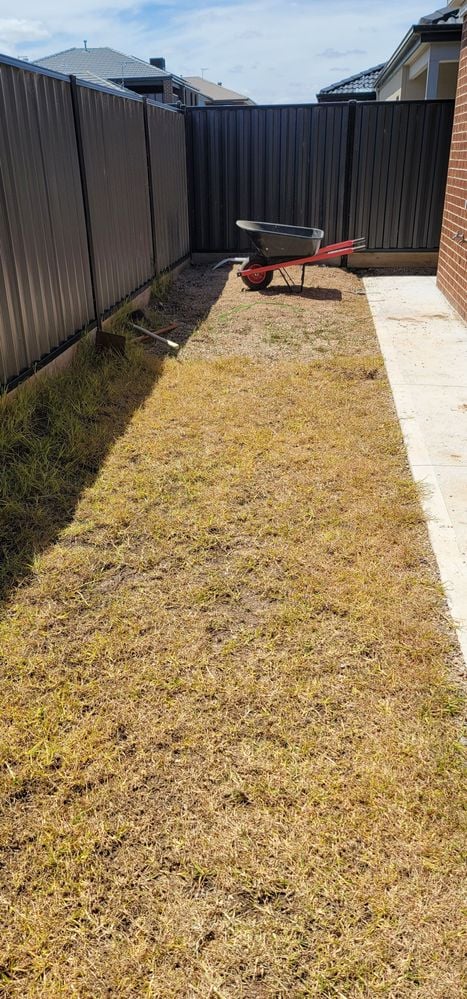
We relocated to a new property, but the backyard was in complete disarray. Weeds had spread all over, completely taking over the grass. We were shocked by the quotes we received, ranging from $20k to $30k for building a deck and installing artificial grass. As a result, we decided to tackle the project ourselves.
This was our first DIY endeavour, so it was a completely new territory. I spent several months researching online and reading books to learn how to build a deck. As a software architect, I tend to be thorough in the design process.
This journey took a year, with extended breaks due to weather and other personal commitments. However, I am pleased that it was finally completed and provided a lot of experience along the way. I am thankful to the Bunnings community for their guidance and support throughout the project.
Steps
Step 1
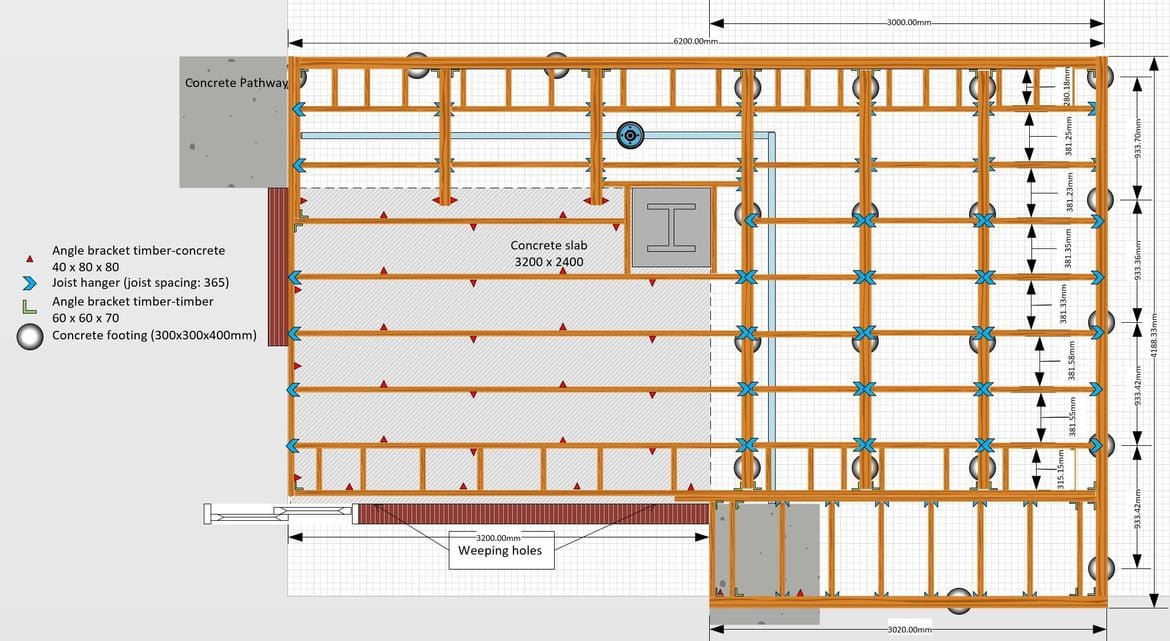
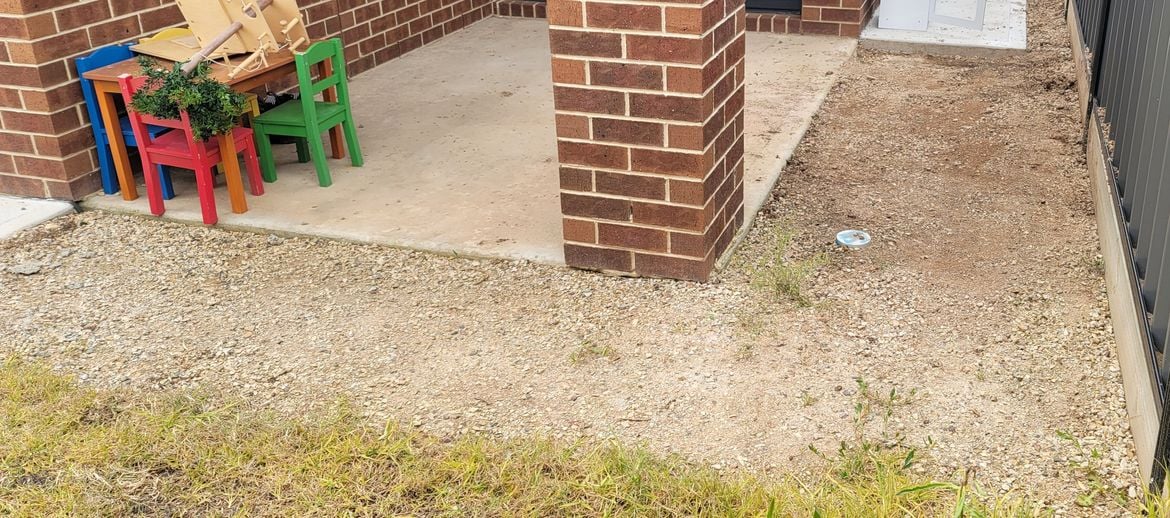
Profiling and digging. The size of the alfresco area is 3.2m x 2.4m but we decided to extend the deck to the backyard fence, increasing the size of deck to 6.2m x 3.33m with 2cm clearance on concrete and 10cm clearance on the soil. The deck was supposed to meet two walls with 2cm clearance to allow ventilation for weep holes. A small deck was added to the plan later to serve as entrance to the grass.
Step 2
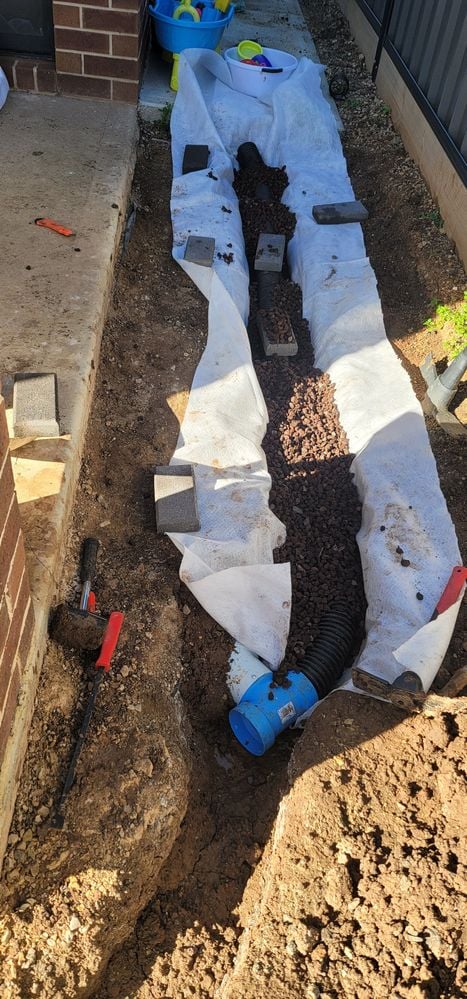
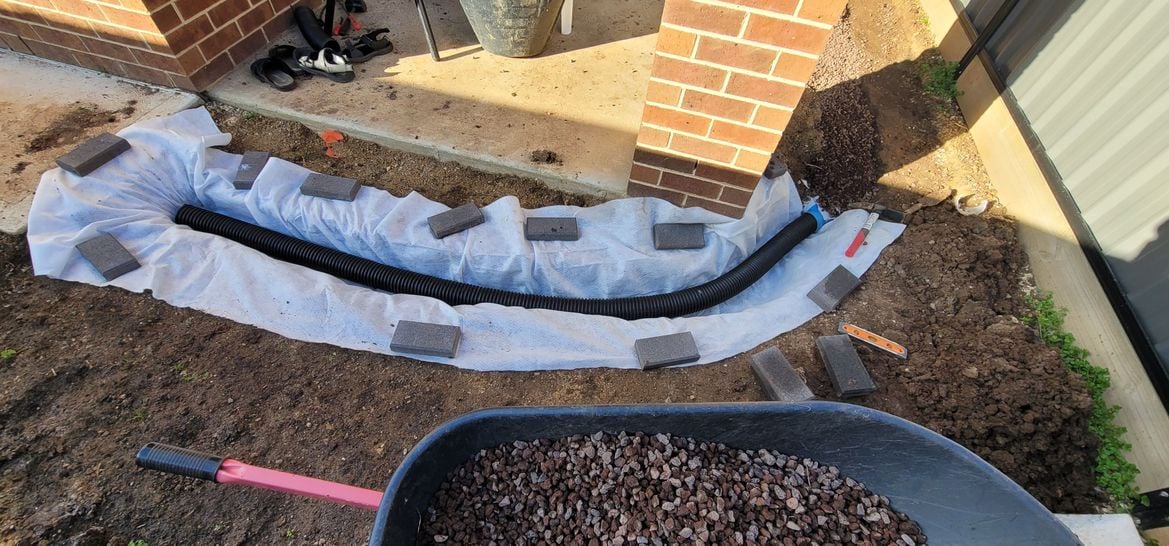
Drainage. A channel was excavated on both sides of the alfresco, ensuring it was wide and deep enough for the ag pipe and drainage stones. Geotextile fabric was laid down, followed by a thin layer of drainage scoria before placing the ag pipe. Fortunately, a stormwater drain was located at the corner where both ag pipes met, allowing for an easy connection using a stormwater snap tee. Another layer of scoria was added, and the geotextile fabric was wrapped around the pipe. Finally, the channel was filled with the remaining scoria.
Step 3
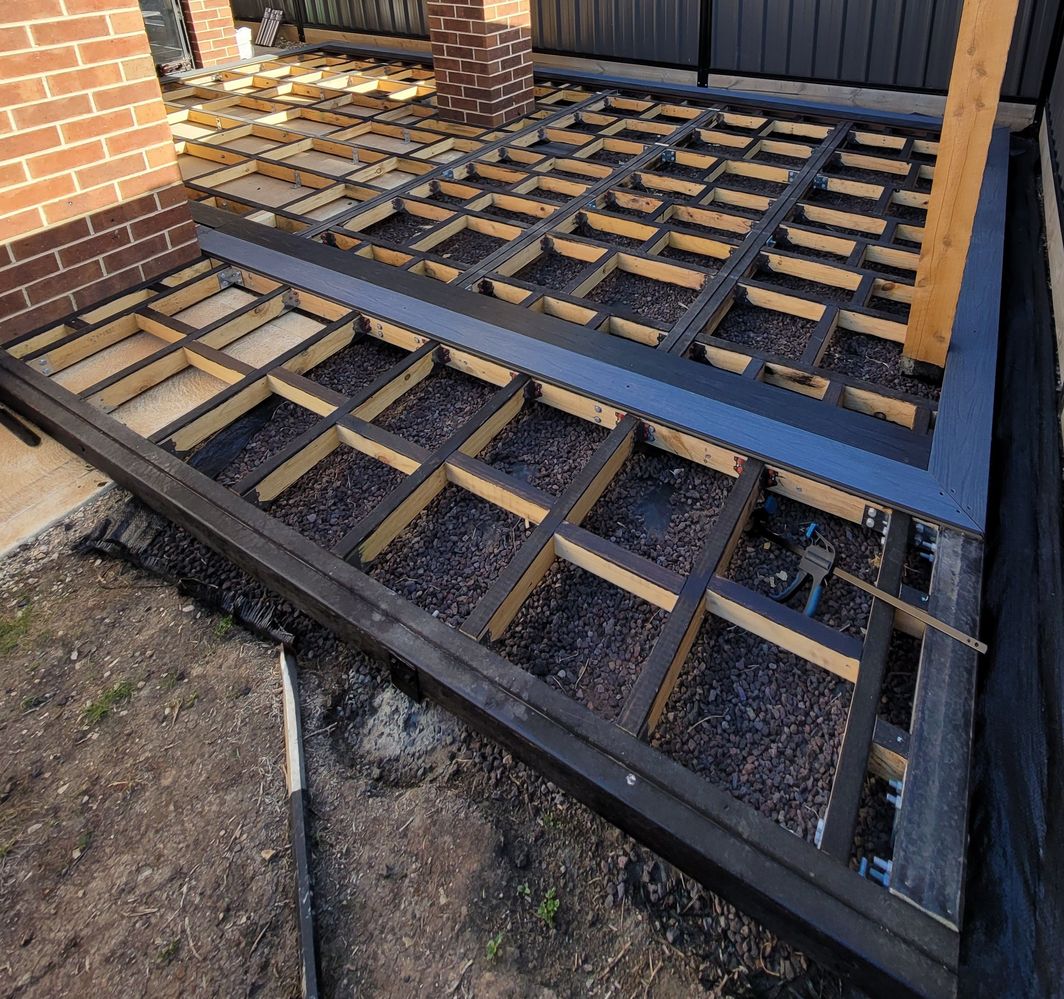
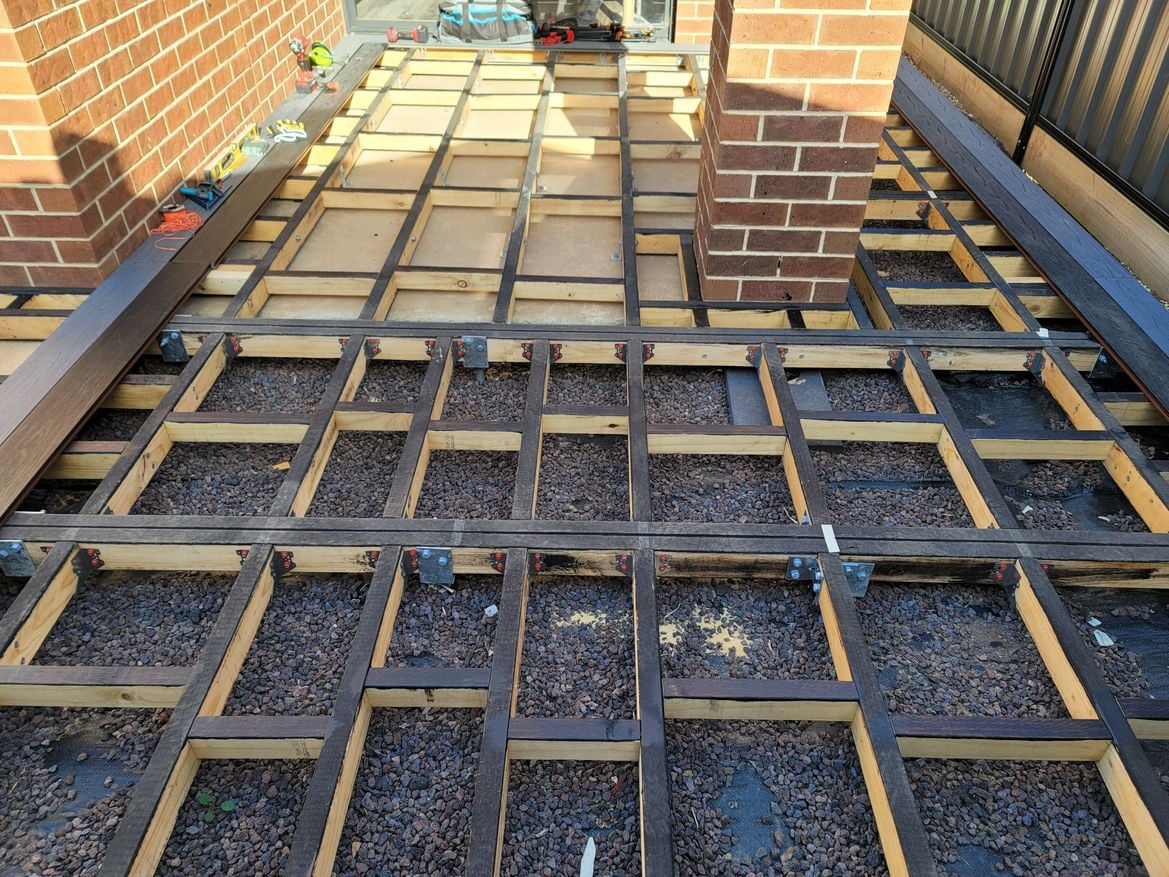
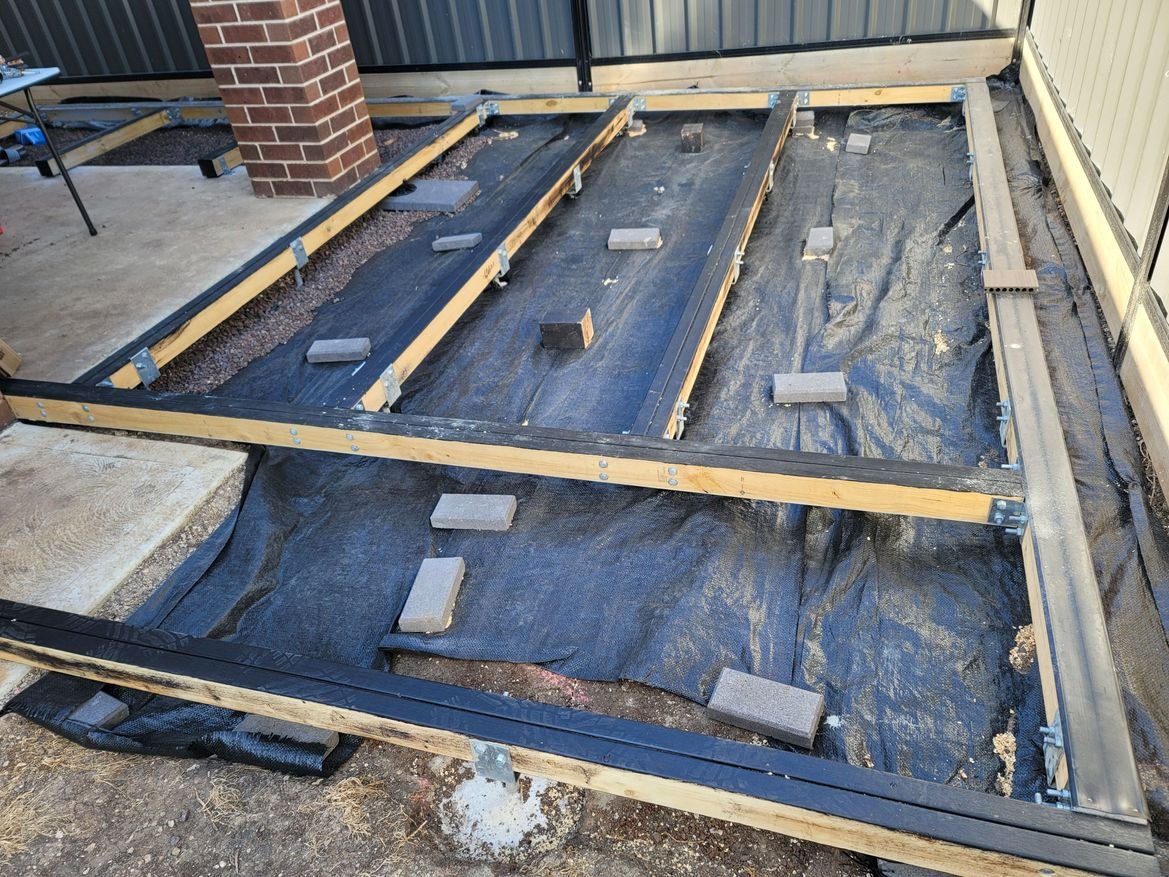
Frame. Galvanized stirrups were used as stumps, set into 400 x 400mm holes filled with quick-set concrete. A weed mat was laid down, followed by a layer of drainage scoria. The bearers were constructed using two 90 x 45mm treated timber pieces, glued and nailed together.
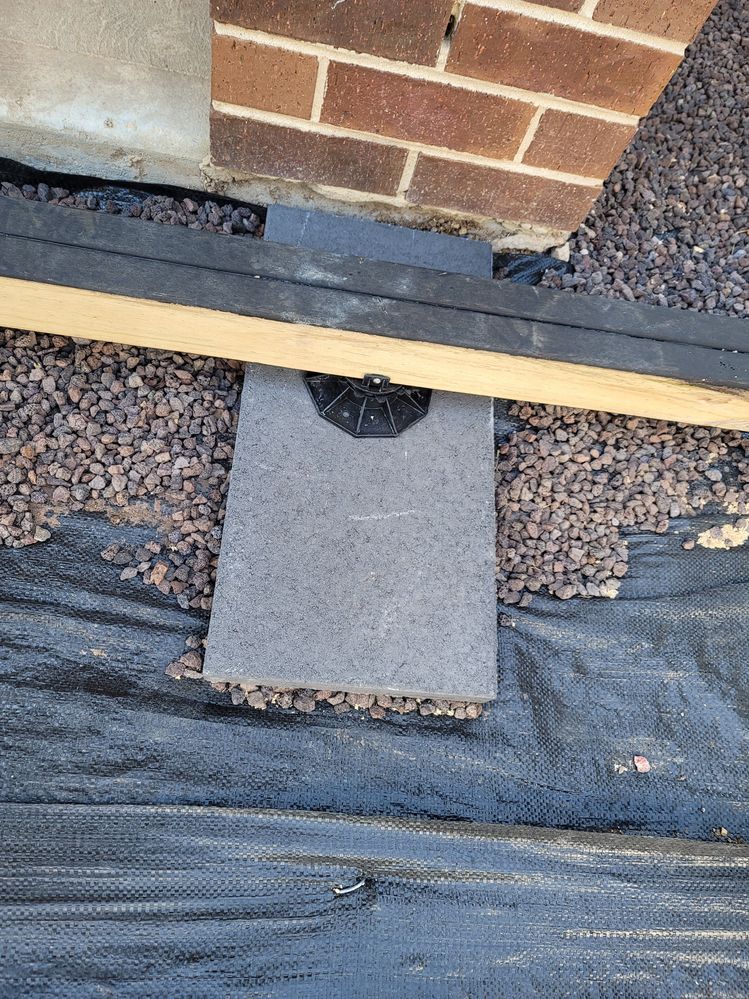
I got stuck when one of the stumps ended up being over the ag pipe channel, which was resolved by using a large paving stone and a pedestal feet. Since it was a low-level deck, the bearers and joists were installed at the same level. The frame was secured to the alfresco floor with angle brackets and dynabolts. To enhance durability, the surface of the frame was coated with a bitumen membrane.
Step 4
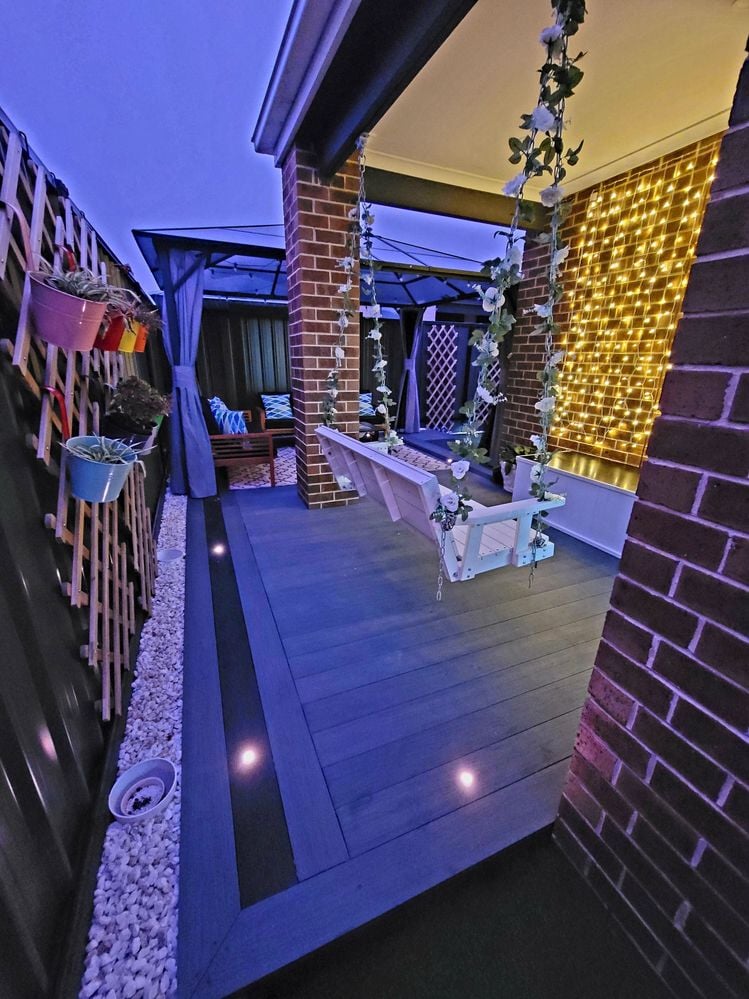
Decking Boards. The decking boards were mitred and installed to create a picture frame. Holes were drilled to accommodate decking lights. After that, the boards were cut to size and secured using decking clips.