
The Bunnings Workshop community can help with your home improvement projects.
- Bunnings Workshop
- >
- Discussion
- >
- Garden
- >
- Re: lemon tree disease
lemon tree disease
- Subscribe to RSS Feed
- Mark Topic as New
- Mark Topic as Read
- Float this Topic for Current User
- Bookmark
- Subscribe
- Mute
- Printer Friendly Page
Share


- Mark as New
- Bookmark
- Subscribe
- Mute
- Subscribe to RSS Feed
- Highlight
- Report Inappropriate Content
lemon tree disease
Hi all. Lemon tree has suddenly developed some sort of disease. Leaves and stems are displaying white and brown spots, whilst the lemons are also showing the same plus their shape is becoming very distorted. I’m unable to narrow down the disease from google searching. The tree otherwise has lovely green growth and still looks healthy. I am concerned however that it touches up against our lime tree and could potentially spread the disease. Any advice would be great. Photos attached below. Thanks


- Mark as New
- Bookmark
- Subscribe
- Mute
- Subscribe to RSS Feed
- Highlight
- Report Inappropriate Content
Re: lemon tree disease
Hello @acicco
Thanks for the clear photos, they help a lot. What you’re seeing isn’t a disease in the fungal or bacterial sense, it’s a heavy scale insect infestation, most likely a mix of brown scale and citrus snow scale. The white and brown bumps on the stems and leaves are the insects themselves, not spotting from infection. They attach to the plant, suck sap, and excrete honeydew, which weakens growth and causes secondary problems.
The distorted, knobbly lemons are a classic result of scale feeding while the fruit is very young. When sap flow is disrupted early, the fruit keeps growing but in an uneven, misshapen way. That’s why the tree can still look lush and green overall, yet the fruit and newer growth look odd. Citrus are surprisingly tough and can stay green for a long time even while under pest stress.
The good news is that this is not a contagious disease in the way citrus canker or greening are, but scale insects can spread to nearby citrus, especially when branches touch, so your concern about the lime tree is valid. Ant activity often makes scale worse, because ants farm them for honeydew and protect them from predators, so check for ants running up the trunk as well.
Treatment is very doable. Prune out the worst affected stems first to reduce numbers, and dispose of them in the bin, not compost. Then thoroughly spray the entire tree, especially stems and leaf undersides, with white oil or eco oil. Coverage matters more than strength, as the oil works by smothering the insects. Repeat spraying every 7 to 14 days for several rounds, because new scale will hatch. If ants are present, put a barrier or ant bait around the trunk or at the base to stop reinfestation. Once the scale pressure drops, new fruit should form normally, though the current distorted lemons won’t improve and are best removed.
Keep an eye on the lime tree and give it a preventative oil spray as well, even if symptoms aren’t obvious yet. With consistent treatment, the lemon should recover well, and there’s no need to remove the tree.
Please remember to wear personal protection such as gloves, goggles and a mask when spraying your plants.
If you need further assistance, please let us know.
Eric

- Mark as New
- Bookmark
- Subscribe
- Mute
- Subscribe to RSS Feed
- Highlight
- Report Inappropriate Content
Re: lemon tree disease
Amazing thank you Eric that’s a very comprehensive reply. I will start with the oil spray and removing heavily diseased branches.
Final question im sorry, it certainly has a lot of ant activity. Is there a barrier or option you personally prefer to help reduce them at the base?
thanks again
- Mark as New
- Bookmark
- Subscribe
- Mute
- Subscribe to RSS Feed
- Highlight
- Report Inappropriate Content
Re: lemon tree disease
Hello @acicco
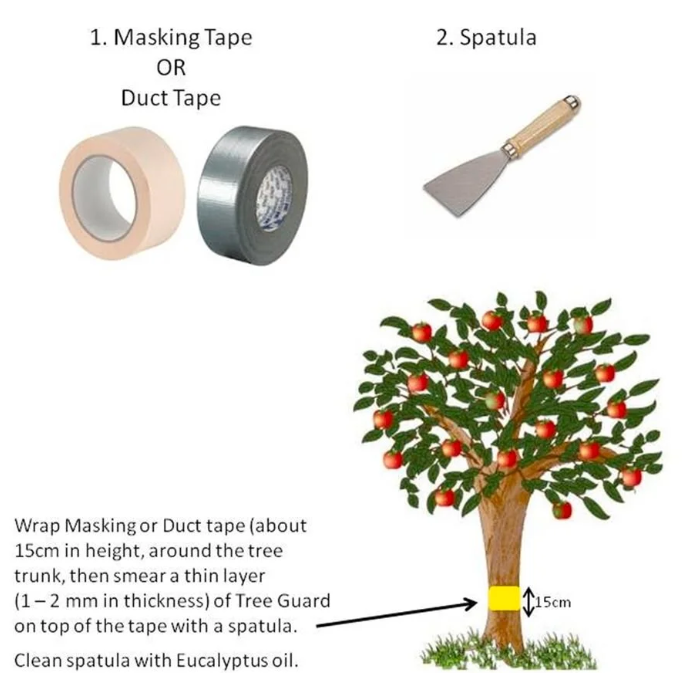
I suggest using Go Natural Tree Guard For Codling Moth. It is an environmentally friendly way to control and protect trees all year round from crawling insects that must climb tree trunks to feed, mate or deposit eggs into fruit, leaves and stems. It will trap any crawling insect from climbing up or down a tree trunk, including codling moth, elm leaf beetle, cherry and pear slug, ants, earwigs, moths, caterpillars, worms and weevils. It does not use pesticides or harmful chemicals.
If you need further assistance, please let us know.
Eric

Why join the Bunnings Workshop community?
Workshop is a friendly place to learn, get ideas and find inspiration for your home improvement projects







We would love to help with your project.
Join the Bunnings Workshop community today to ask questions and get advice.