The Bunnings Workshop community can help with your home improvement projects.
Hi All.
The gutters on one side of my house are overflowing. During the last big storm water overflowed onto the eaves. Not ideal. I’ve been doing some investigation with the intent of doing some DIY and looking for some feedback/thoughts before moving forward and to ensure I've thought as much as possible.
Context:
Questions I currently have:
Photos below.
Thanks!
Gutter Looking West
Gutter Looking East (Sag Visible Near Brick)
Gutter Bracket
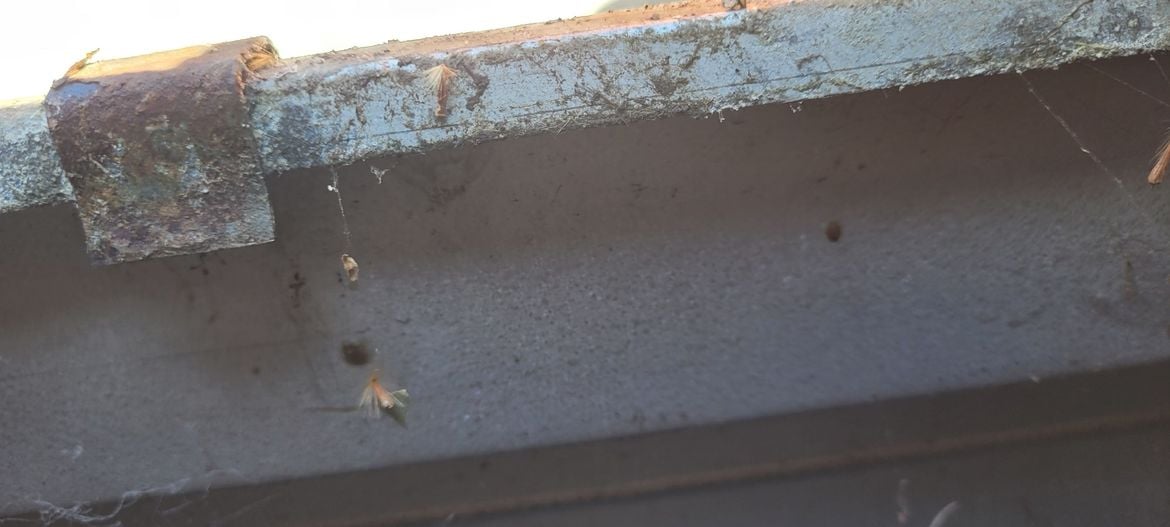
Gutter (Crimped) /Fascia Interface
Gutter Bracket (Rear) Connection to Channel Profile
Hi @mblewis,
Welcome to the Bunnings Workshop community and thank you for your question.
The first thing we should do is try to identify the profile of your gutter to confirm what brackets are suitable. Most basic gutters are a quad profile like those shown here - LYSAGHT® | QUAD.
Looking at the outside edge, I suspect it could be a Quad Square Bead profile, which is common in Western Australia. Were you perhaps in WA?
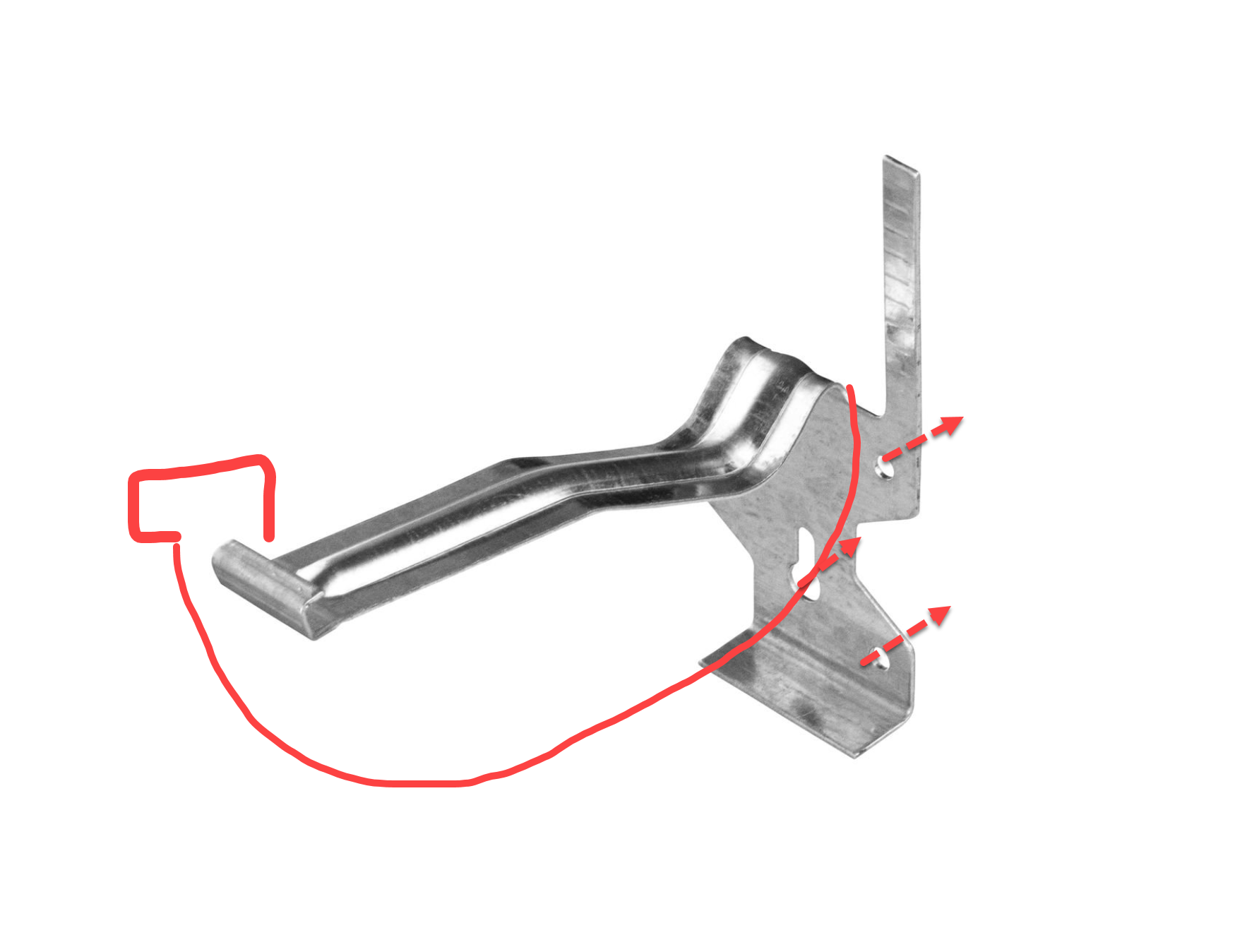
If it is as I suspect, then these Icon Plastics Zinc Gutter Brackets would be the type of brackets you are looking for.
The bracket is fixed in place on the fascia at the correct height, then the slot on the outside of the gutter is slipped over the bracket, and it is rolled under to set the gutter in place.

In your situation, it seems like you are going to need to move or add additional brackets to the centre of the gutter so that it is better supported and will not sag. Typically, gutter brackets are spaced around 600mm apart.
To adjust this, you will have to take off the gutter and either add more clips or move the ones that are there to suit. To remove the gutter, you need to grab the underside of it and roll the back edge down and away from the fascia. You can then slip the outside edge of the gutter off the outside edge of the bracket. Once the gutter is off, you will have access to the brackets' fixing points so you can move them sideways, adjust them up or down or add more.
In your situation, it makes sense to have the centre of the gutter be the highest point so that water flows outwards towards the downpipes. Eave gutters, like yours, require a minimum fall of 1:500, which works out to 2mm per metre.
Using your laser level, you will need to adjust the brackets to meet this fall. If you jump on Youtube, you should be able to find some videos about setting brackets to height.
Allow me to tag our experienced members @Dave-1 and @Nailbag to see if they have further advice they can add.
Let me know what you think and if you have further questions, please don't hesitate to ask.
Jacob
Afternoon @mblewis
@JacobZ 's advice is also the way I would be following. That dip in the middle looks like it lines up with that small shed.aivery? Maybe someone has used the shed as a stepping point to get on or off the roof and the gutter has taken part of the load? I have had my gutters full of leaves and water plus mud, but generally wouldnt think that would bend the gutter.
Dave
Hi @JacobZ / @Nailbag / @Dave-1
Thanks for taking the time to provide some thoughts and feedback.
Yes, I am based in Perth, WA and the profile is the Quad Square Bead, thanks for the link and resource! I'm assuming the long tab with notches represent lengths (5mm each?) to assist with positioning and can be trimmed off after installation.
Thanks! The down-pipes were flushed out as part of the gutter clean.
The "aviary" is actually a garden bed and was built after we purchased the house. The sag would've been pre-existing and I suspect it could've occured during the previous owner's occupation, who had installed awnings along this side attached to the gutters and fence.
Rightio! Bring on summer or a good stretch of good weather and I'll get cracking ![]()
Hello @mblewis
Yes, the long tab with notches is used for positioning. The tab can be cut, if necessary, but I suggest leaving it uncut so that it does not open up the galvanized coating.
Eric
Thanks @EricL
Good point. Bending them backwards would be the next best option, I'd imagine, otherwise the tabs would conflict with the tiles...?
Hi @mblewis
Yes, bending the tab would be a much better option if possible. I suggest doing a test fit to make sure everything lines up and you'll know where to make the bend.
Eric
Workshop is a friendly place to learn, get ideas and find inspiration for your home improvement projects
We would love to help with your project.
Join the Bunnings Workshop community today to ask questions and get advice.