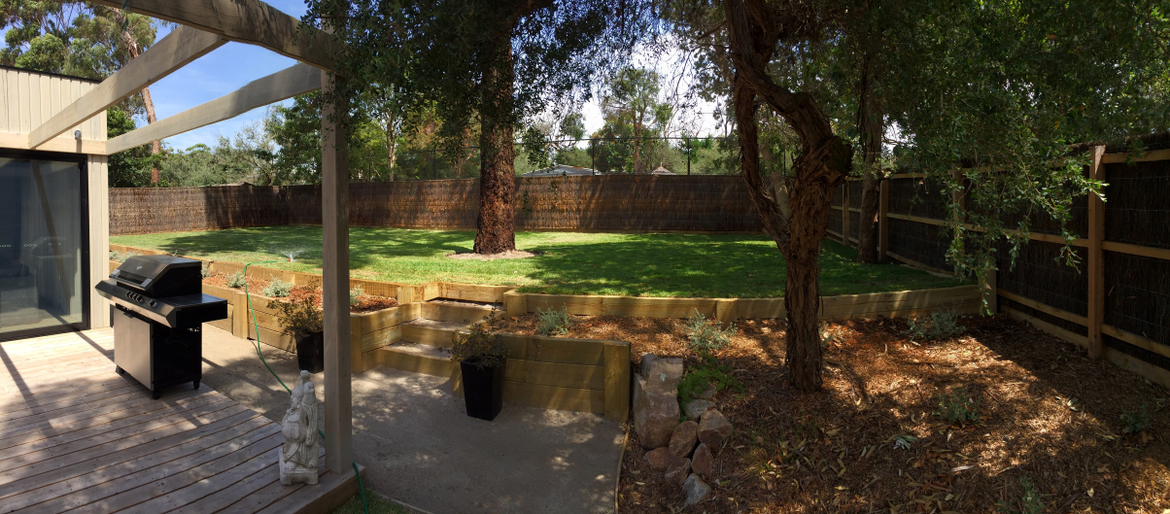
A back lawn muddied by rain and foot traffic was renewed by drainage channels and fresh turf.
The project
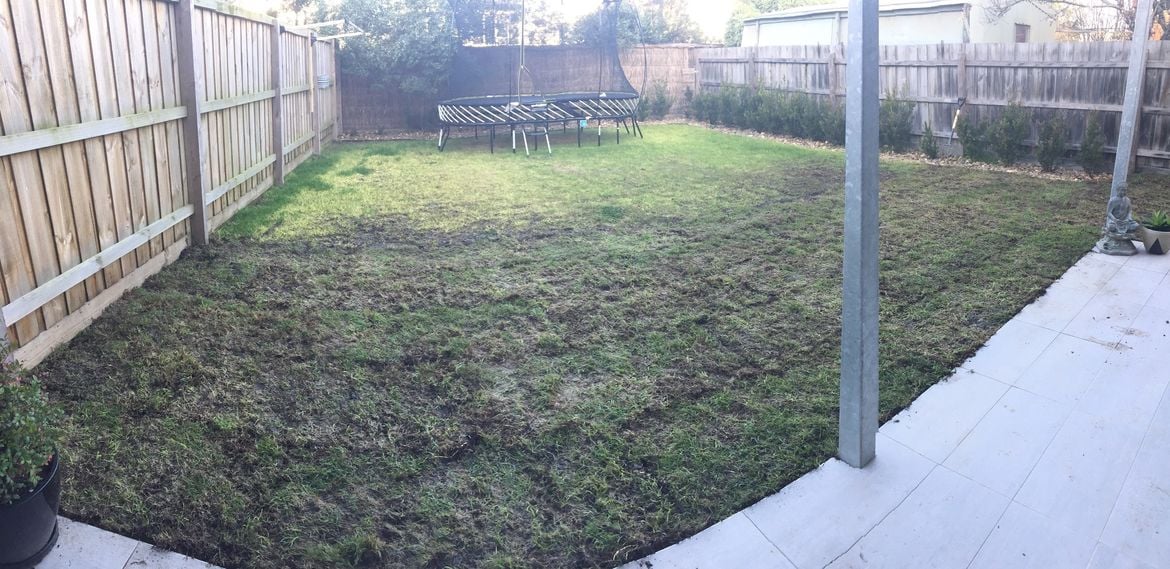
It's our first winter in a new rental and the lush green back lawn that greeted us when we moved in this summer is now a mud pit from the edge of the patio and out for a couple of metres. We had tradespeople come to fix our patio ceiling issues, and the ladders and foot traffic have made the matter much worse.
As it's a rental, I was looking for easy solutions to try to improve the area so the kids can at least step over it en route to the trampoline. In the end, it involved a little more than sticking a pitchfork into the lawn over and over in an attempt to aerate. When the pitchfork sunk effortlessly all the way down without resistance, I knew I had a bigger issue. New drainage and connection to the existing grated drains meant that this project was beyond me. It was time to call in the experts.
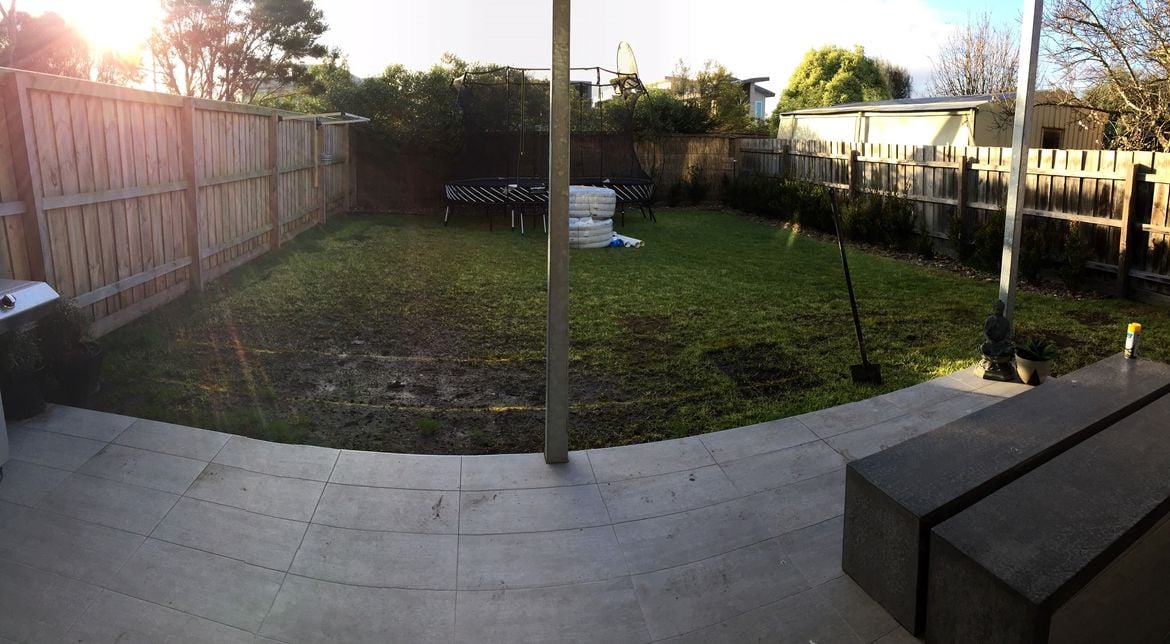
A muddy mess with the drainage lines marked.
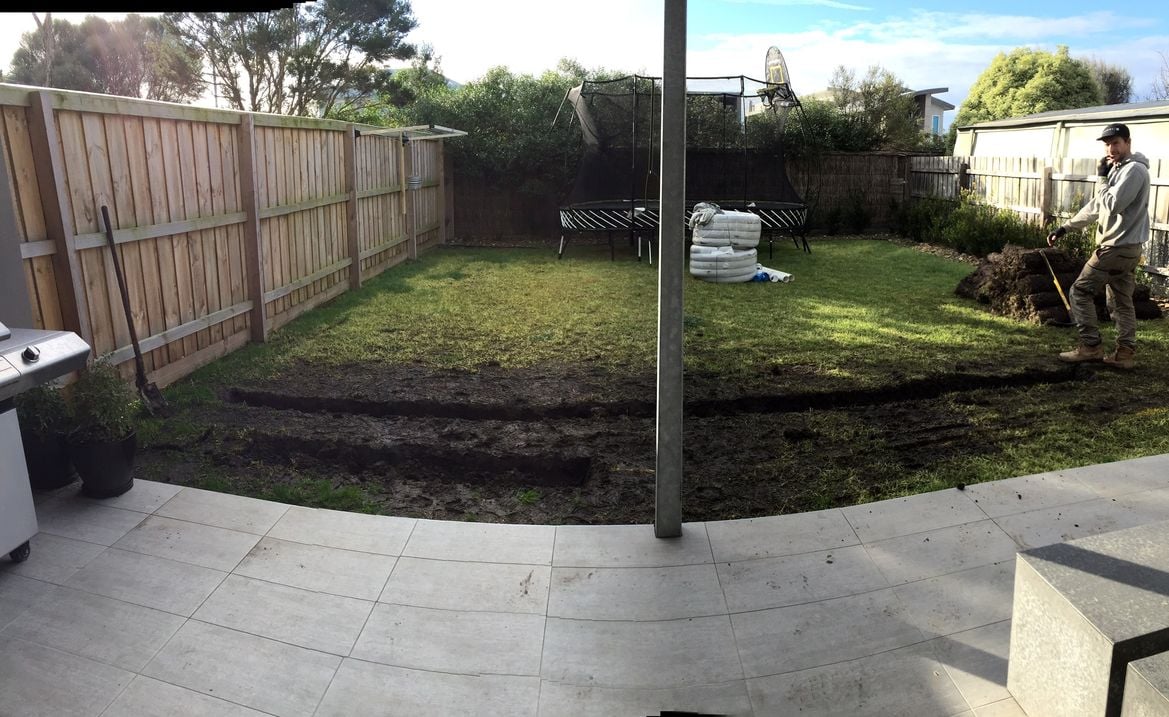
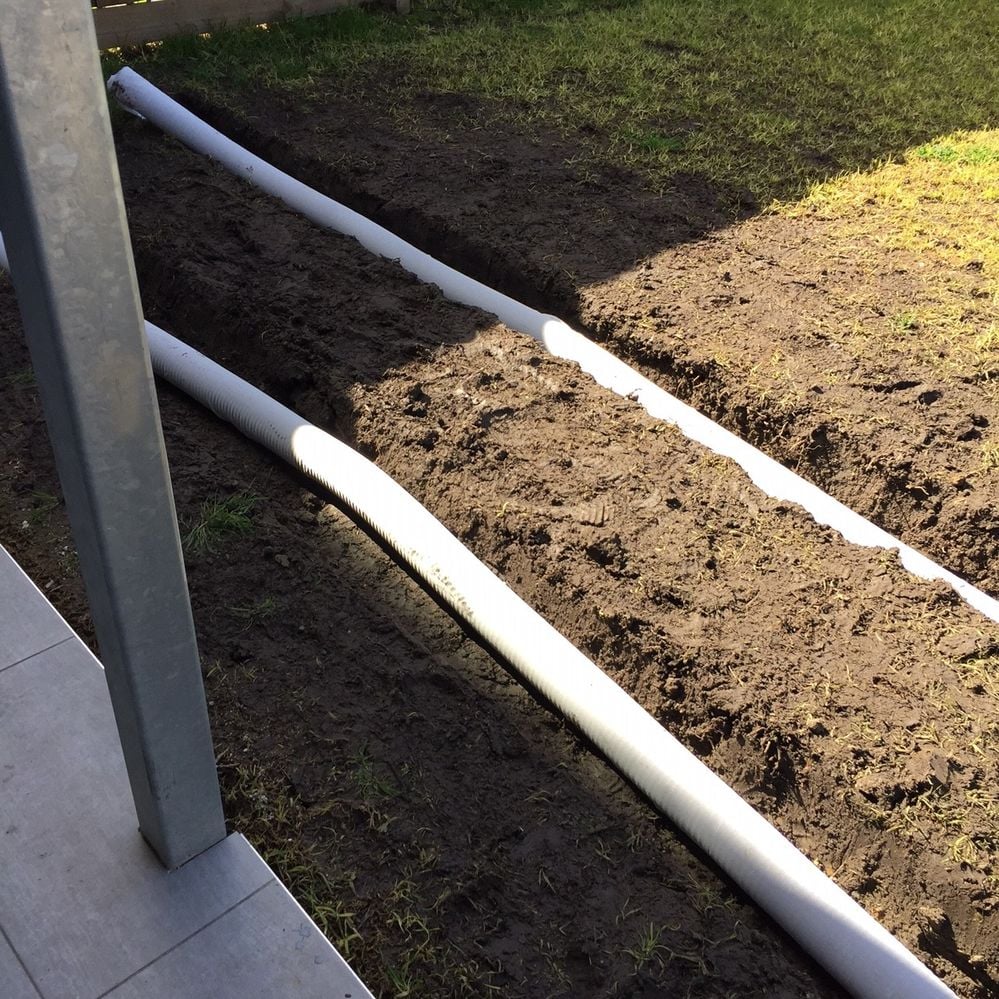
Drainage channels being dug out. The left end is shallow, and the right end deeper, so water will drain to an existing draining point.
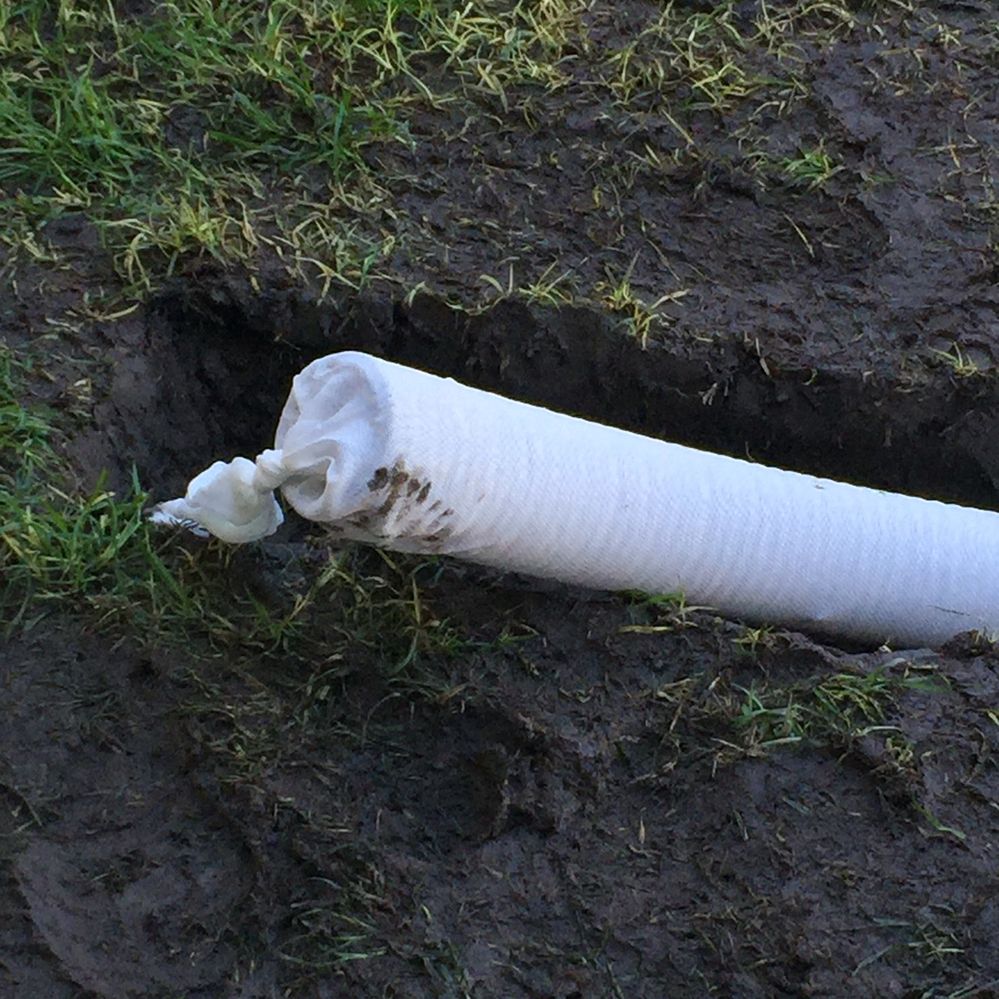
Agi pipe with a filter sock laid into the drainage channels.
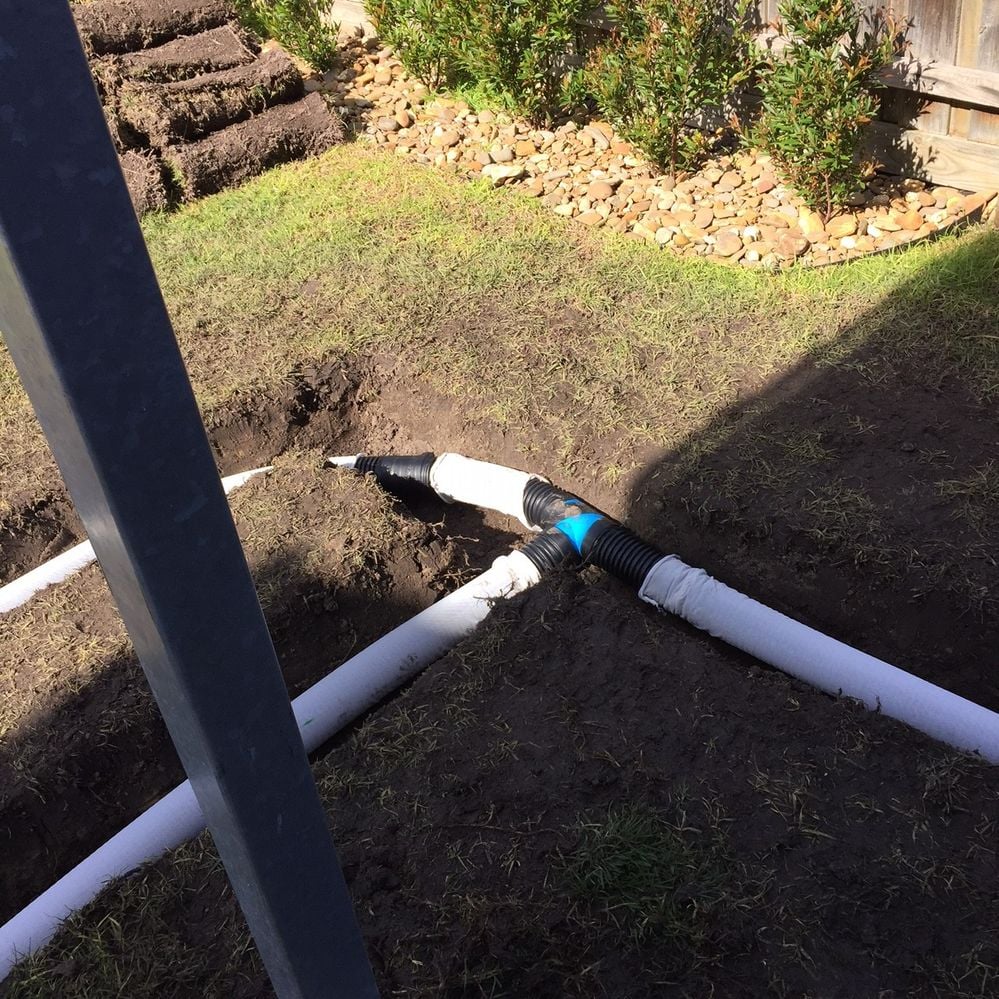
Intersection of the pipes as they lead around to the existing drainage pit.
With Agi pipe laid, drainage gravel was poured into the channels and top soil was spread across the top.
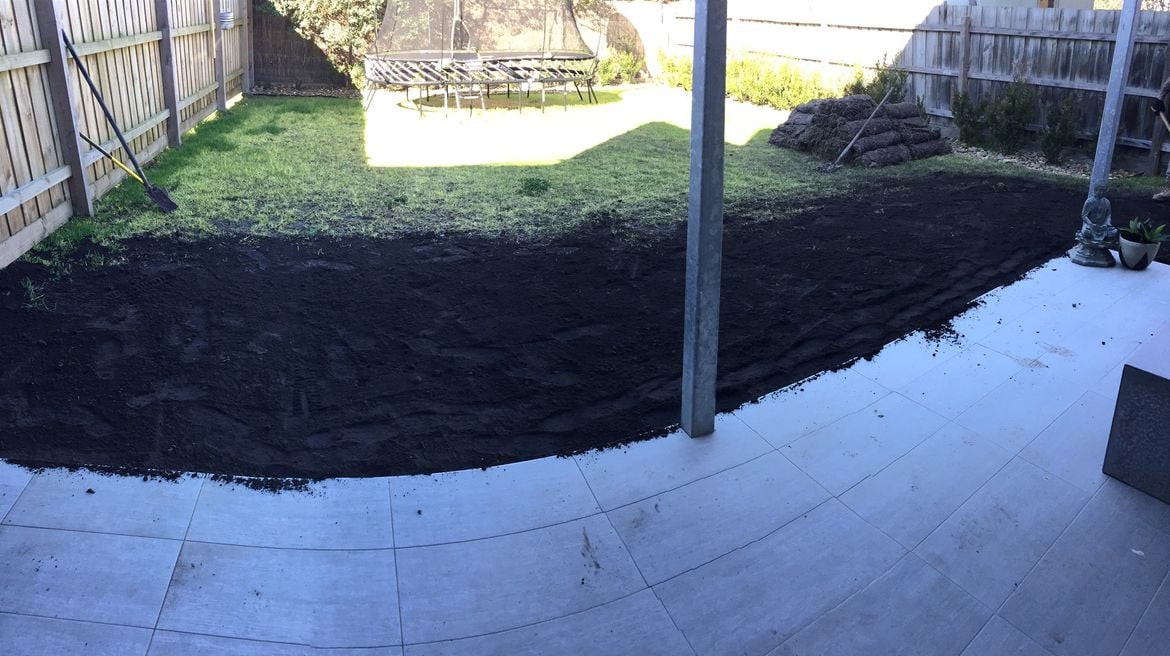
We lay fresh turf above the existing ground level so that the grass is flush with edge of patio. Previously, the patio floor sat about two inches higher than the grass. The kids can now easily run over to the trampoline.
Before and after
More backyard projects
For more backyard projects, including Ben's second back lawn makeover, check out our Top 10 most popular garden makeovers.