Bunnings Workshop is under maintenance and read-only.
The Bunnings Workshop community can help with your home improvement projects.
Hi everyone,
I’m after some advice on building a low composite deck and would really appreciate a second set of eyes before I start.
Project Overview:
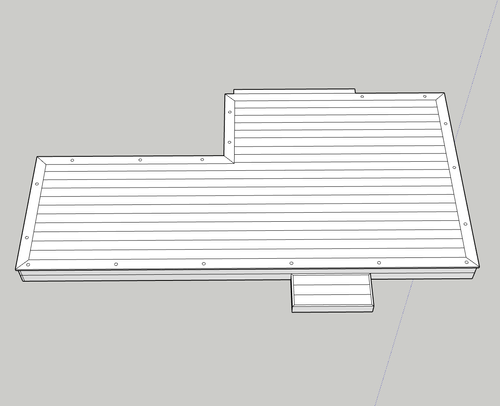
Deck type: Composite decking
Total area: ~14.8 m²
Height: Less than 400 mm off the ground
Deck board thickness: 24 mm
Joists & beams: 45 × 140 mm H3 treated pine
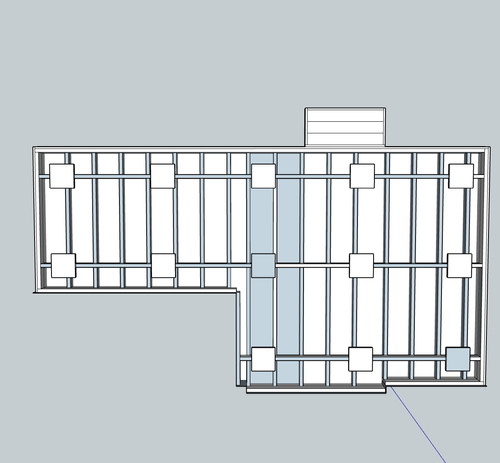
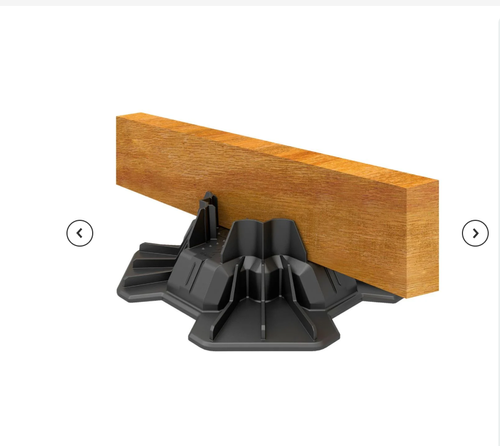
Supports: Tuff Blocks (under the beams)
Based on my calculations, the deck structure will be around 354 mm high, assuming the Tuff Blocks raise the beams by 50 mm.
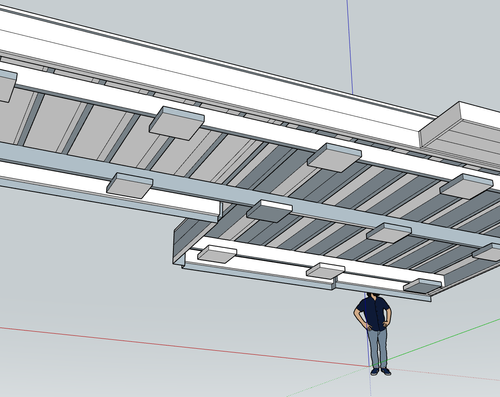
I’ve created a SketchUp model where the squares represent the Tuff Blocks (attached for reference).
What Resources I have:
Joist hangers:
Pryda Joist Hanger – to suit 45 × 140 mm
VUEPRO 45 × 140 mm Stainless Steel Joist Hanger
(I ordered Pryda but they didn't have enough so I was supplemented with the VUEPRO.)
House construction: brick veneer (I'm pretty sure)
I’ll still be supporting the house side of the deck with Tuff Blocks (not relying on the brick for load).
My Questions:
Deck Height:
Because I need the deck to finish at a specific height relative to my back door, what is the best way to establish my starting point?
I understand the theory of measuring down from the finished deck height (deck boards + joists + beams + Tuff Blocks = ~354 mm), but I’d appreciate guidance on:
Where to mark levels
Whether to set ledgers or supports first
Any tips to avoid building too high or too low
Base for Tuff Blocks
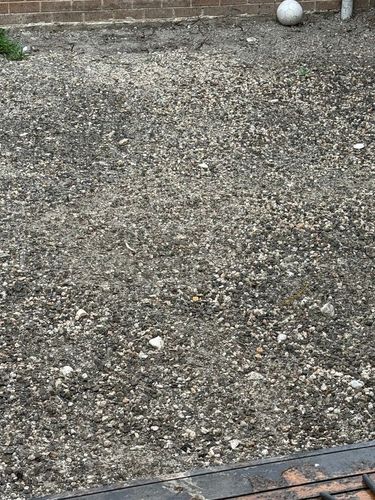
In the attached photo, you’ll see the existing crushed rock base.
If I compact this thoroughly using a hand tamper, is that sufficient for laying the Tuff Blocks?
Would you recommend adding more crushed rock or using a plate compactor instead?
Ledger:
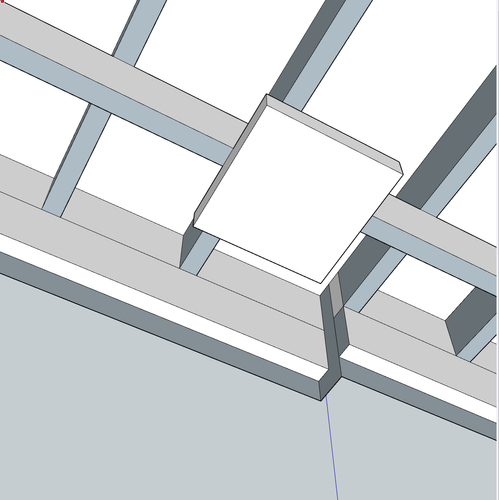
I’m planning to use two ledgers on the house:
One ledger for the beams
One ledger above it for the joists
My thinking is that this will:
Help everything line up cleanly
Make levelling easier
Allow joists to be hung directly from the top ledger
I’ve attached a photo showing how I’m imagining the ledgers stacked.
Is this approach sound?
What’s the correct way to waterproof and flash the ledgers against a brick veneer wall?
Should there be a gap, membrane, or flashing detail I need to include?
What screws or anchors should I use to fix the ledger to a brick veneer house?
Given that the deck is still supported by Tuff Blocks on that side, what fixings are appropriate?
Joists + Beams:
Should I apply joist tape:
On top of the beams?
On top of joists?
On the ledgers where joists/beams connect to the house?
What screws or nails should I use for:
Pryda joist hangers
VUEPRO stainless joist hangers?
Do I need any additional brackets or connectors where:
Joists sit on beams?
Beams sit in Tuff Blocks?
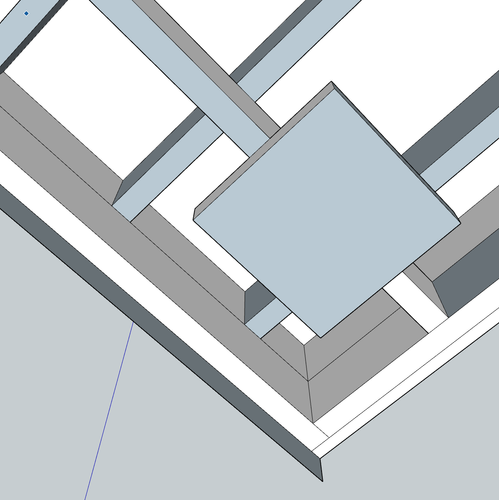
At corners (e.g. where a ledger meets an end joist or perimeter beam), should I be using:
Angle brackets?
Structural screws only?
Are there recommended fixings for these junctions?
I’ve attached a photo showing an example of where these members intersect.
Thanks so much in advance! I’m trying to plan this properly before I start cutting timber. Any advice is appreciated!

Hello @MadylinGamble
Thank you for sharing your question about your decking project.
Please note that because you are linking your deck to your house and it is larger than 10sqm, I suggest checking with your local council regarding its rules and regulations to see if a permit is required. If a permit is required, I suggest engaging the services of a draftsperson or engineer to draw up a certified plan that you can submit to council.
However, please allow me to try and answer some of your questions.
I suggest starting at the back door, because that’s the one height that really matters. I propose deciding exactly where you want the top of the deck boards to finish in relation to the door, usually with a small gap underneath so water can’t get inside. Make a clear mark at that height on the wall or door frame. That mark becomes your reference point. From there, measure straight down the full thickness of the deck structure until you reach where the supports need to sit, and mark that as well. Take the time to carry that level across the area with a long spirit level or string line so everything lines up properly.
Once your levels are marked, I then propose setting the ledger or supports to match those marks rather than guessing from the ground up. If you’re fixing to the house, setting the ledger first makes everything else much easier because the height is locked in. I recommend double-checking the height at the door and do a quick dry run. That small pause to recheck is what stops the deck ending up a little too high or too low.
In regards to your foundation, I suggest adding more crushed rock and using a plate compactor to level the area. Please double check with your engineer regarding your wish to use TuffBlocks. I don't think it's necessary to have two ledgers as there won't be a lot of connections added to the bottom ledger.
Part of your questions will need to be answered by an engineer or drafts person:
Should I apply joist tape on top of the beams and joist? Yes, you can apply joist tape to the beams and joist. The third question will be covered by your engineer's answer to waterproofing the ledger.
What screws or nails should I use for Pryda joist hangers and VUEPRO stainless joist hangers. I suggest using only the nails or fixings the manufacturer has recommended for the Pryda that would be the Pryda Nails or Pryda 35mm Screws. For the VUEPRO that would be the VUEPRO 30 x 2.8mm 500g Stainless Steel Connector Plate Nails - 260 Pack.
I'm sorry if I can't answer all your questions, but in the interest of safety and compliance, those other questions must be answered officially by either a draftsperson or engineer.
If you need further assistance, please let us know.
Eric
Workshop is a friendly place to learn, get ideas and find inspiration for your home improvement projects
We would love to help with your project.
Join the Bunnings Workshop community today to ask questions and get advice.