The Bunnings Workshop community can help with your home improvement projects.
Hello! 😊
I'm new here, but this community has already been an amazing source of knowledge—so thank you all!
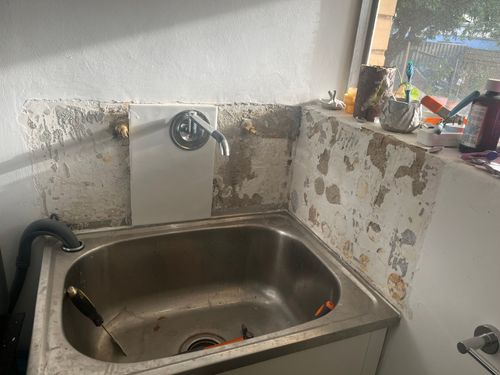
I'm currently renovating my laundry. I'm keeping it simple and not removing the floor tiles since they're in decent condition. However, I did have to remove a few awkwardly placed wall tiles behind the sink to install a new benchtop and tile a backsplash.
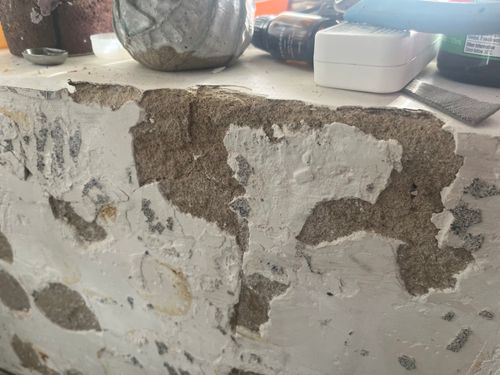
Following the great advice from the workshop, I tried to remove the tiles as carefully as possible, but the wall started crumbling beneath them. This is my first time doing something like this, so I’d really appreciate some guidance.
To prep the area for painting and tiling:
Do I need to re-render the whole section of the wall?
Can I just chip away any loose or damaged material and patch it up?
Should I plaster and prime before tiling?
Thanks so much in advance for any tips—and sorry for the barrage of questions!
Welcome to the Bunnings Workshop community @Liu. It's fabulous to have you join us, and many thanks for your question about tiling.
The most important step here is to make sure there’s nothing proud or sticking out from the surface, as that’s what will stop your tiles from sitting flat. Your tile adhesive will easily fill the small voids or uneven spots, but any raised sections need to be removed. Since the damage is fairly shallow and mostly uneven patches, you can do a skim coat of tile adhesive over the area and let it dry before tiling to even things out.
Here's a helpful guide: How to tile a splashback.
Please let me know if you have any questions.
Mitchell
Thanks a lot @MitchellMc for your kind response! I would definitely try that. My only worry is area under the window , as when removing tiles the curve to window sill is damaged and tiles will be just under it. Should I use same layer of tile adhesive and prime / paint it, or do the plaster patch up?(sorry for newbie’s questions)
thanks in advance, it’s a great help!
Hello @Liu
For the surface part of the window, I suggest using Parfix 500g Ready To Use Multipurpose Filler. This filler is ideal for repairing small to large internal cracks and holes and is suitable for use on plasterboard, fibrous cement, brick and timber surfaces. It can be sanded down to level the surface. Please make sure to prime and paint the surface once it has fully cured.
Eric
Thanks @EricL ! I will follow your advice:)
Have a great evening , thank you for a quick reply!
Workshop is a friendly place to learn, get ideas and find inspiration for your home improvement projects
We would love to help with your project.
Join the Bunnings Workshop community today to ask questions and get advice.