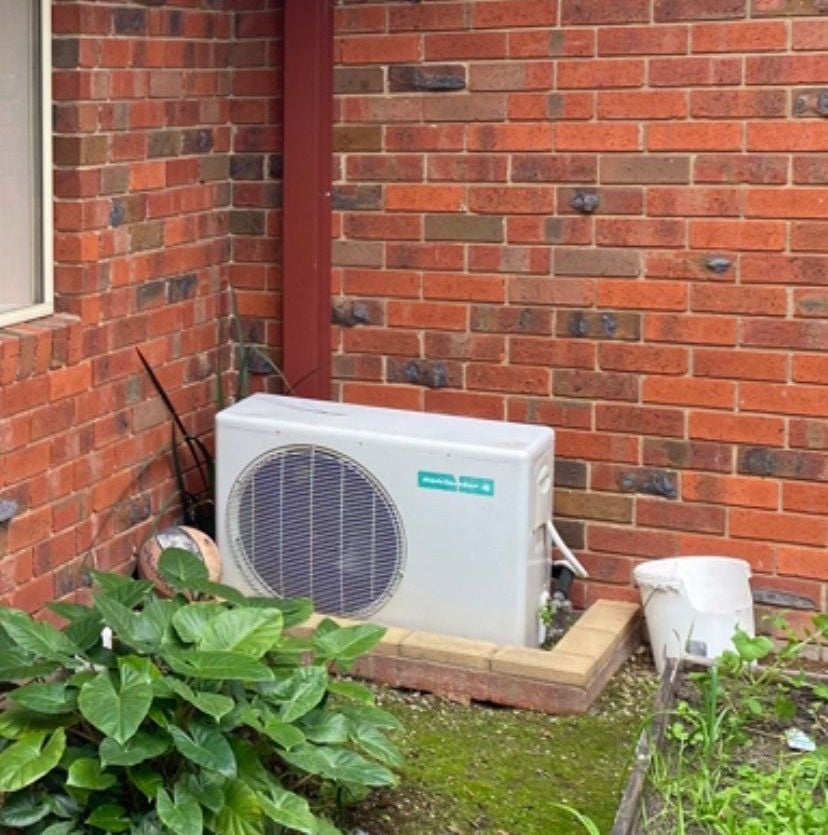
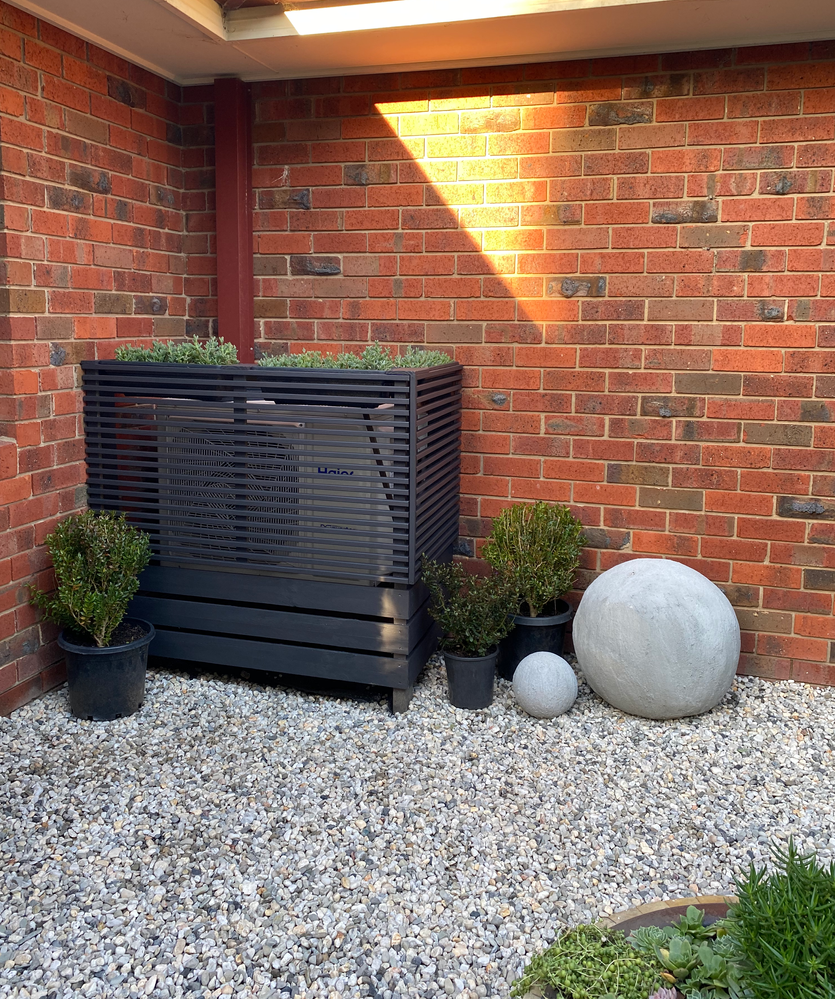
The Bunnings Workshop community can help with your home improvement projects.
Adhering to the airflow requirements for the air conditioning condenser, this screening solution includes a hinge so the screen can be opened when the air conditioner is in use for added piece of mind.
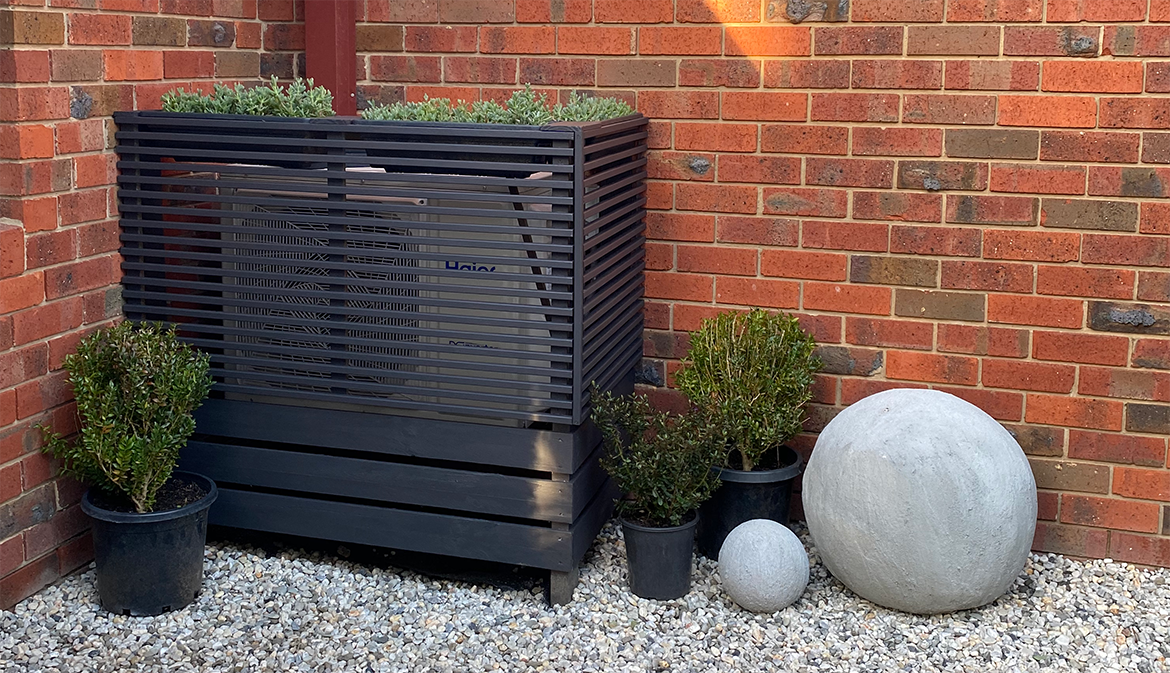
I was inspired by Rufaro (@Chaks_DIY)'s Enclosure to screen hot water tank and wanted to do a similar screening on a condenser unit in our backyard.
We installed a new unit and had it raised off the ground.
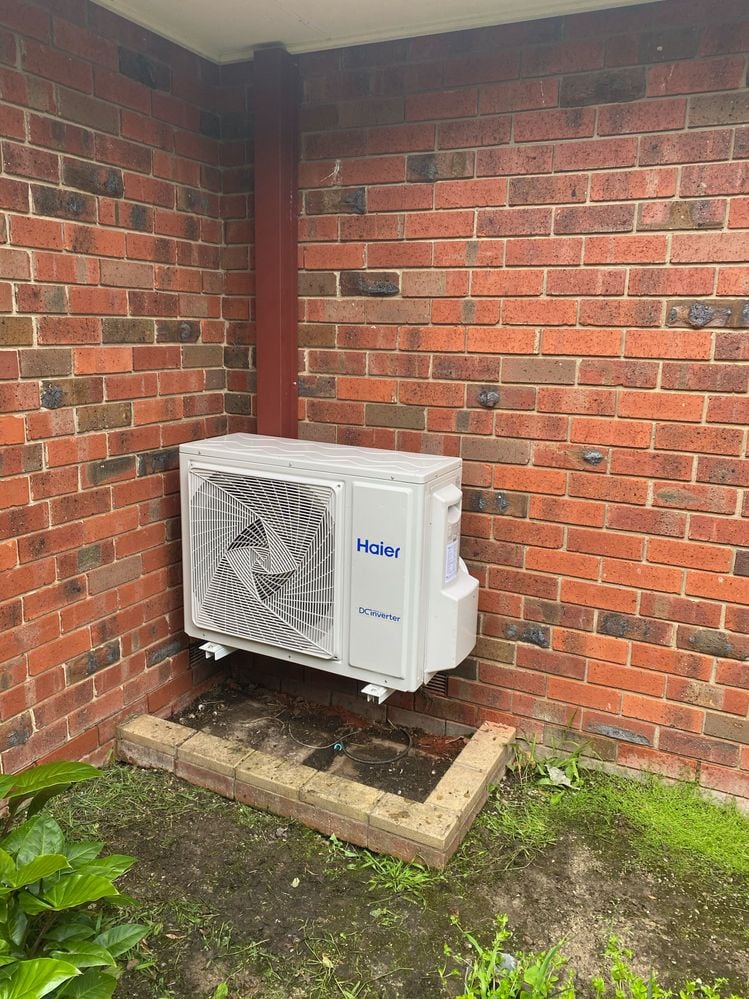
We started by measuring around the a/c condenser unit to make sure there was plenty of clearance in front for ventilation and air flow as well as space to accommodate some planter boxes up top.
To ensure airflow, there is:
We concreted in the corner post and fixed two treated pine lengths to the brick.
We then created 3 holders on the top for the 3 planter boxes to drop into (we used the Whites 495mm Charcoal Outdoor Garden Up Classic Pot).
We attached the Merbau screening to the posts and for the bottom section, we used treated timber fence palings.
We sanded with 120 grit and cleaned to prep for painting.
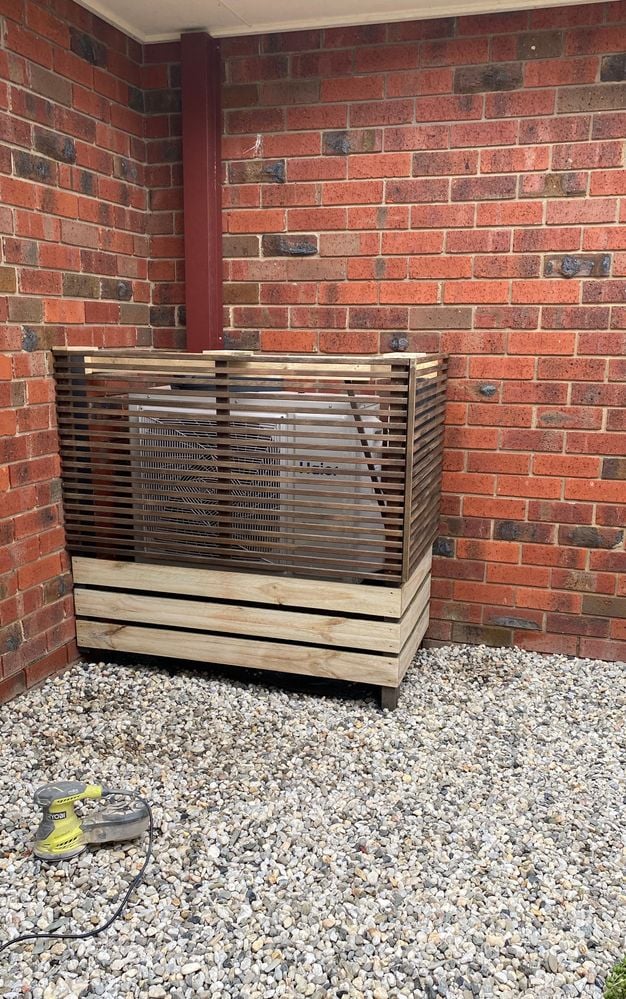
To finish, we painted everything in Dulux Monument.
(Buxus placed in front of screening for the photo only. It will be moved so as not to block air flow)
We saw a lot of discussion and feedback regarding this a/c condenser screening project and later made a change to the screening accordingly for added peace of mind.
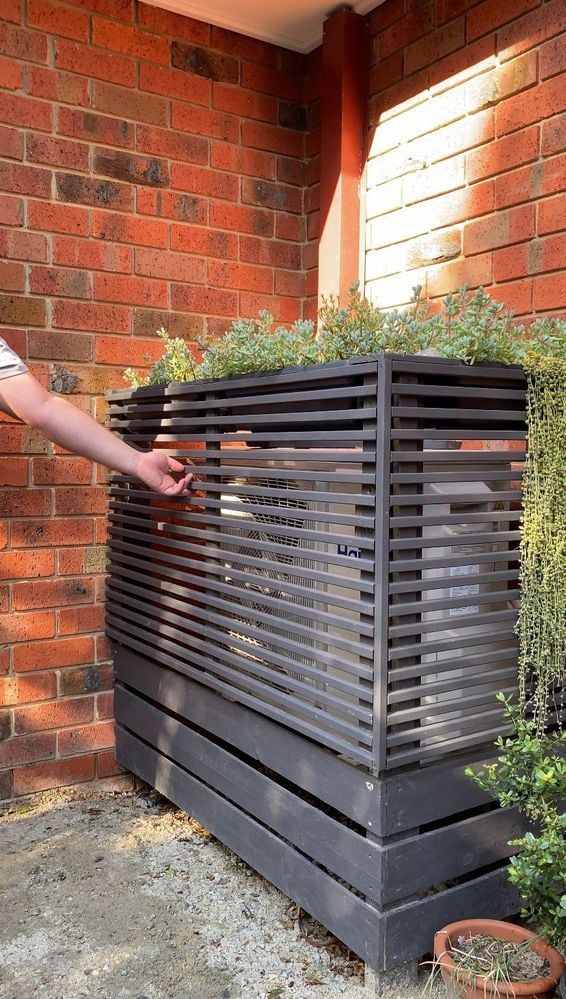
We installed a magnetic catcher and hinges to allow for improved heat exchange when the air conditioner is in use.
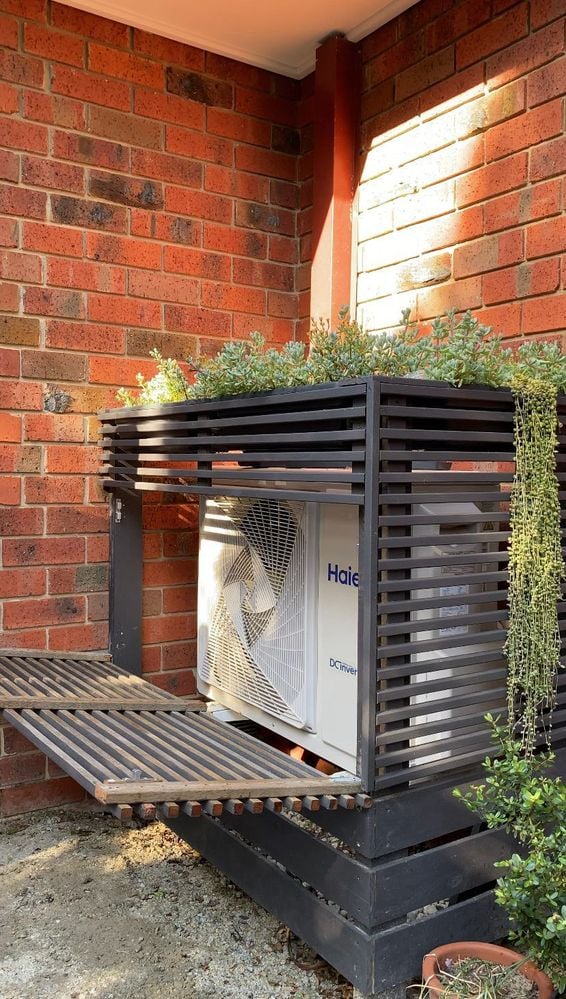
Air conditioning condensers typically will have specifications on how close objects like screening can be placed.
The first thing to do is look up your model's installation instructions and determine the setback required for anything that might block airflow.
The unit in this post has exceptionally minimal setbacks, so it's important to check your model. Installing Merbau screening panels to block the view of your unit could be a more feasible option than a cover.
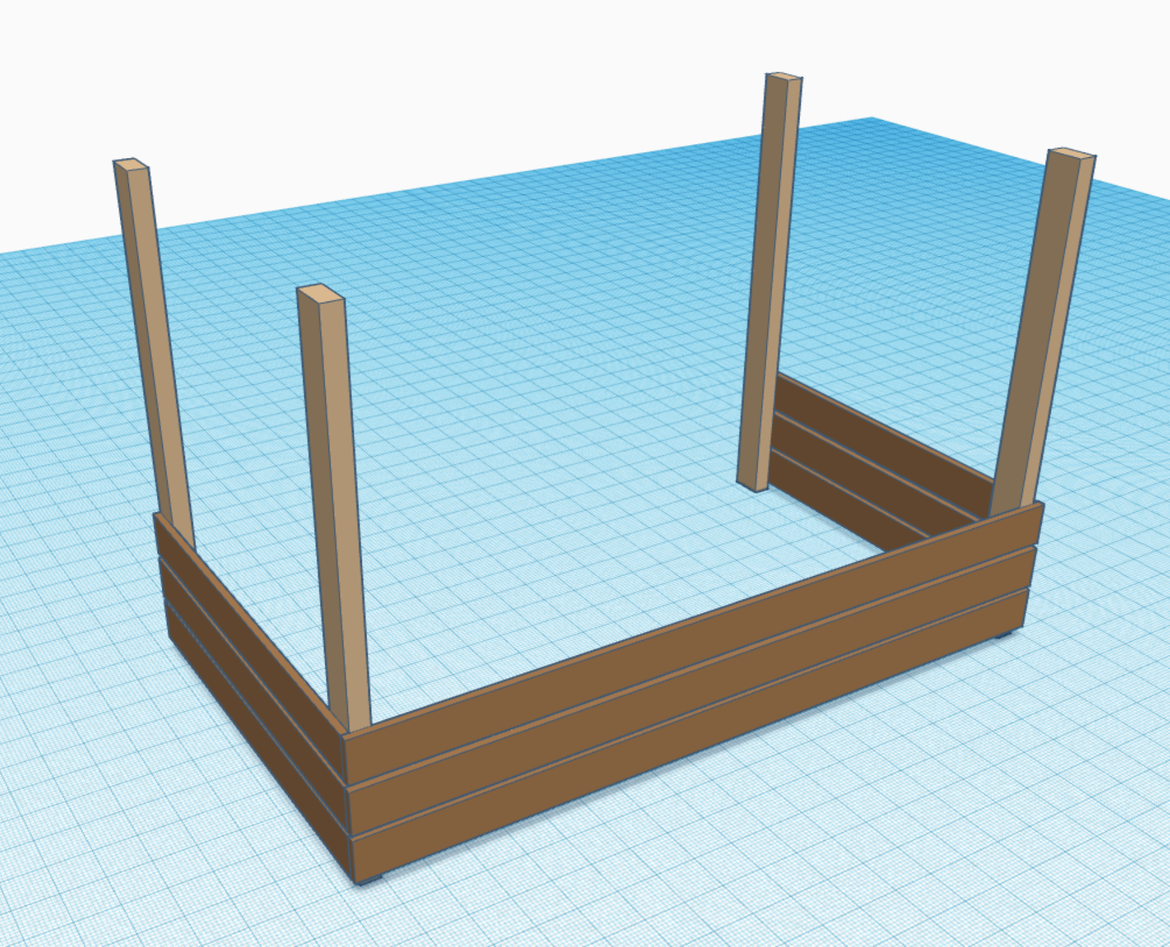
Once you've established the minimum distance requirements of the screening, you can begin sketching out how you'll build the cover.
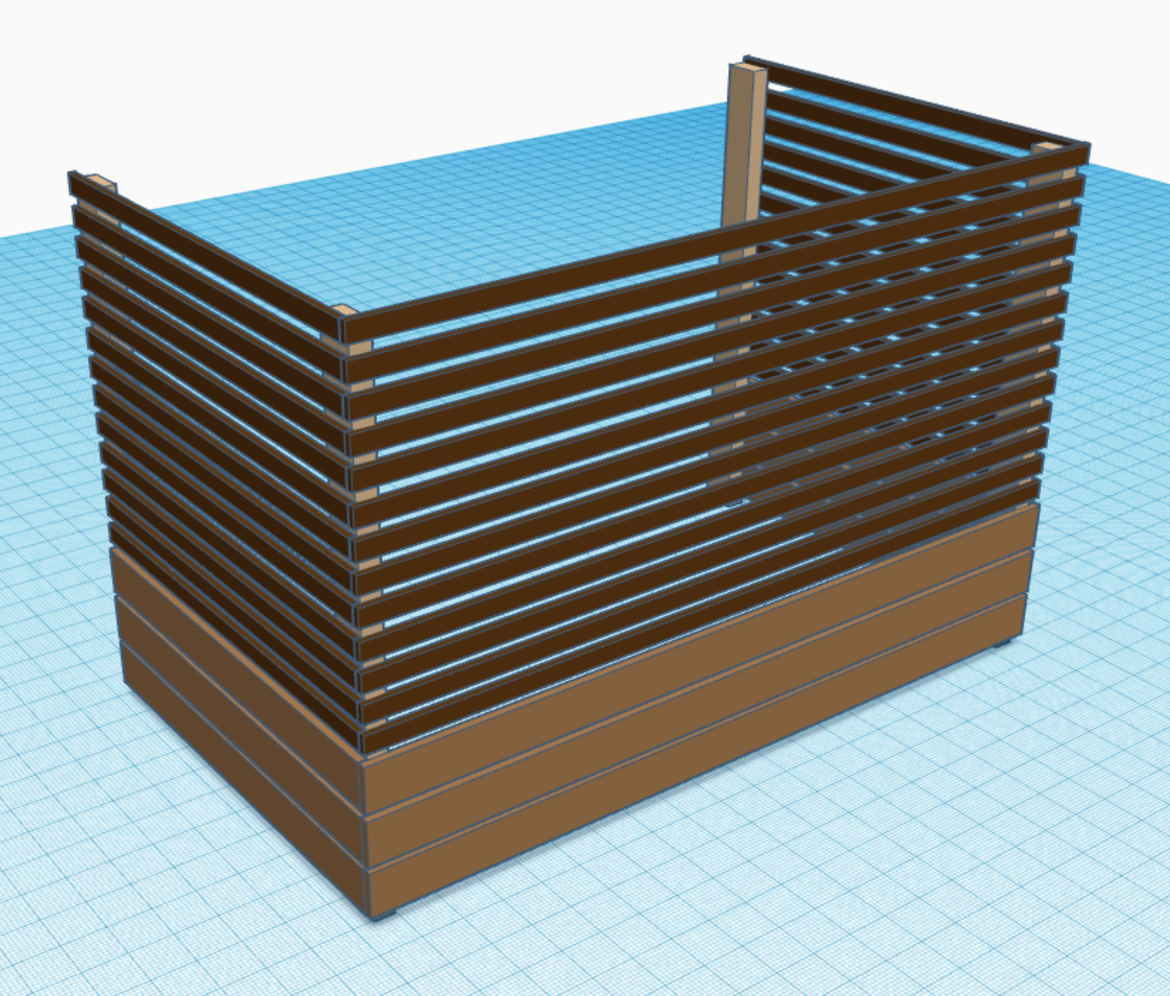
We have created a rendering below how you could build a similar screening cover. 90 x 45mm treated Pine can be used for the framing uprights, treated Pine pailings for the skirting boards and Merbau screening for the slats. Climacoat screws can be used to join the skirting boards and slats to the frame timbers.
At a minimum, you'll need a handsaw or, preferably, a circular saw and a drill driver.
Please make sure to wear appropriate PPE whilst constructing the project, like safety glasses and follow the manufacturer's directions on tool use.
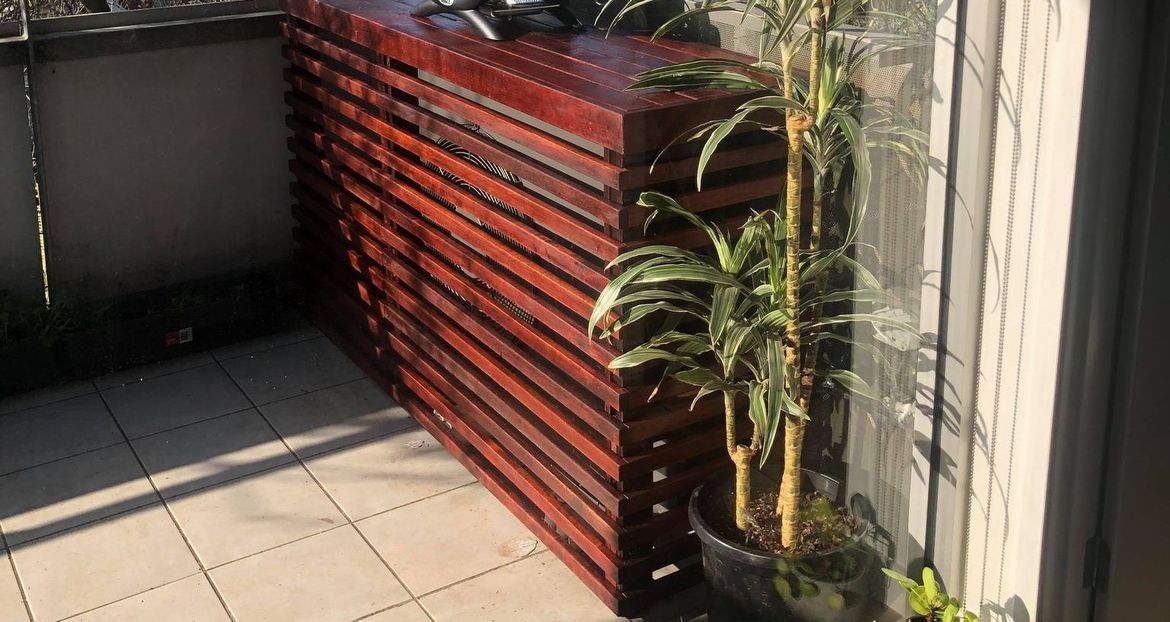
Wanting to hide an unsightly air conditioning unit, community member DoSimpleBetter built a custom air conditioner cover for their apartment balcony.
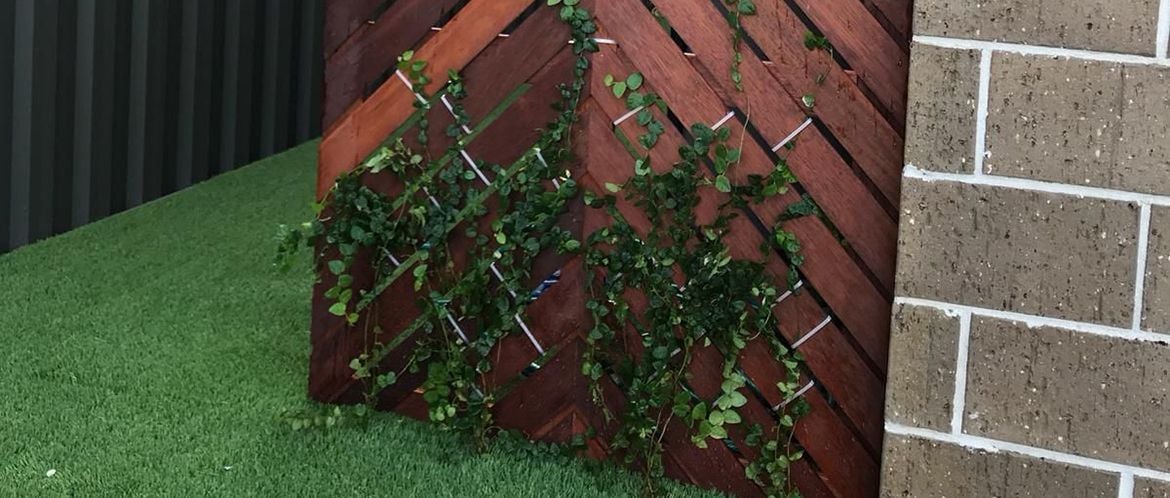
Hot water systems can also be an eyesore, so experienced creator ProjectPete utilised a pre-made panel and planted a climbing Ficus as an attractive screen to hide his hot water system.
More ideas can be found in our Top 10 most popular screening projects.
@homeinmelbourne Now that’s amazing !!!! Absolutely love it 😊 Not just the screen BUT the whole area looks sensational, so clever and the floor !!!! WOW
Thank you so much @mich1972. The ground in this area of the garden is no longer pebbles but instead crushed compacted rock (a compromise to keep our dog's paws happy). 🙂
Hi @homeinmelbourne,
I for one really like the concept and the finish on your project, top marks!! 😎
I work on Aircon units quite frequently and personally, unless you're experiencing 30-35°C days, I don't see an issue with you having to remove the grille on the front.
The worst thing that will happen is that the condenser unit will "go out" on High Pressure, due to lack of airflow, should this occur, take the grille off.
I can't see that happening to be honest, I've worked with this sort of gear for 20 years and what usually happens is people cover the condenser unit with a large box (out of sight, out of mind), the fan cannot move enough air to transfer heat from the coils in the evaporator unit (in the house) and the whole thing turns to custard.
My advice would be to keep the grille on there and see if it works correctly.
If the unit should fault, switch off the circuit breaker at the switchboard, remove the grille and try again.
I don't think you'll have to do that though, there is more than enough space between the timber slats to allow decent airflow around the condenser.
Thanks for posting this project, it looks great!
Cheers,
Mike T.
Love this idea!
Hi @homeinmelbourne an awesome project and well designed and finished. I'll definitely save your post for future reference. 👌
Having been in the AC industry for over 40 years as an electrician and completed refrigeration mechanic post trade over 30 years ago.
I have been a service mechanic, supervisor then went into sales for a number of AC brands.
I have seen first hand what a 1 brick high obstruction in front of a condenser unit can do to the efficiency of an AC unit. Hot air discharge air hitting the bricks in front of the unit created a flow of hot air back under the unit and into the incoming air and reduced capacity drastically. We measured the 50o + air mixing with 36o ambient air. When the temperatures got much over this 36o ambient the unit would trip out on high pressure.
Any manufacturer that saw this screen would void warranty.
The unit may appear to work ok on mild days but as soon as the temperature goes up the unit will suffer and with the new inverter units will ramp up to try and overcome the lack of performance. Resulting in increased energy bills. Same in Winter. The cold air coming back onto the condenser unit will create more de-ice cycles and loss of performance.
Opening the grille is a good idea and will improve airflow but there will be raised / lowered air temperatures into the condenser generally from under the unit but also around the sides of the unit creating loss of efficiency.
I know AC units are somewhat unattractive but they are designed to work. Even manufacturers minimum clearances can create problems particularly when a fence is too close to the unit with block sizes generally getting smaller.
Just a word of caution. You may not be bothered by increased energy bills?
Welcome to the Bunnings Workshop community @PJVB. It's terrific to have you join us, and many thanks for jumping into the discussion.
Thank you for taking the time to share your experience and insights. With your extensive background in the AC industry, I’m sure our members will really appreciate the input of such a knowledgeable person. It’s always valuable to hear first-hand how installation choices can impact performance and running costs.
We look forward to hearing all about your projects and plans around the house and garden. Feel free to reach out anytime you need assistance or have something to share with the community.
Mitchell
Workshop is a friendly place to learn, get ideas and find inspiration for your home improvement projects