Steps
Step 1
The main part of the frame work had been completed in the first stage. (Courtyard privacy fence and gate build) This is the fleshing it out stage. I almost changed the design as I could see how large/tall it was going to be. I decided to keep it the way it was originally designed as the courtyard gets a serious amount of sun in summer and this would help cool the area.
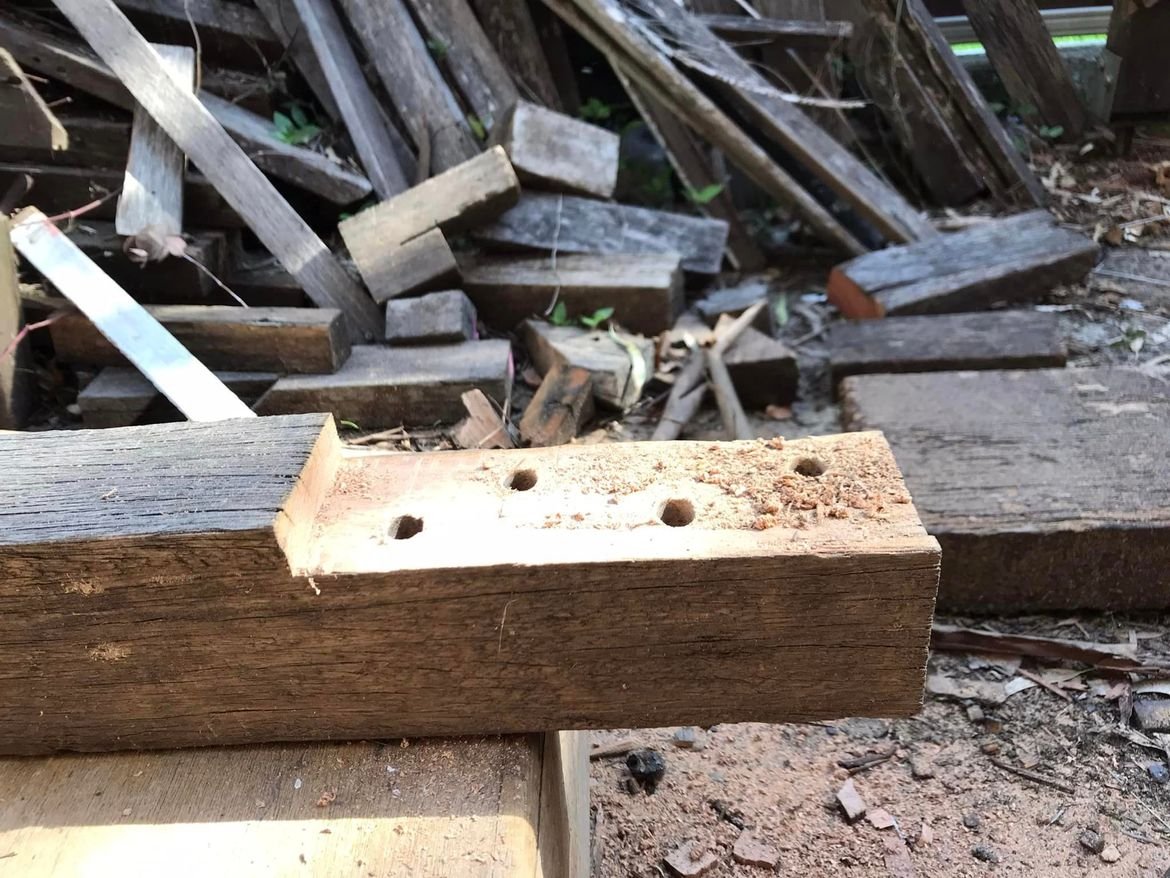
This is for the middle rear post that the handrail would attach to. I ended up putting a second crossbeam up as it did not look strong enough with just one cross beam.
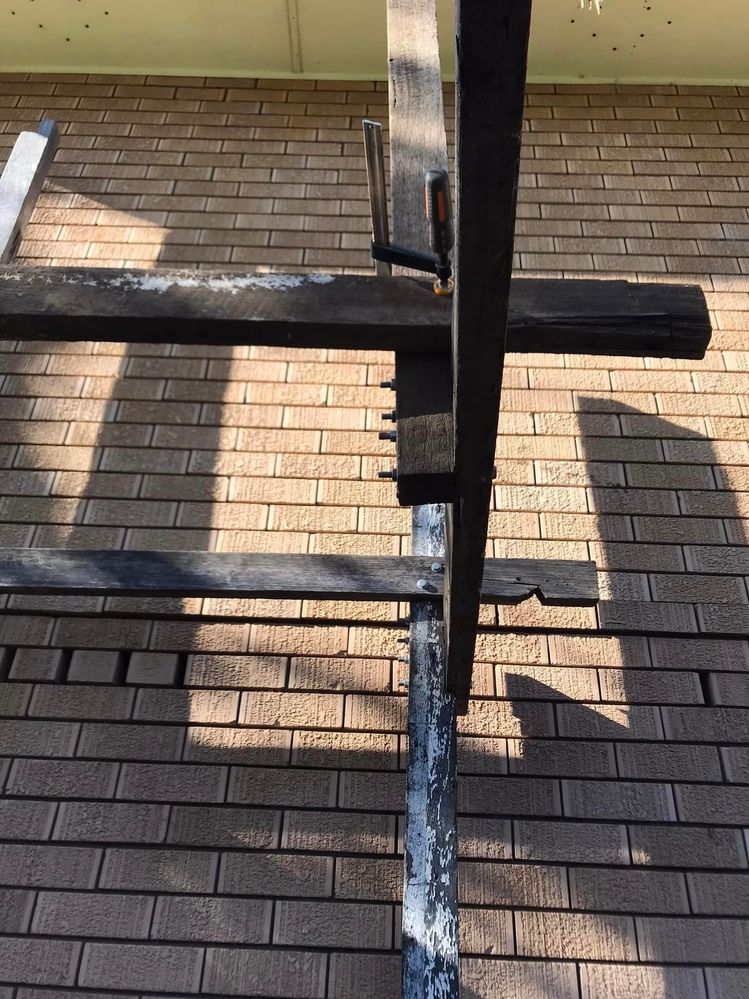
Reusing old timber that has twists and curves in it can be interesting.... You can see how far out of true it was,
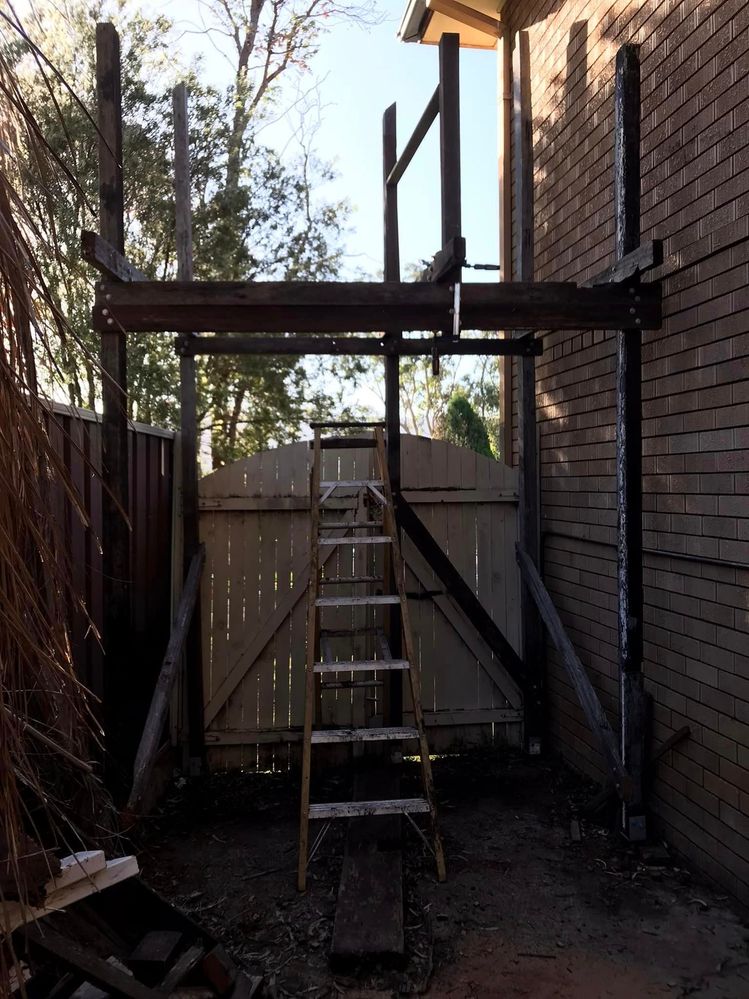
All the posts are in and you can see the temporary slat to hold the middle post in its position. It actually set into position as I tightened all the bolts up/plus time.
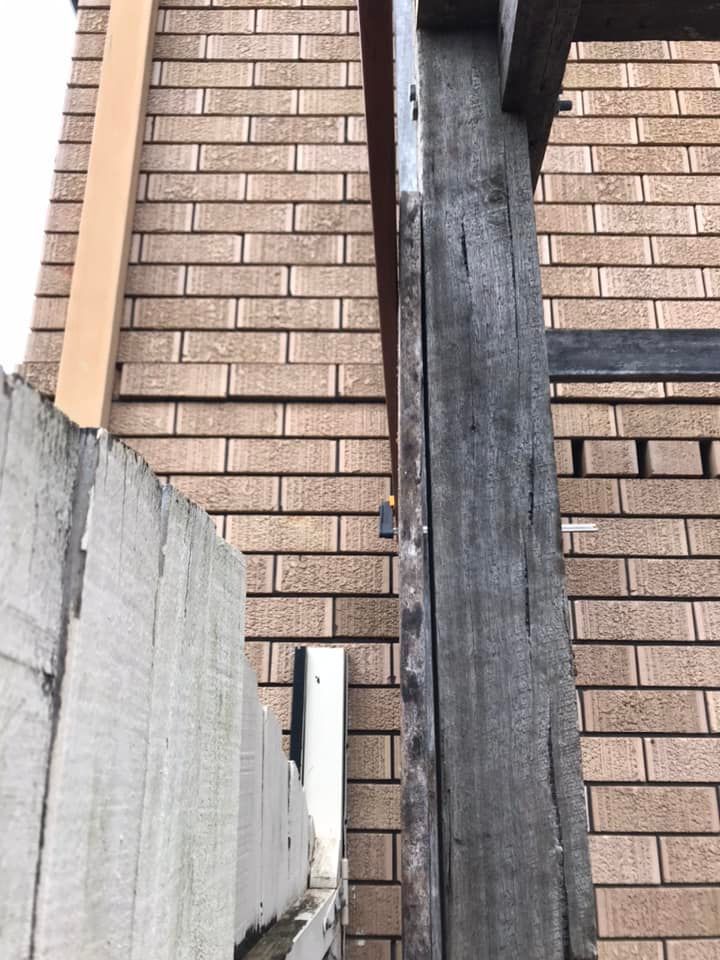
There is a 19mm slat screwed vertically to the middle post as the post was 15mm out of true at the base (I dont know how I managed that!)
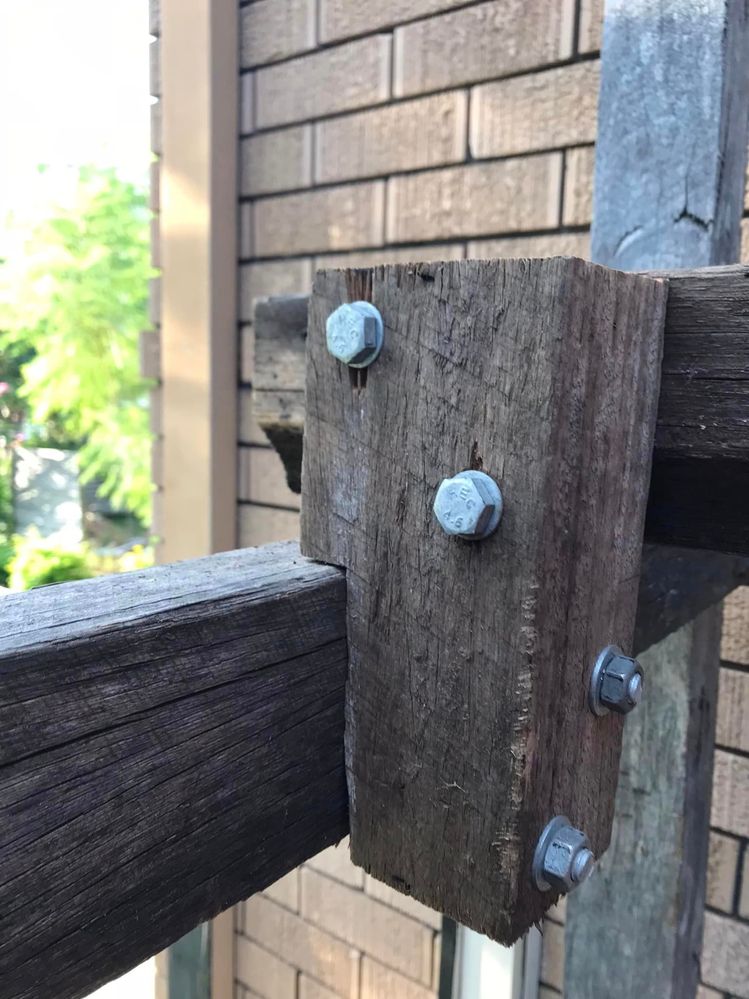
Made up short bits for the floor beams to bolt to. I didnt want any vertical screws for water to just sit in.
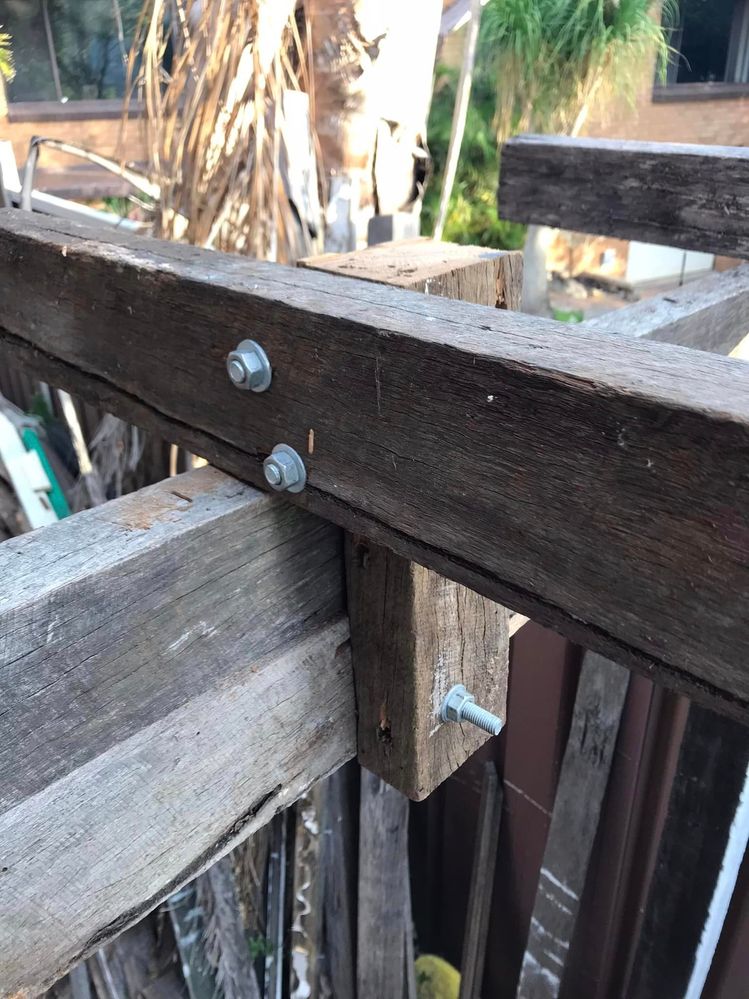
Reusing timber can be a pain but I think its worth it as it adds character.
Step 2
Finally get to start putting the slats up. The bottom two are wider pieces as I managed to get them on special and also I knew I was going to have issues with the stirrups of the posts. (Looking at it I should have turned them 90 deg when I was installing them originally). Live and learn I tell myself.
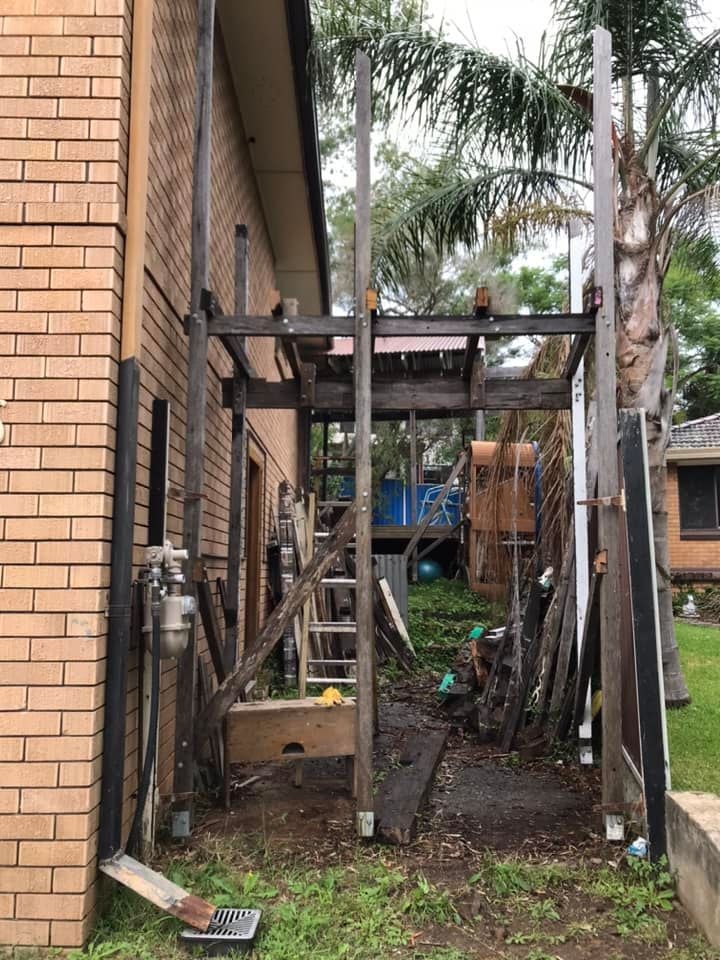
Old gates have been removed plus their brackets that held them to the wall and the fence. They were NOT coming off easily.
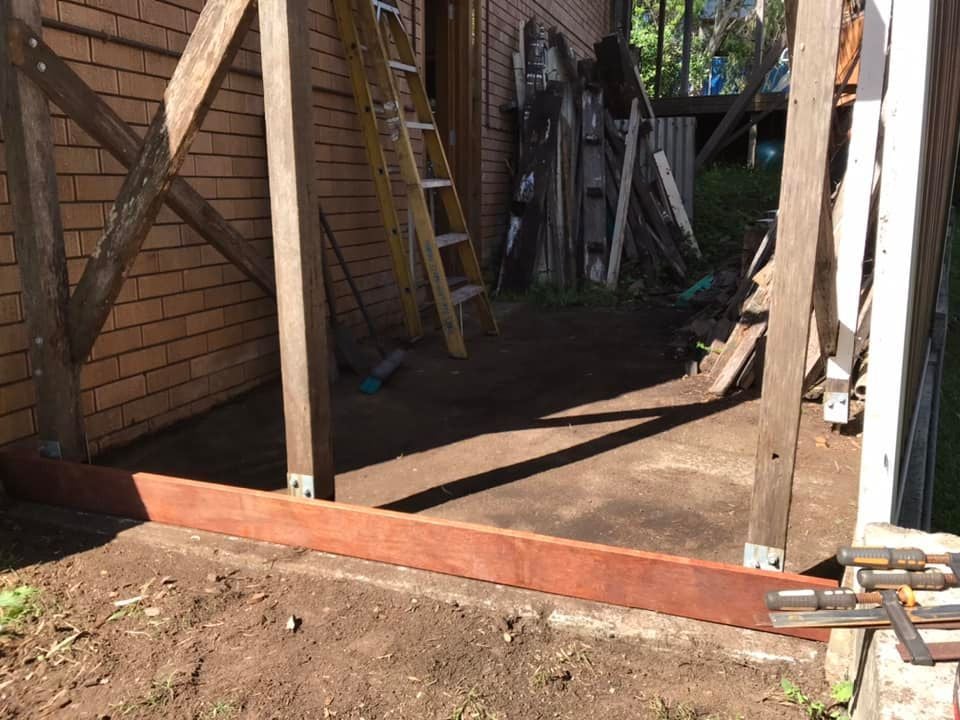
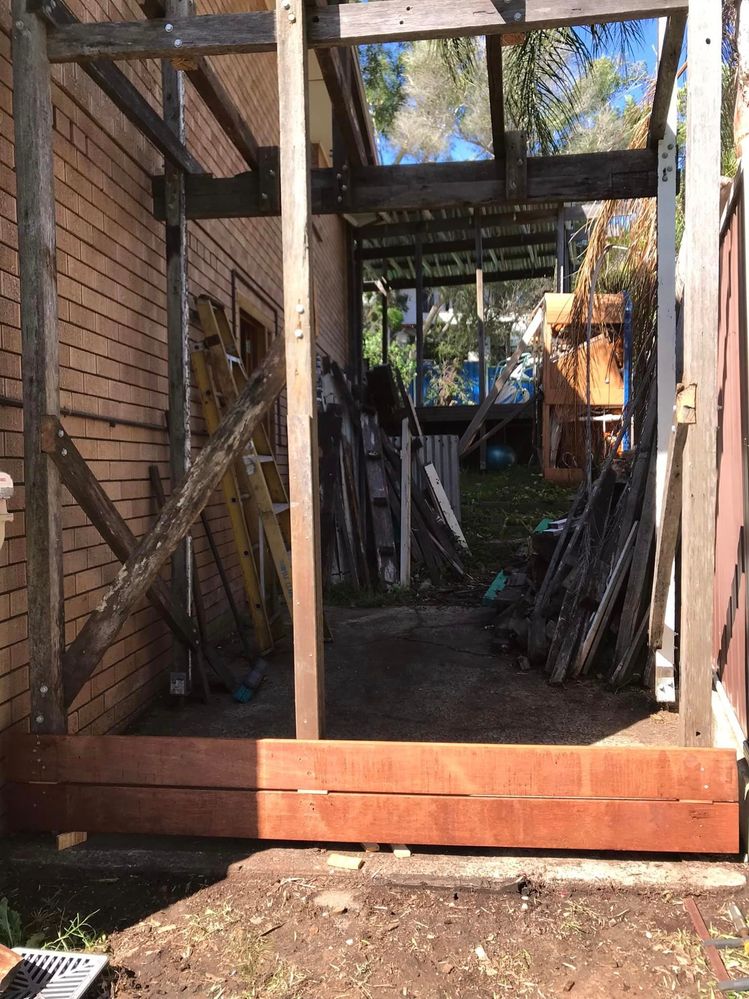
Getting the first slat in place and level. Because I had messed up with the stirrups and bolt heads poking out I cheated by recessing the timber slat to match the head of the bolts (To do this I belted the timber held against the bolt head with a mallet to indent the wood so I could drill it out)
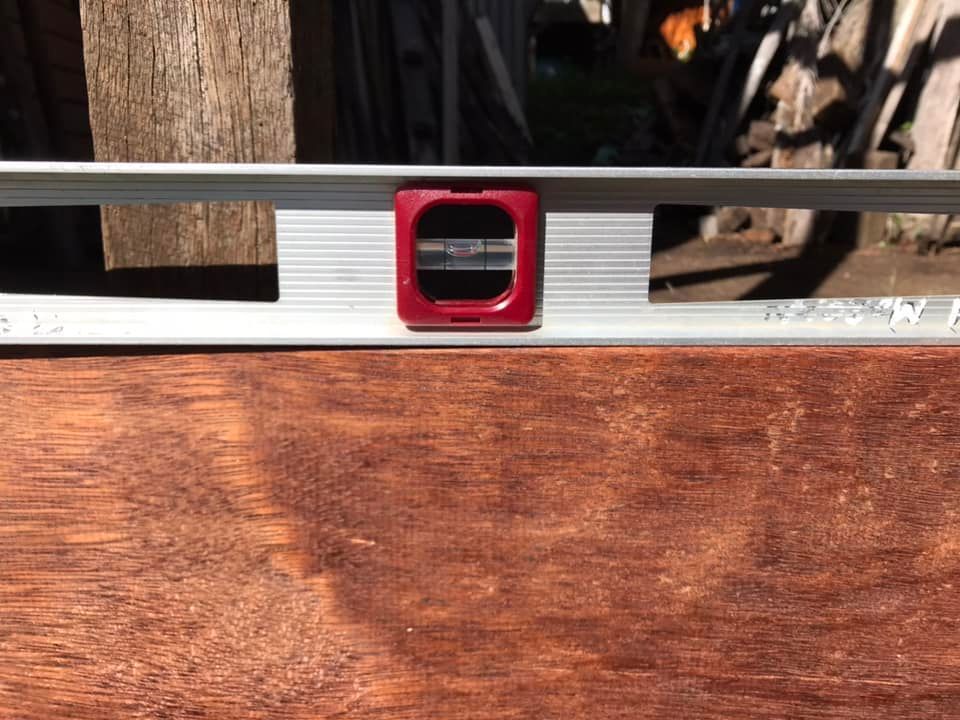
Level 🙂 If the first one is level then the rest should be a little easier.
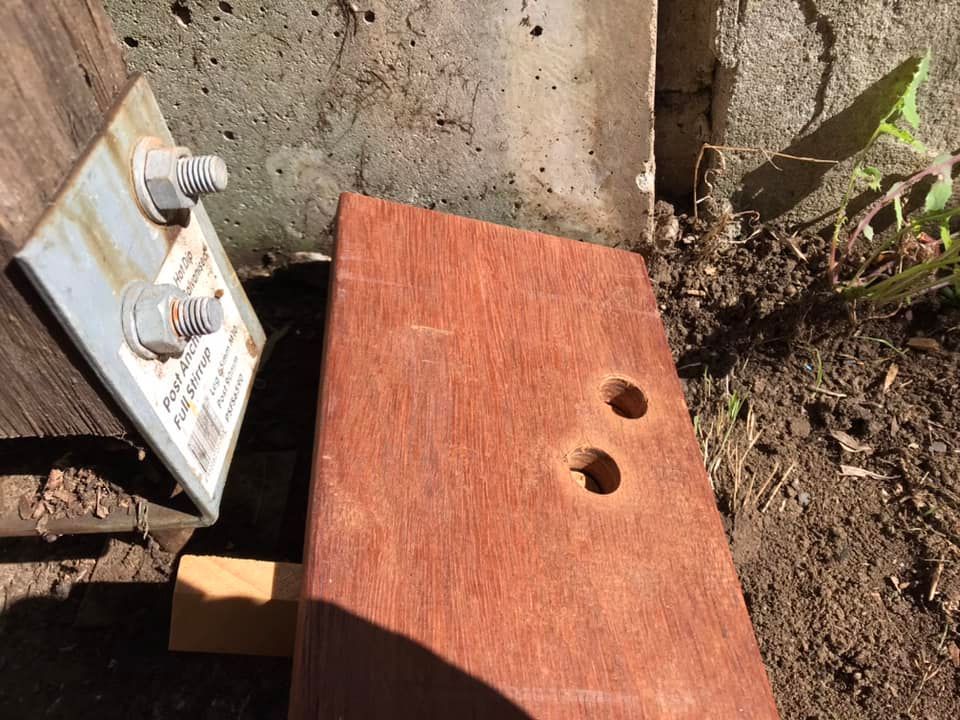
Recessed holes for the bolts to sit in. It worked a dream. Having to drill the pilot hole through the timber and stirrup to be able to use the screws was a pain tho.
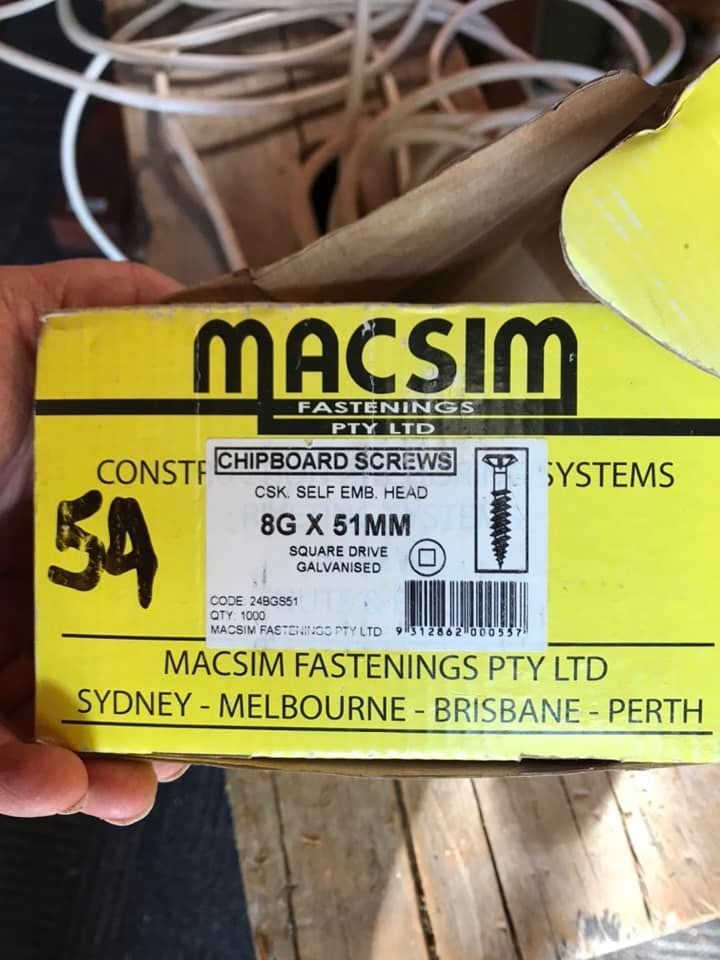
Ran into an issue. I had last used these almost a decade ago and when I was using them this time I was shearing them off. I was using them into the same type of timber slats and hardwood frame. For the life of me I couldnt figure out what I was doing wrong..
Sheared off four screws in two pieces of timber... What the!

Bingo... Call me a dolt. The original deck I built I used a torqued drill for the screws. (Impact drivers were not around easily to buy a decade ago) This time I was using an impact driver (I dont know why) and the screws were just snapping. I talked to Bunnings staff and the two staff I asked had some suggestions. (Use stainless screws as I was using the wrong screws or use soap on the screws with the predrilled holes.)
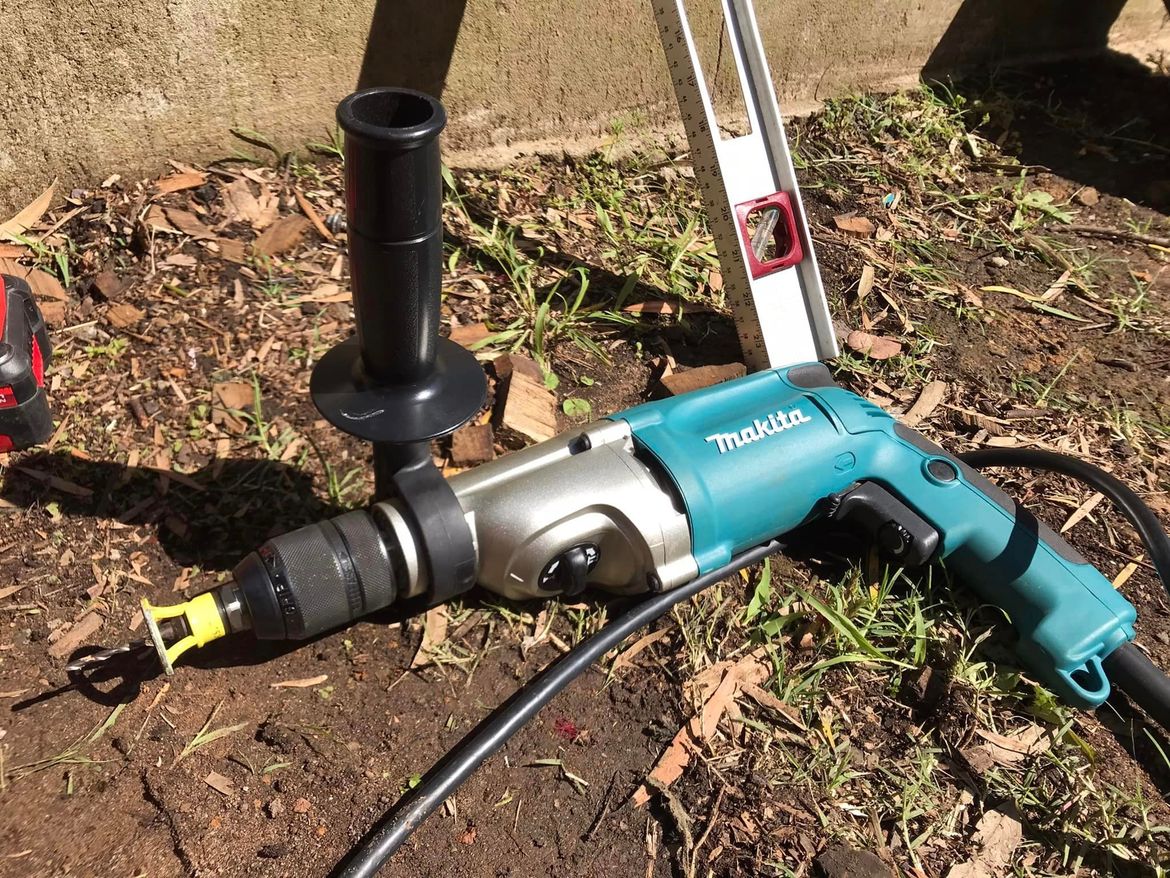
The drill I used for counter-sinking and pre-drilling of the holes. (Same tool I used for the original decking)
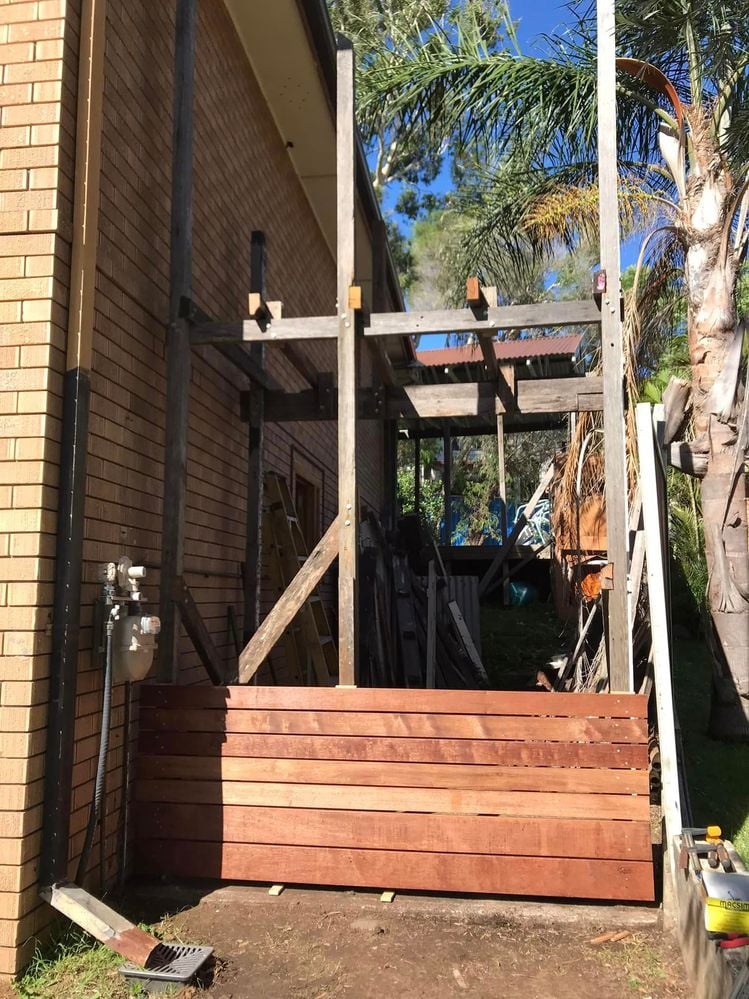
Once I had woken up that I was using the wrong drill (I was using an impact driver instead of a torqued drill) life became way easier and didnt shear any more screws at all.
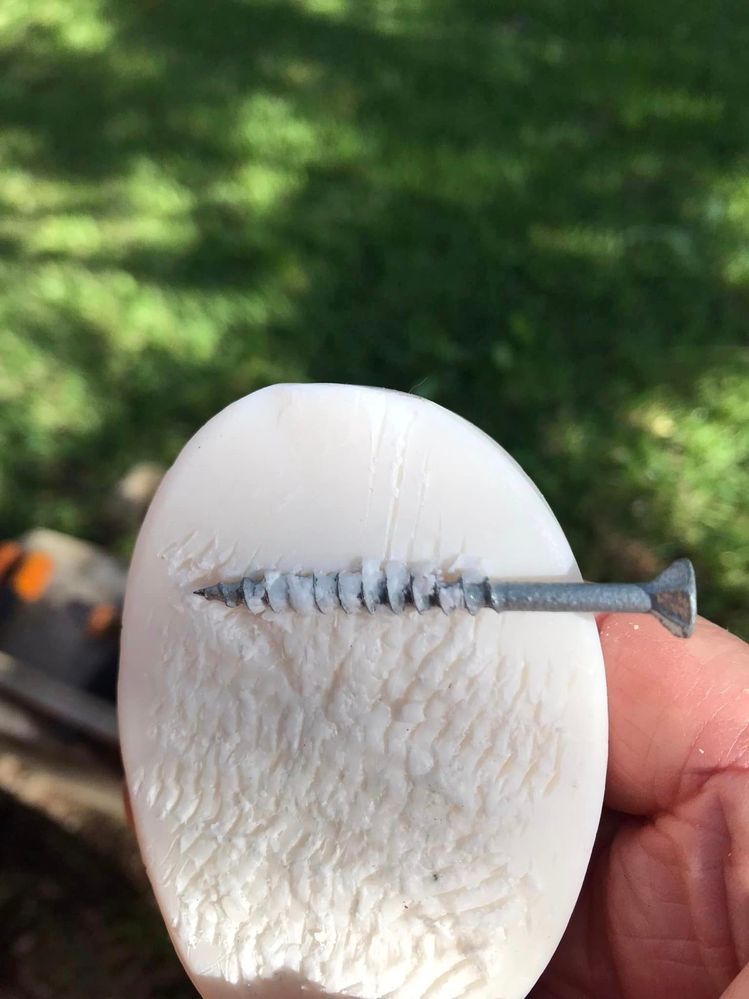
The Bunnings staff member suggested I use soap on the screws. It worked a dream!
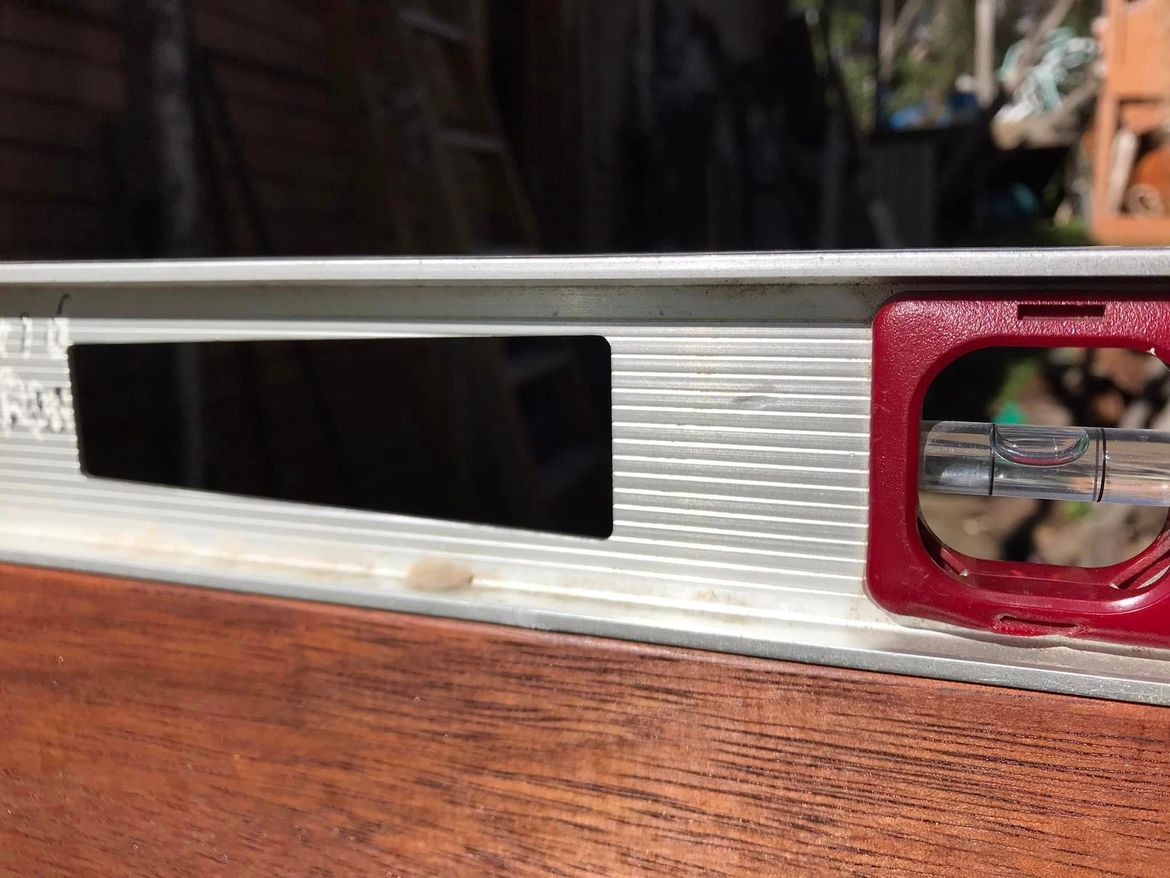
Level! 😀
Step 3
I came up with a complicated way of levering the slats down to be level (Had a few lengths that had a banana shape to them.) Then I thought about the ratchet straps and figured why not give it a go. Sped up the job by 4 times I would say.
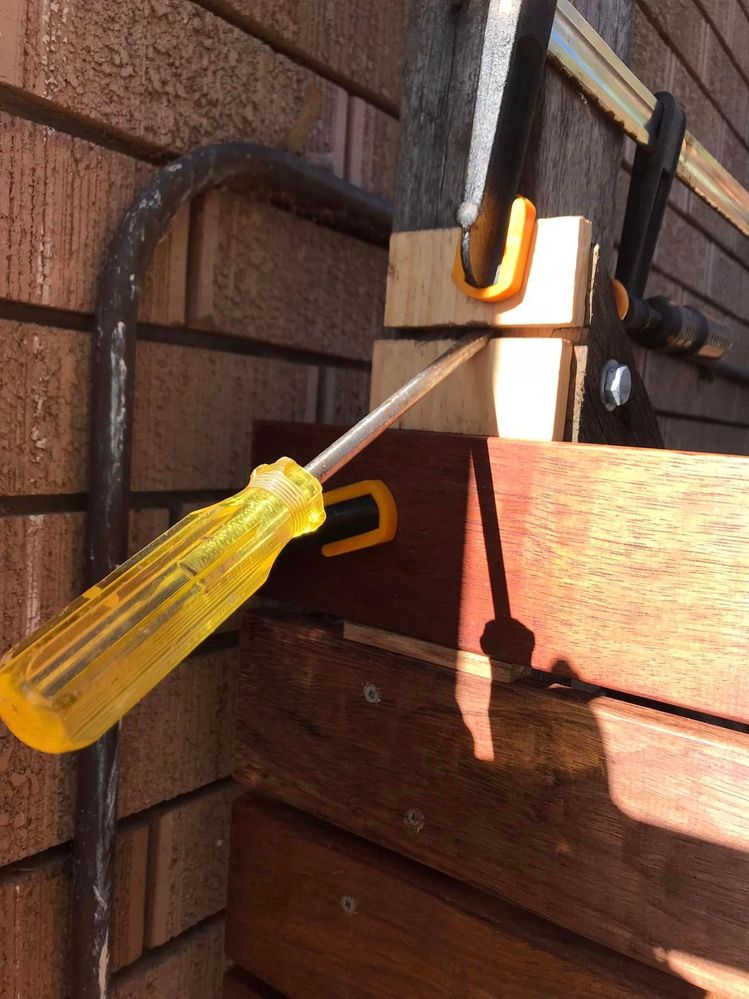
The way I was levering the slats down before clamping and drilling them. It was complicated and would slip like crazy.
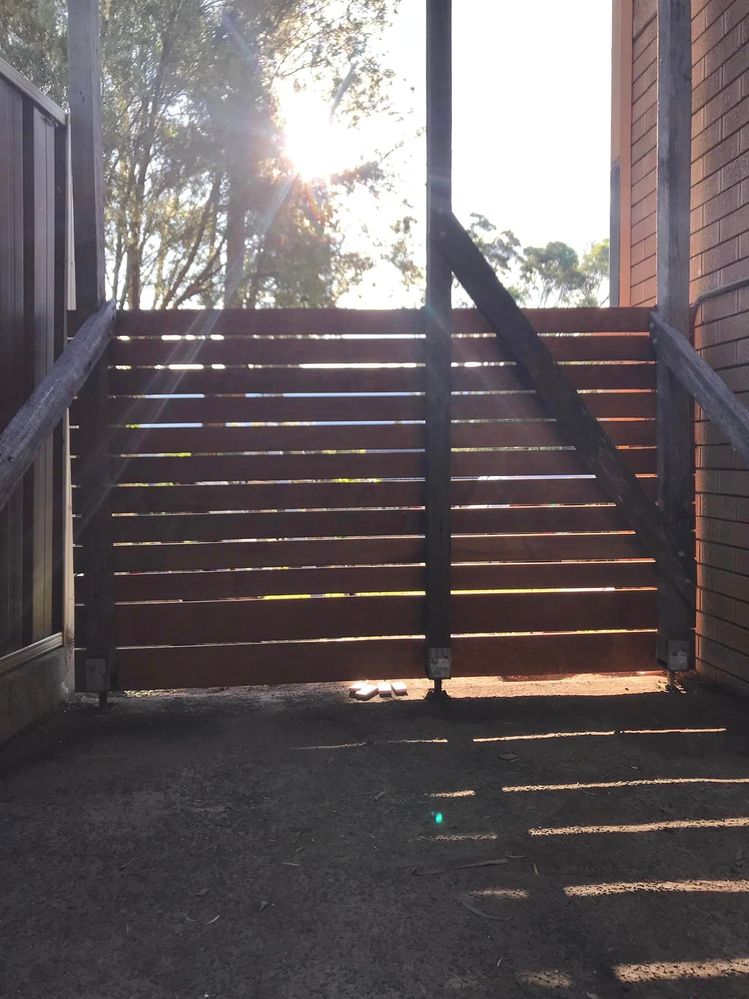
Time to call it a day. Feeling happy with the way its going.
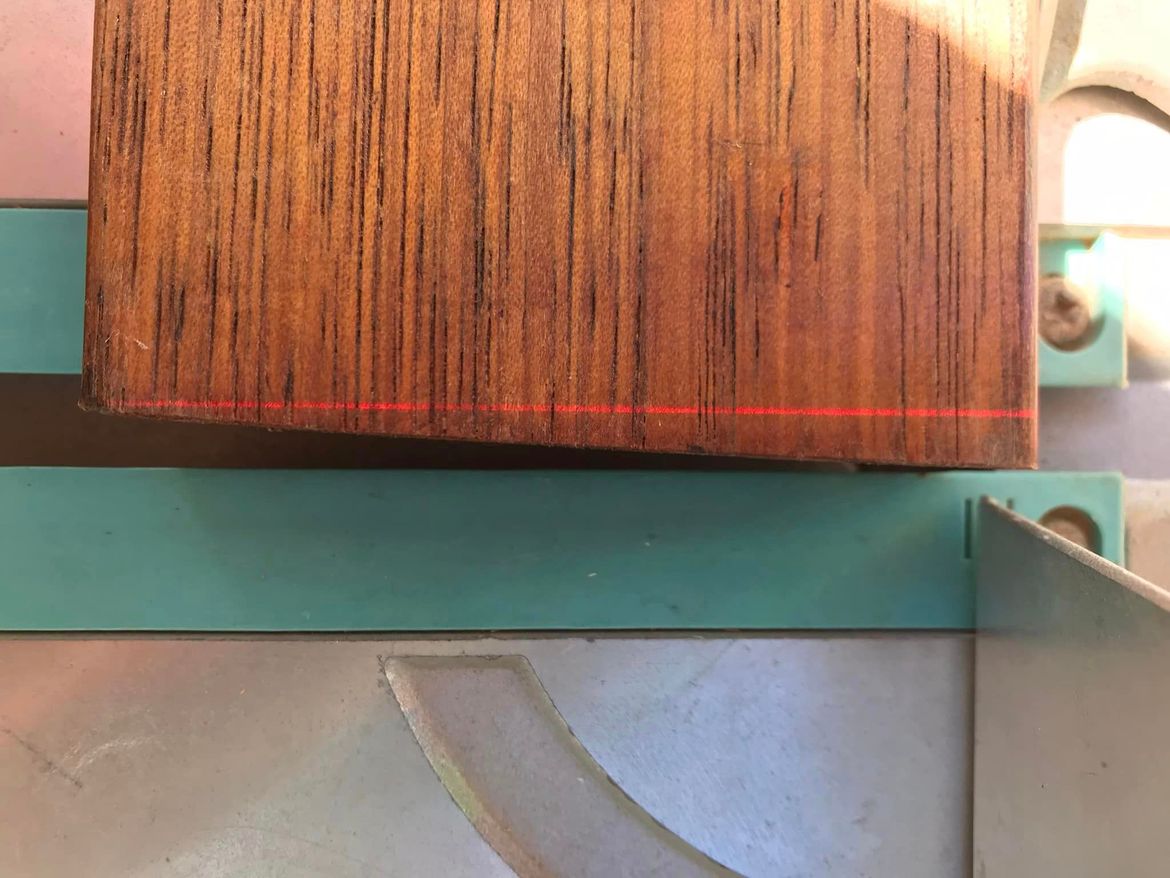
One thing I found is that the end of the slats were not always square.
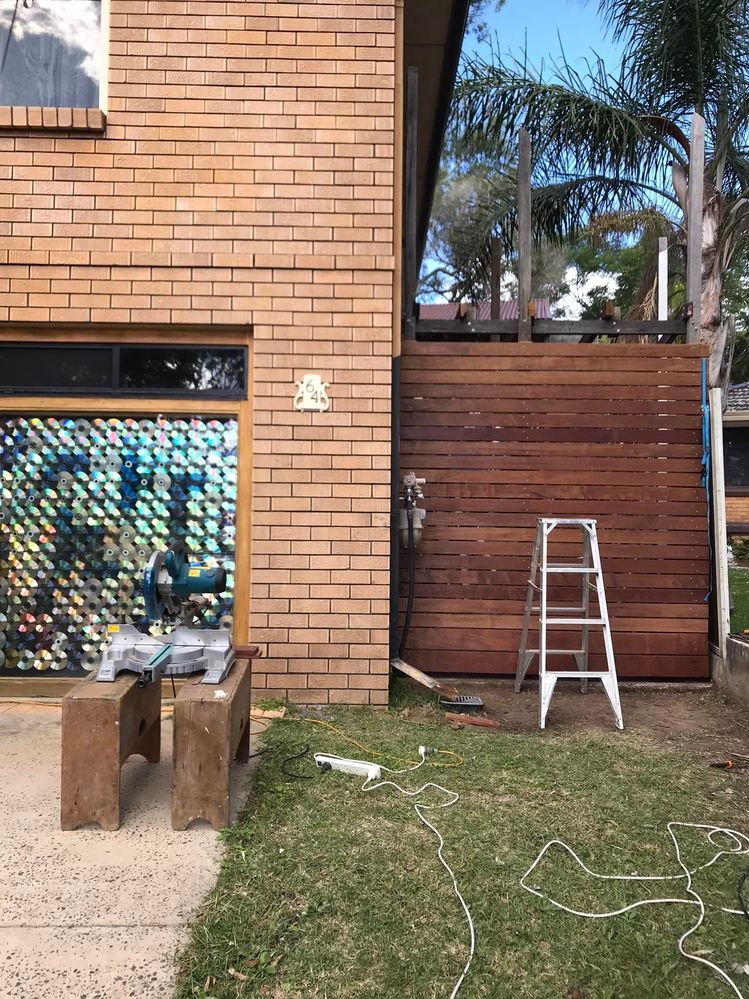
At the point of needing to put the deck part down so I could continue with the slats.
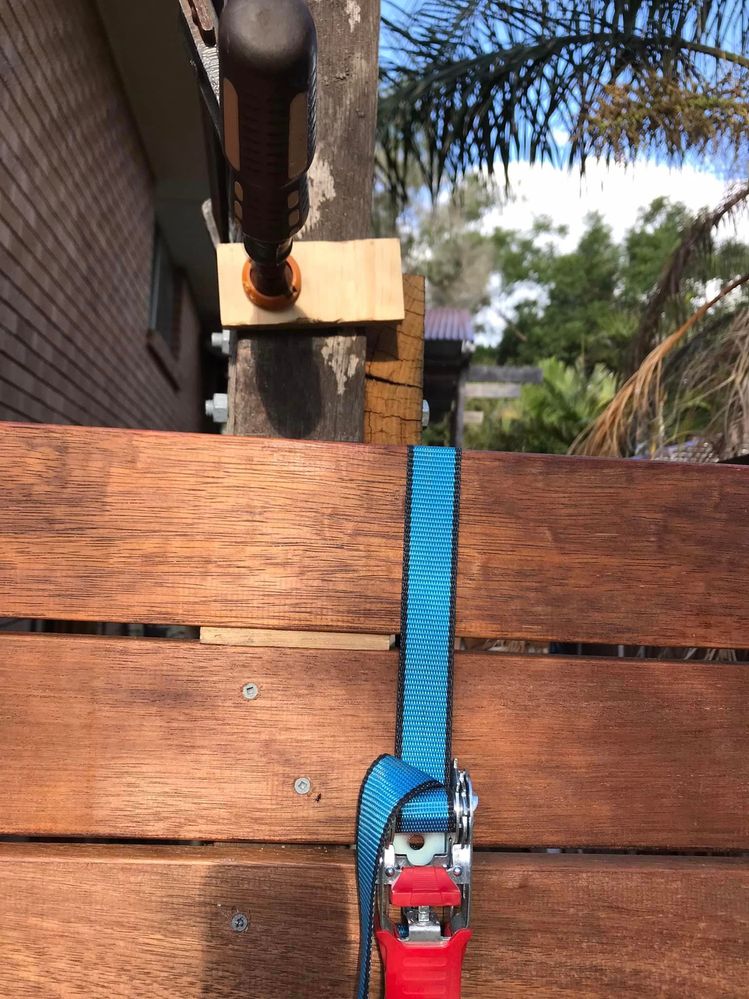
Started using my brains. I Used the ratchet straps looped around a lower fixed slat and tighten. Made sure the banana bend was high on one side (Not high in the middle). It was a lot easier doing it this way. The spacer was an offcut piece of 8mm timber
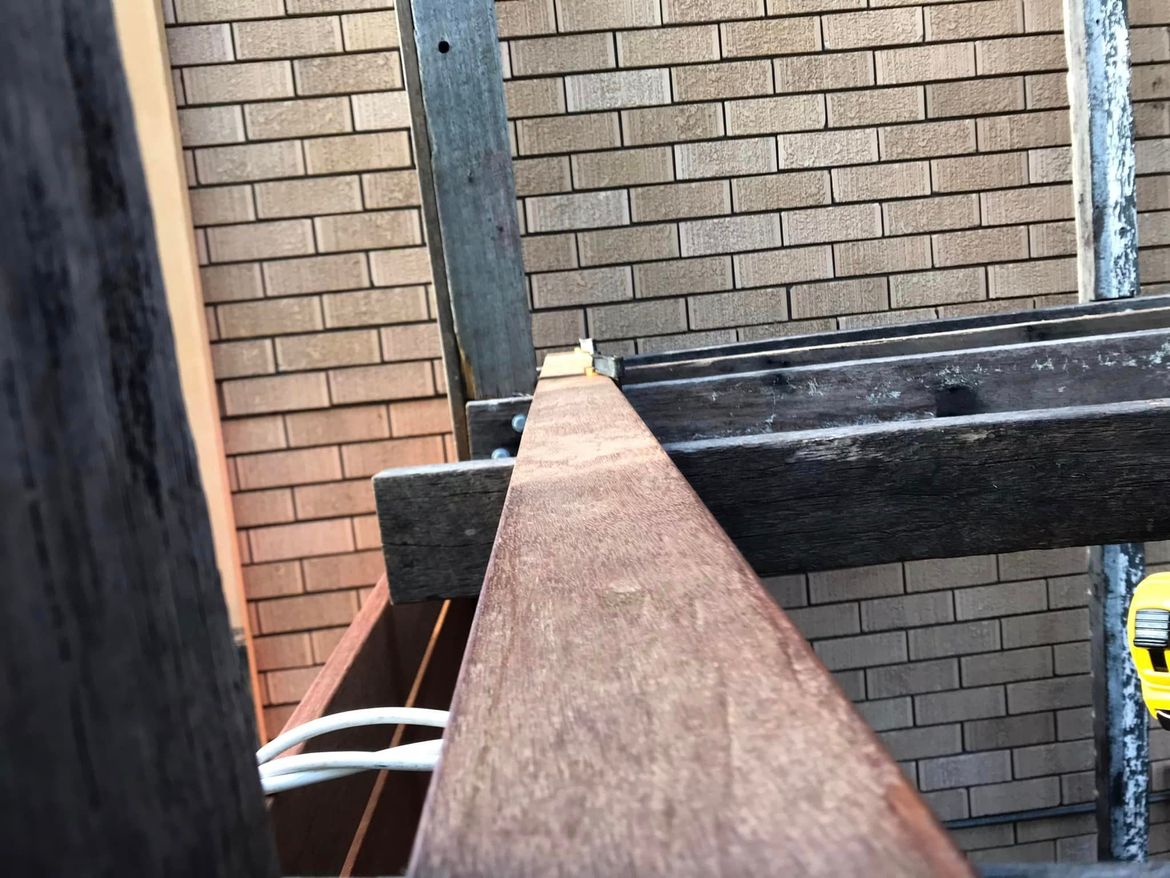
Putting the decking down. Was a little bit of working as to how I would run them with the posts being out. I ended up following the straight line of the front timber slats.
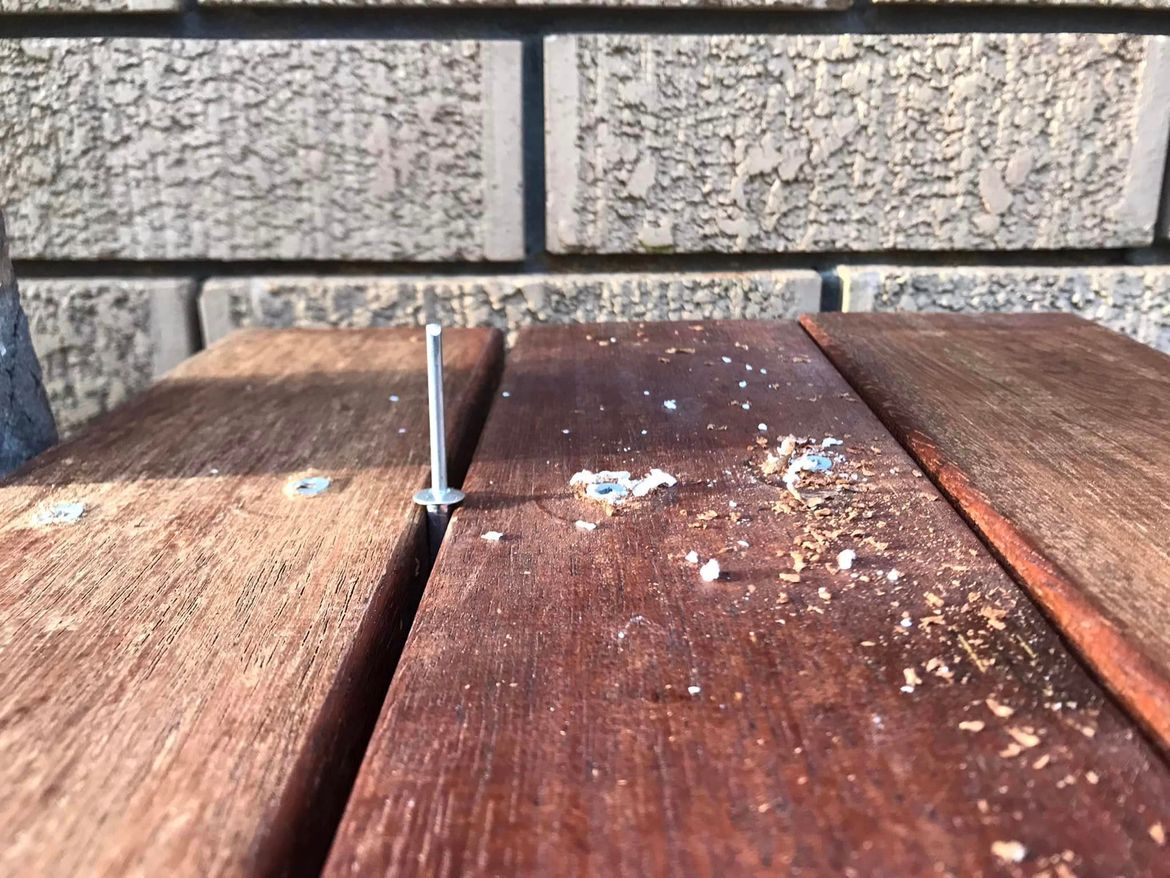
Worked it out and then used some large rivets as spacers.
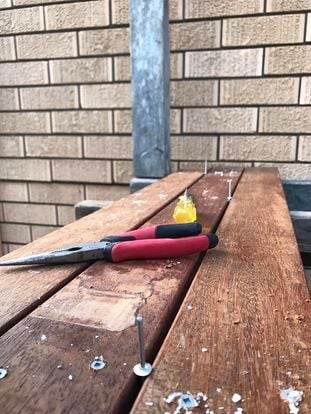
Used a pair of long nosed pliers and a screwdriver as a flat bar to lever out the rivets. I didnt want to mark the timber with the long nose pliers.
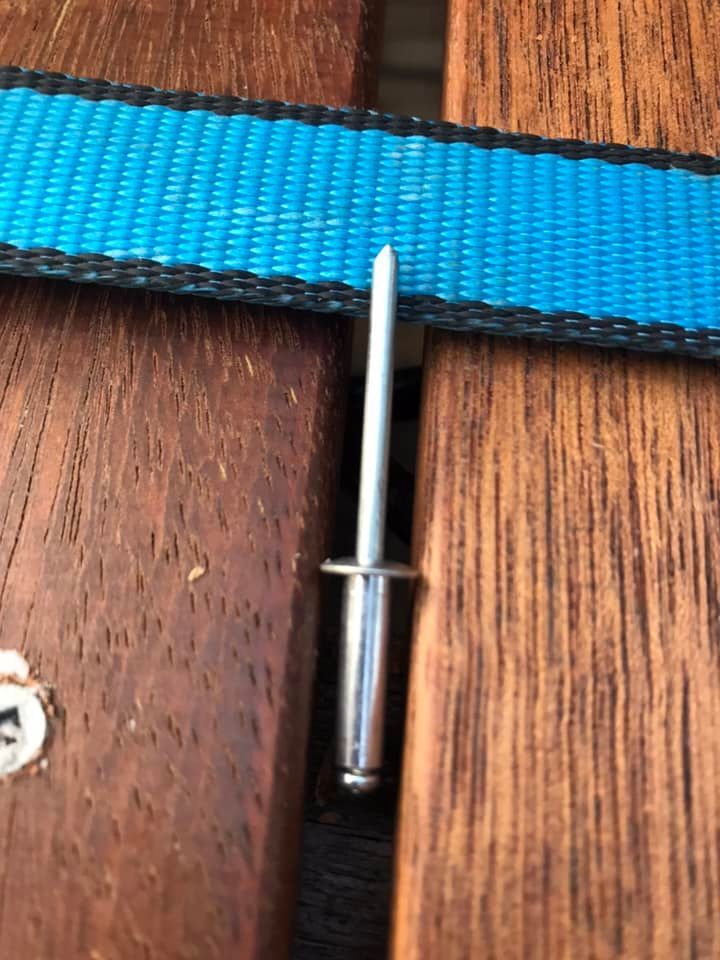
Before the ratchet was tightened.
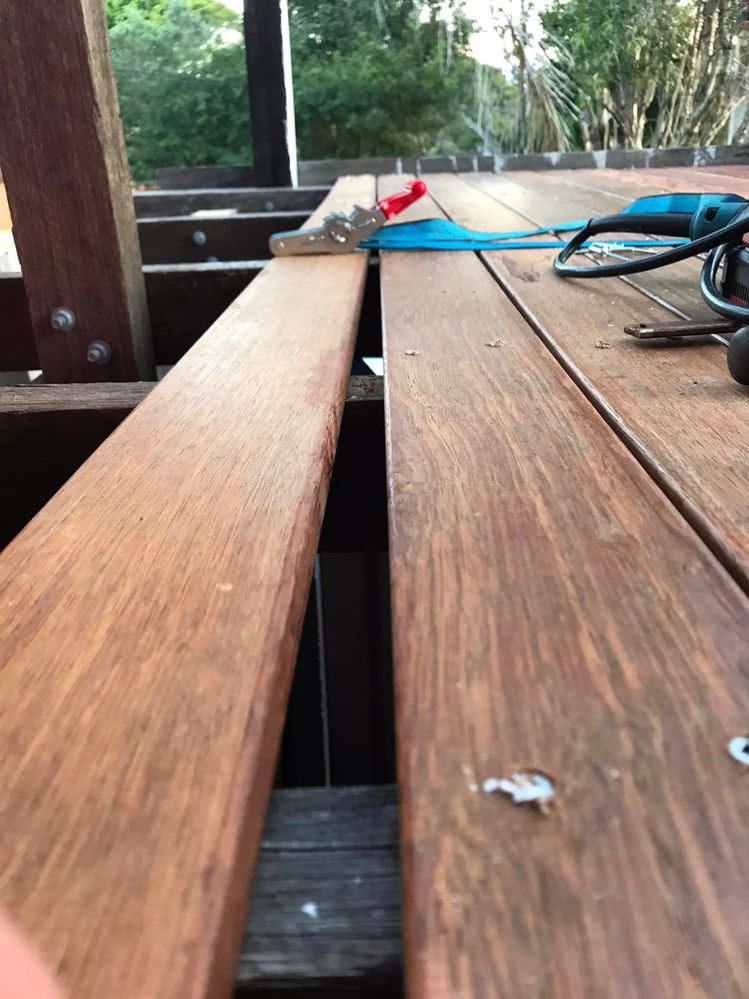
Sometimes the warp was largish.... Ratchets made it work.
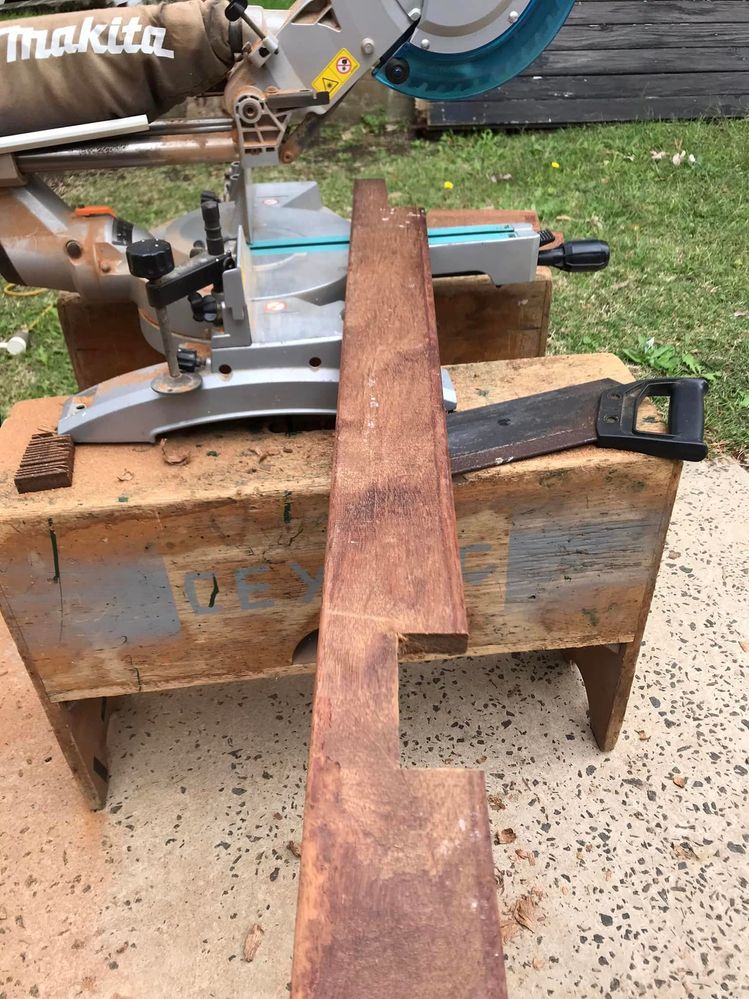
Notching out the floorboards for the deck. Trying to think if I had put the notches on the right side.
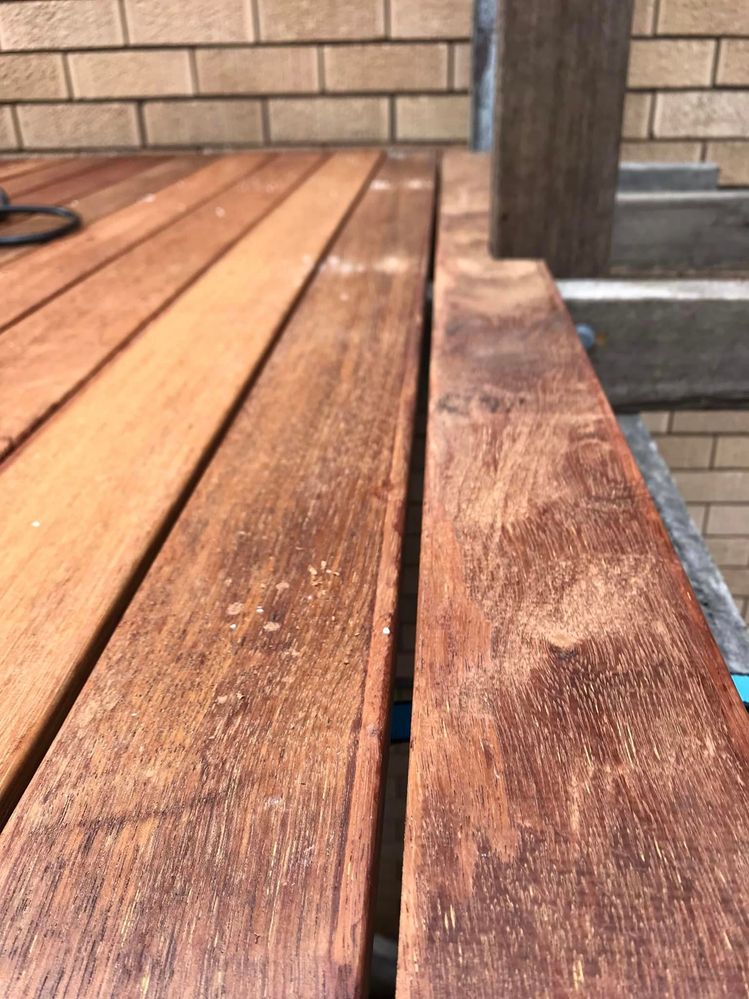
Yep, managed to put them on the right side! And more ratchet work needed.
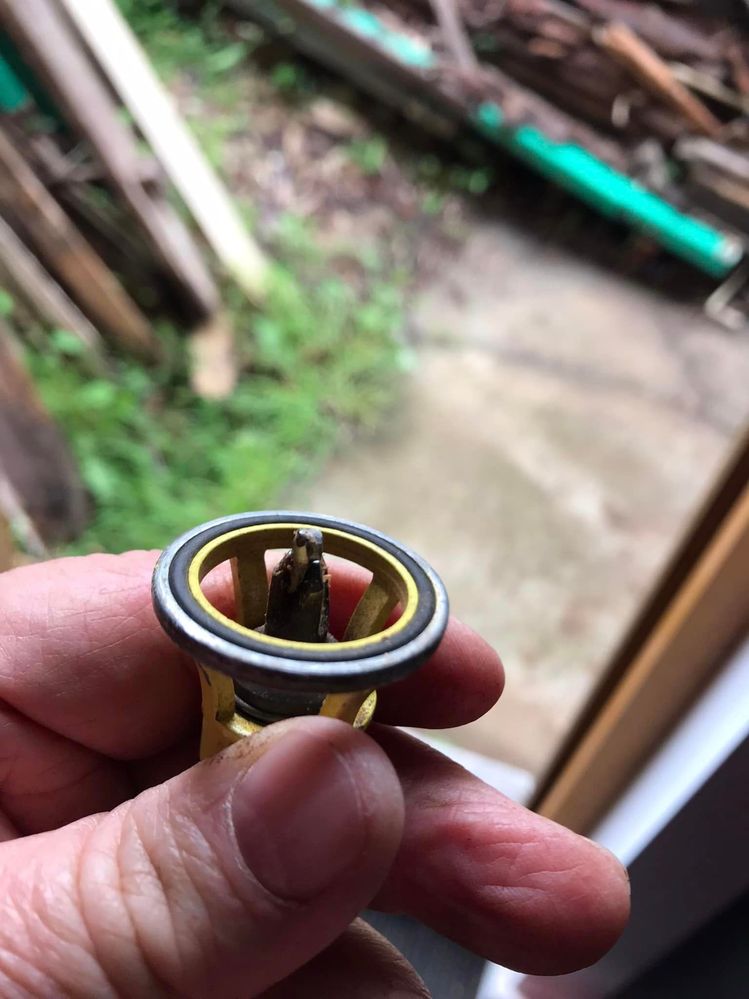
End of the day and I heard a "crack" as I stepped over some tools... I had snapped the drill bit. Off to Bunnings again! I stopped work as I wasnt paying enough attention and was making small mistakes.
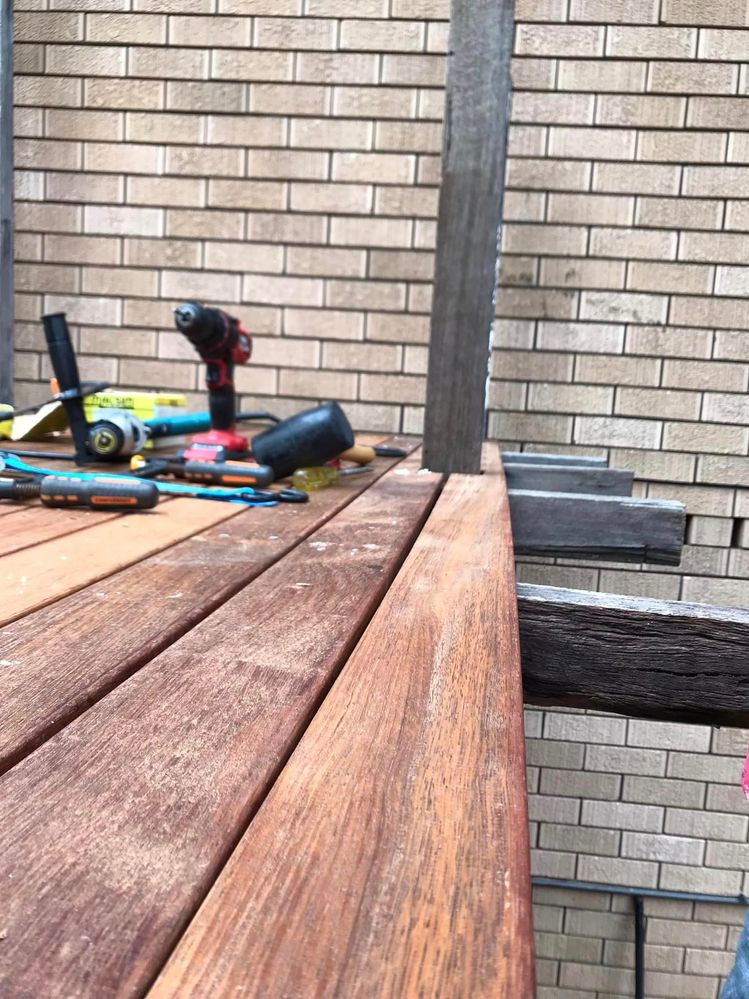
Deck is done!
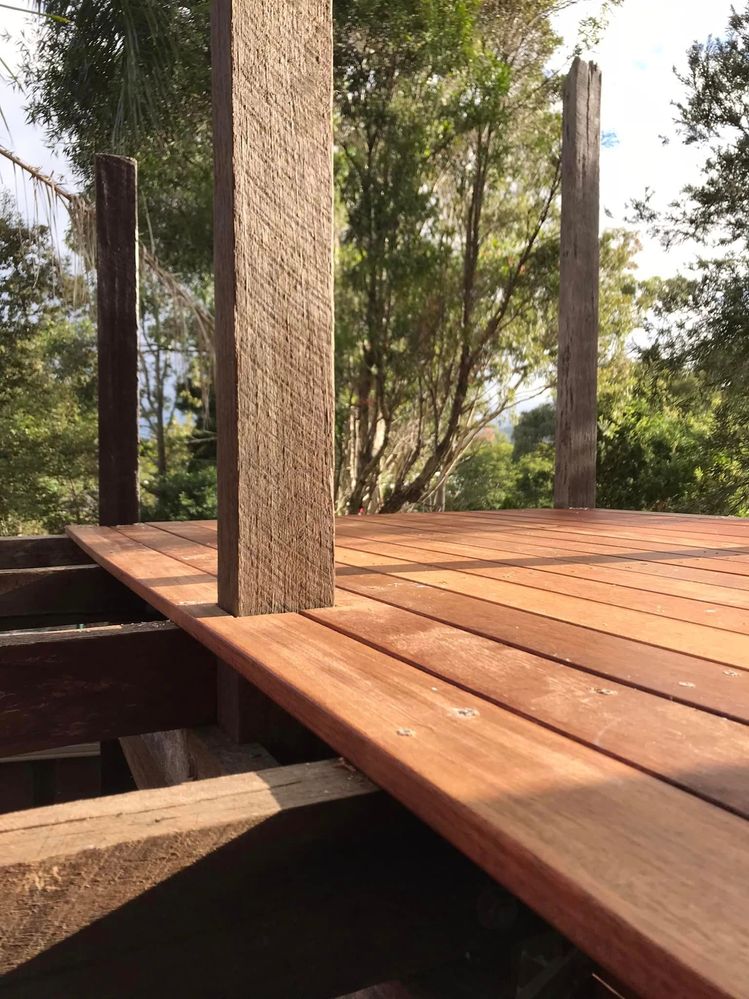
Happy with it. I have left the joists hanging out as may attach something to them later (As in a sail or string of lighting)
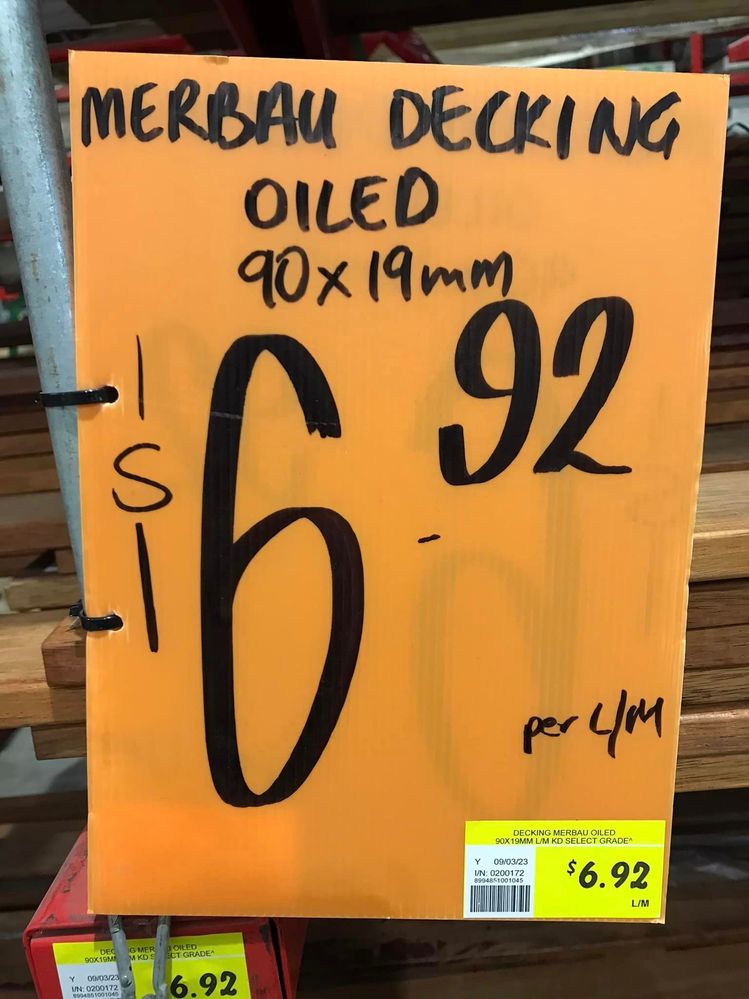
Always helps to take a photo of what timber you buy before going to pay for it at the trade desk 🙂
Step 4
Handrail time, Trying to figure out the height I wanted and make sure it would be legal. Also I really didnt want to cut the post height (was just being nervous as once cut it was cut) Finally just bit the bullet and did it.
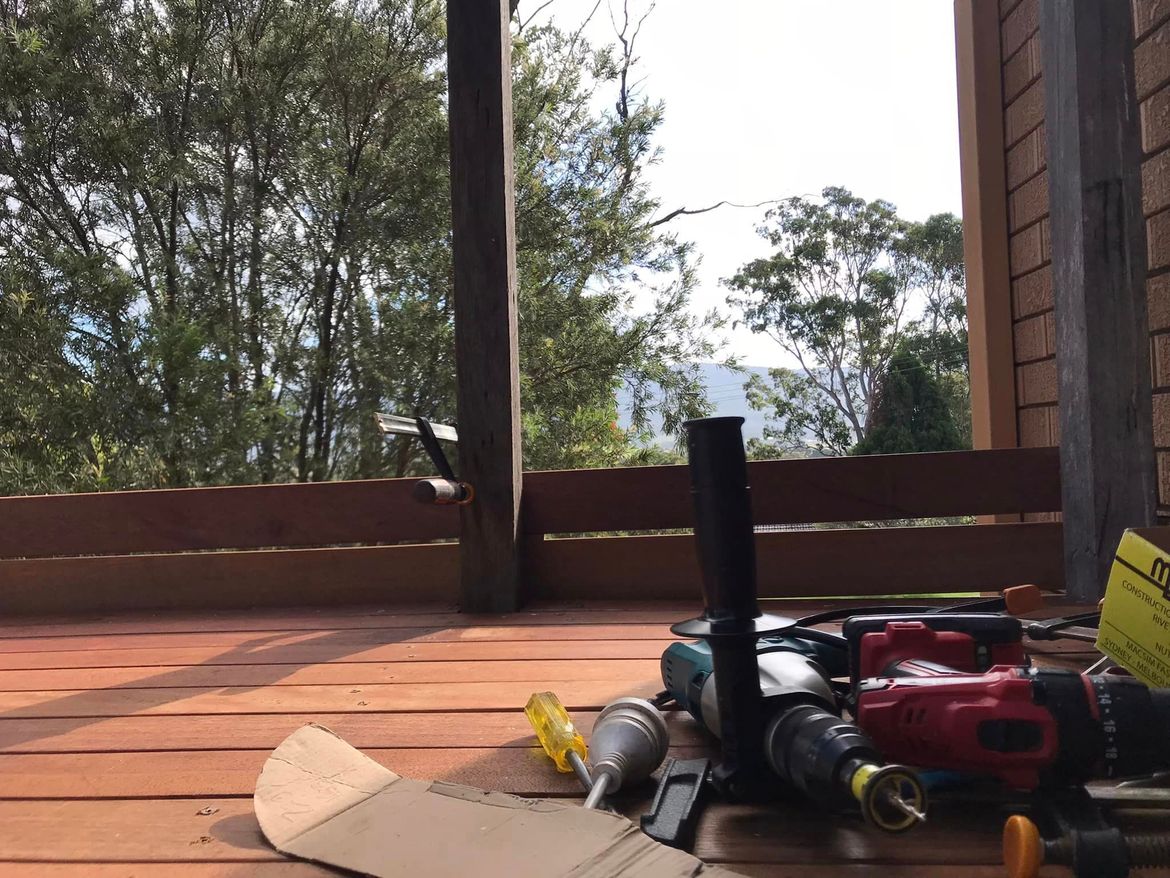
You can see the ratchet strap I was using on the left.
It was nice getting an edge to the decking part.
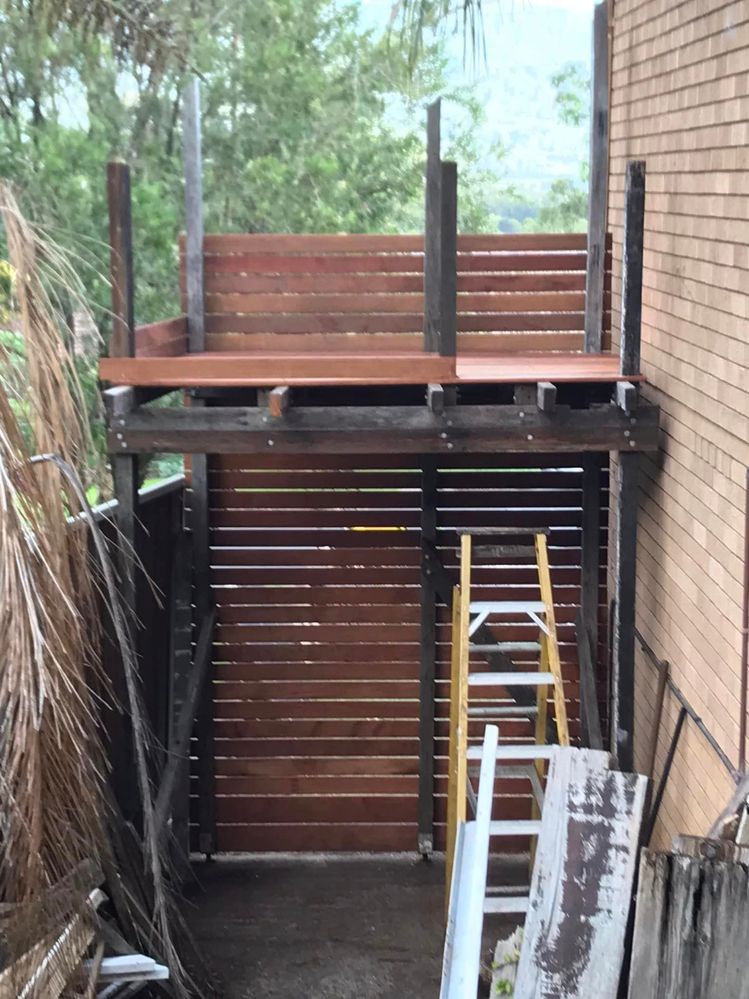
Taking shape and realised how tall it actually was.
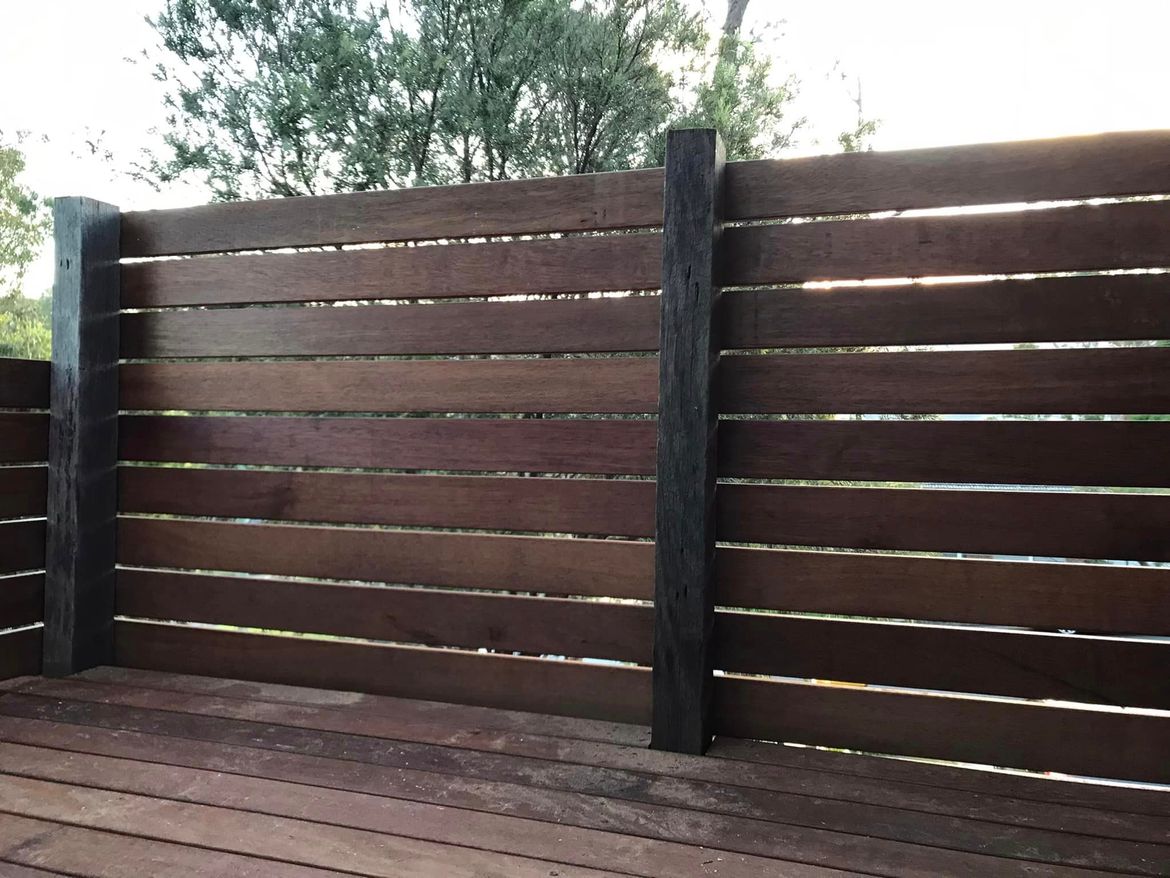
Posts have been cut, the slats at the front are at the right height. Next stop the handrail. I asked the Workshop community for some suggestions (Workshop question) and actually used one of the suggestions (My idea would have been way to wide with a fierce overhang)
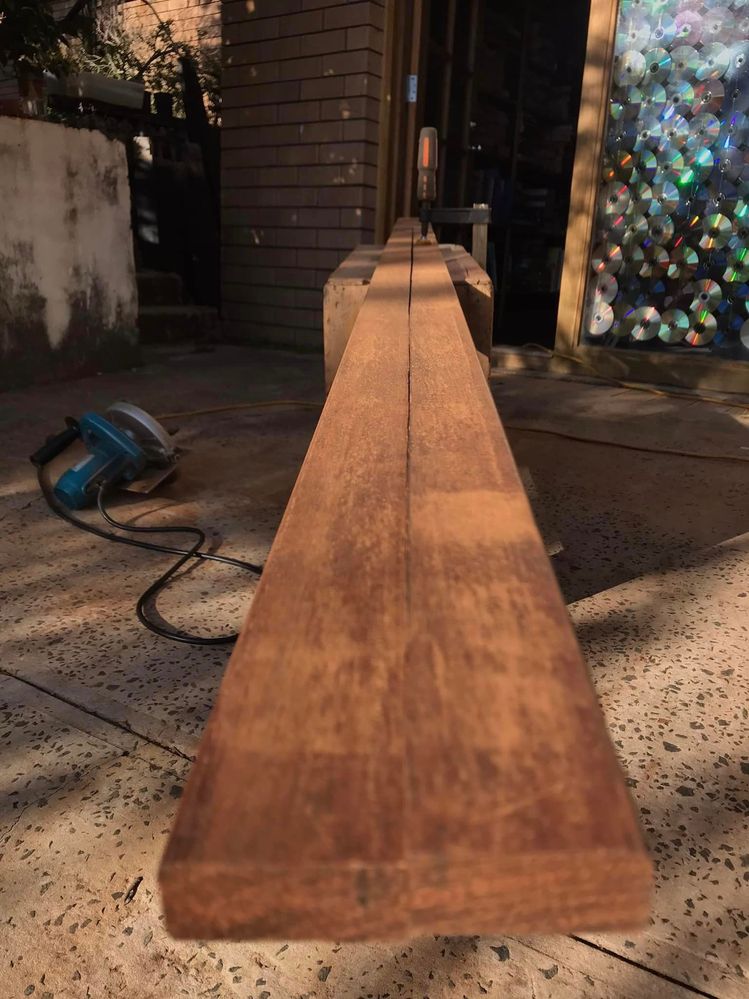
First time ripping a piece of timber. It went well. I Was just nervous doing it.
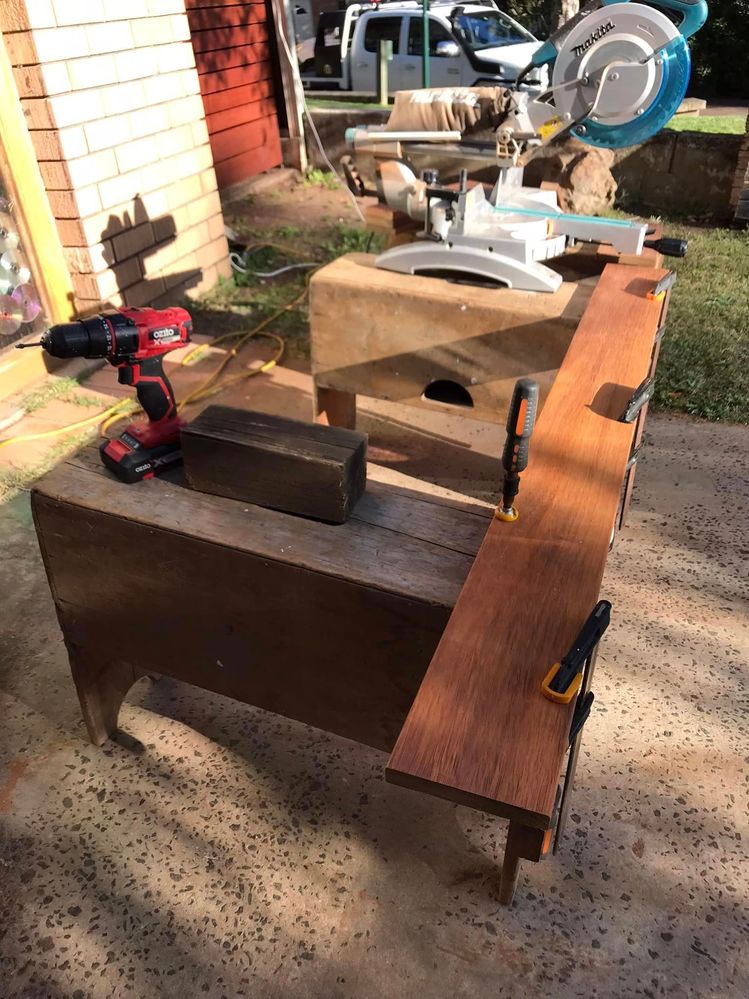
Making up the edge of the handrail. I made a long "L" edge to stop the flat flexing so much and to allow me to screw the back of it to the posts instead of down into the post (That would allow water to get in and rot)
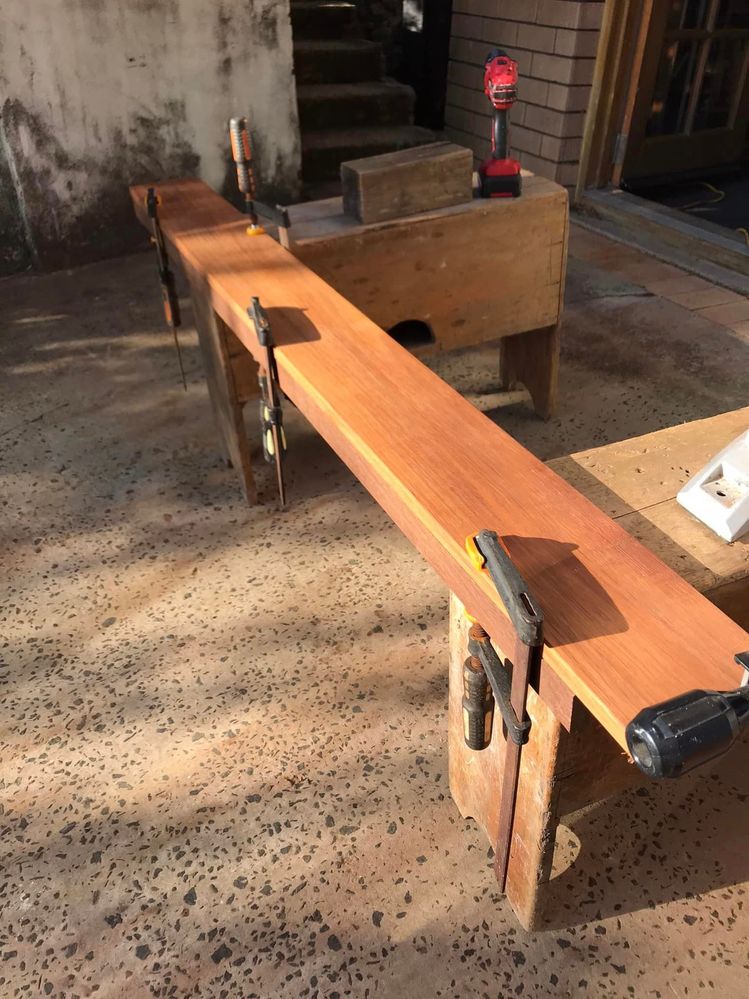
Notched the right hand end to match the side slats of the deck. I predrilled the holes as I almost split the timber as I was drilling into only 19mm width.
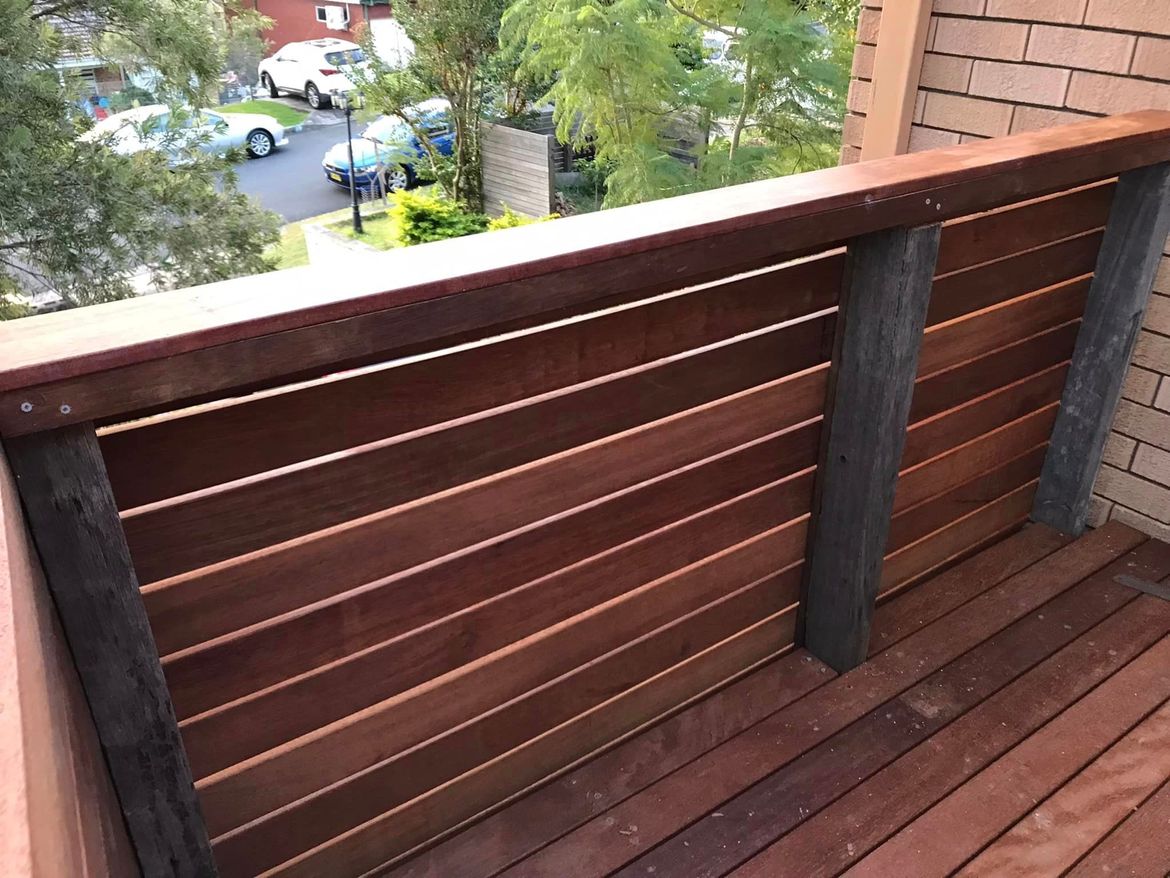
The flat timber on top is 140mm wide and only has screws into the 35mm timber across the back of it. I screwed The 35mm piece to the posts. There is no flex in the top plate and no way water can sit and pool on the top of the posts.
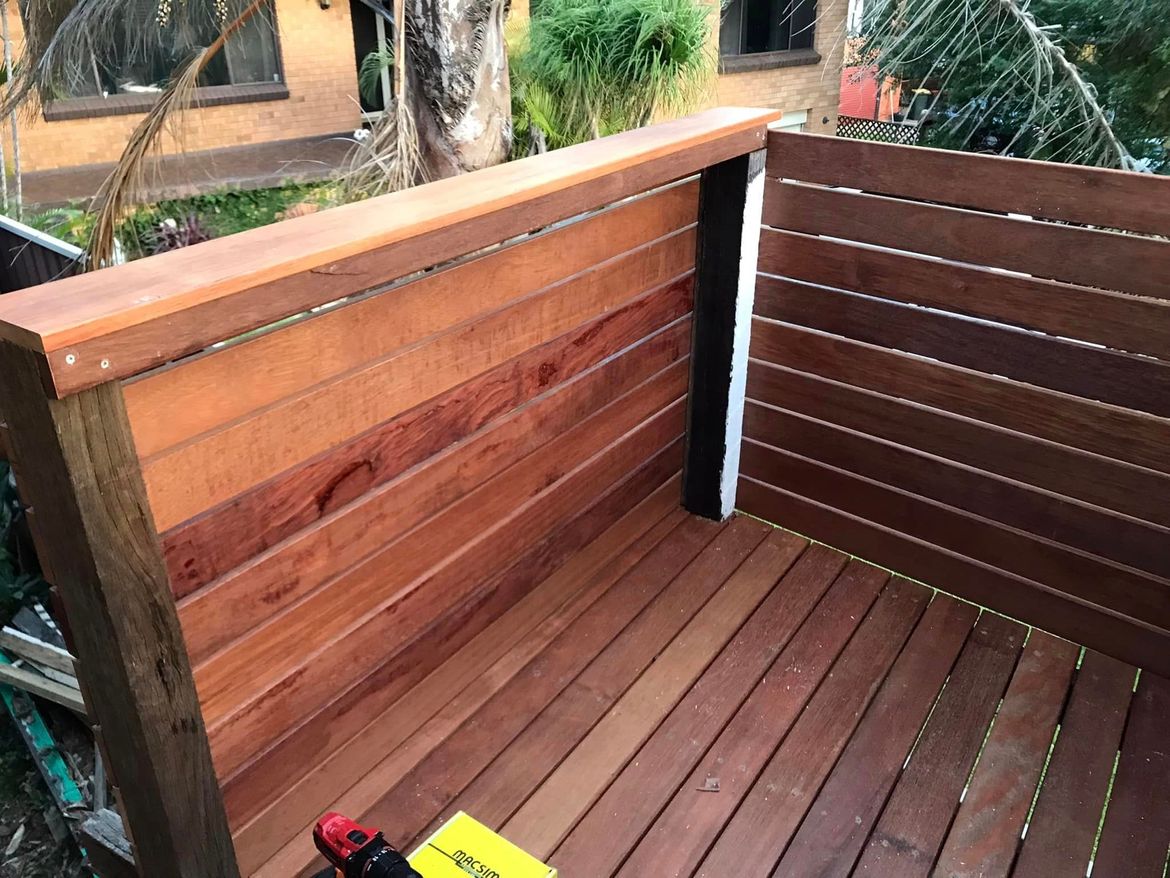
Pretty happy with how it came together.
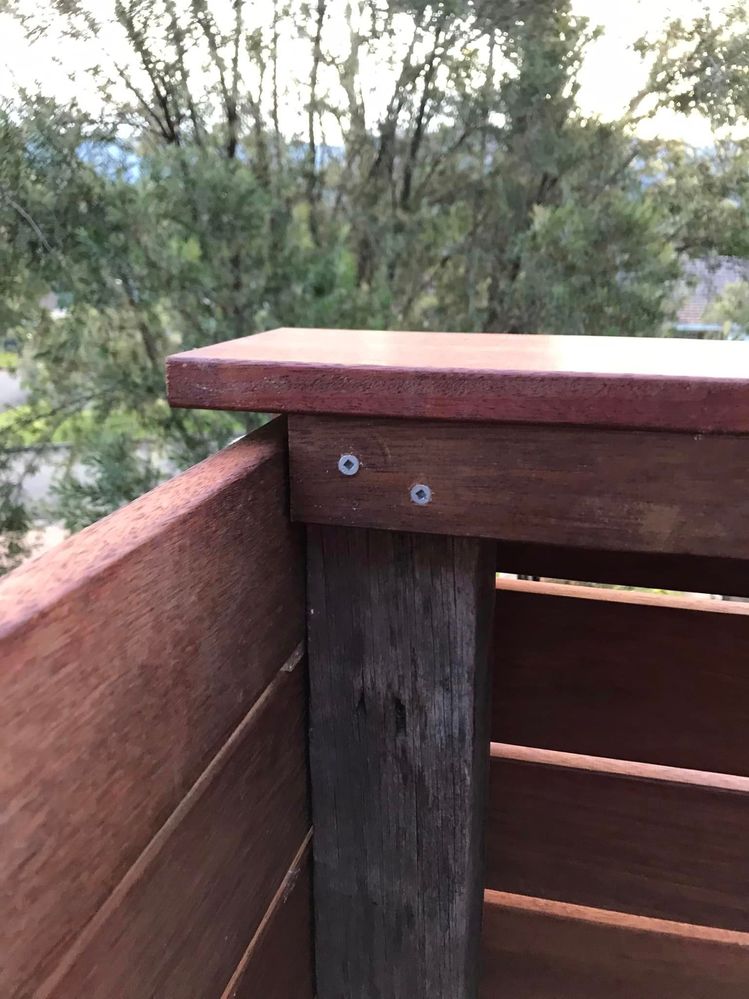
This is why I had notched the underneath slat. I knew that it would come up against the side slats of the deck area and wanted it to fit nicely.
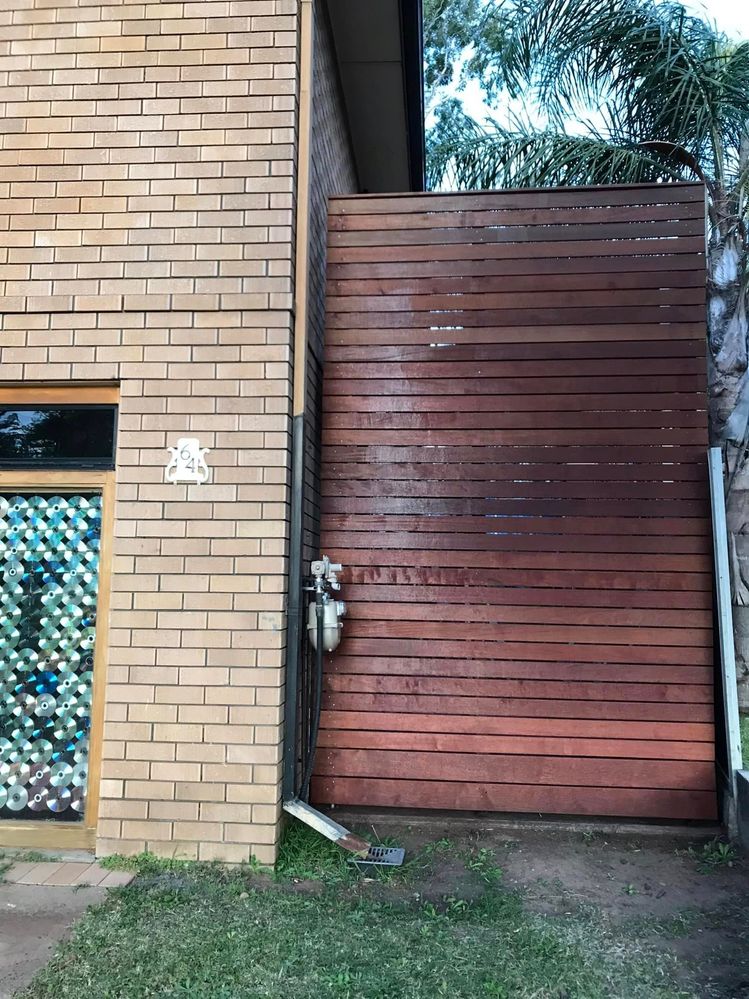
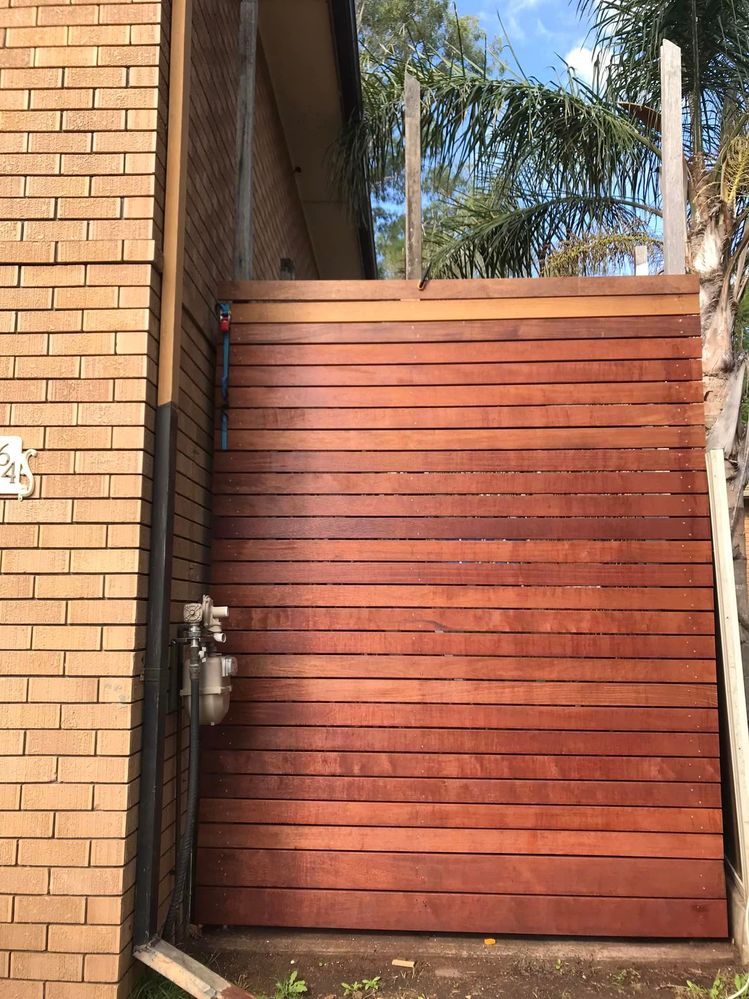
All done. The sun was going down otherwise the timber shines! One day I will fit the gate to the fence. But as is it is very secure. I will oil it in a week or so when no rain is expected.
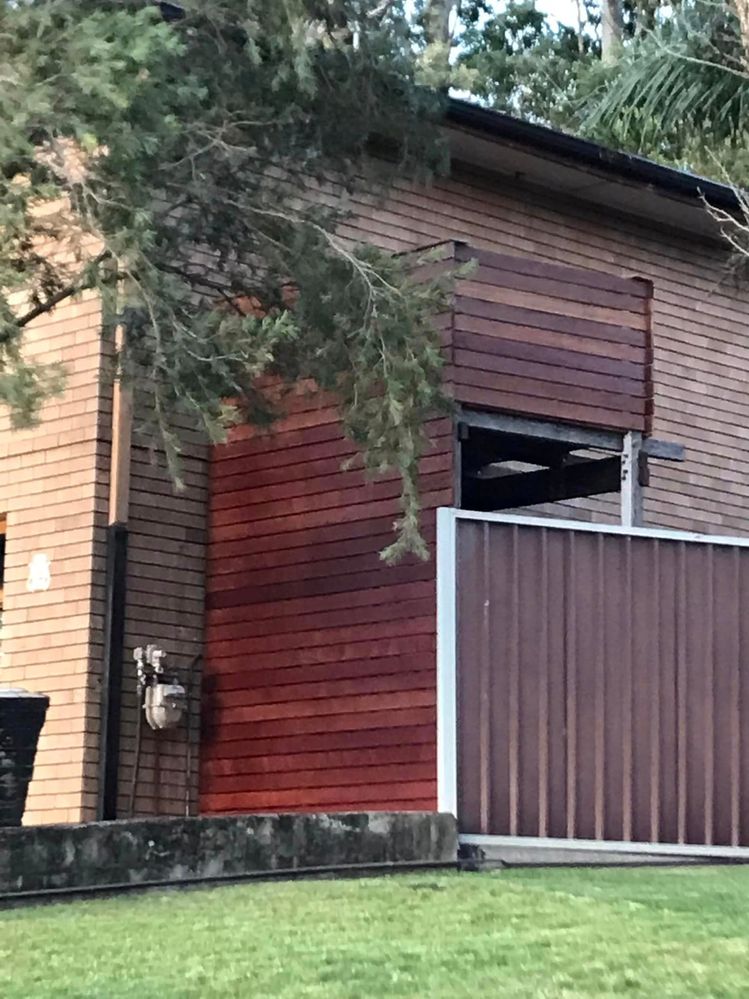
I may put some slats between the deck and the top of the fence (ran out of material and money) But will see. This is taken from my neighbours driveway.


