
The Bunnings Workshop community can help with your home improvement projects.
- Bunnings Workshop
- >
- Discussion
- >
- Garage and Shed
- >
- How to insulate walls for an existing st...
How to insulate walls for an existing steel framed shed?
- Subscribe to RSS Feed
- Mark Topic as New
- Mark Topic as Read
- Float this Topic for Current User
- Bookmark
- Subscribe
- Mute
- Printer Friendly Page
Share


- Mark as New
- Bookmark
- Subscribe
- Mute
- Subscribe to RSS Feed
- Highlight
- Report Inappropriate Content
How to insulate walls for an existing steel framed shed?
Hi all.
I realize this topic has been raised a number of times and i have looked at previous conversations but retrofit style projects usually have unique requirements/nuances that suggest differing approaches. I have a 9x6m steel framed shed (Stramit, portal frames at 3m crs with 64mm top hat purlins and girts at generally 1400mm crs) that was constructed on the land i purchased. I think it is circa 20 - 25yrs old. I am now looking to line some of the walls to allow building benches/shelves etc. I had built some benches against a shed wall previously by simply fixing timber plates to the shed walls - screwed from the outside through the wall sheeting - but this time would like to line the walls likely with plywood (painted) for a better look and the ability to fix anywhere to the internal walls in the future. Fixing the ply sheets to the inside will provide a 64mm air gap (top hat purlin depth) so a bit of insulation but i am looking to get a bit more insulation if possible - primarily against heat as Brisbane summer is extremely hot in there!!
Being a standard steel framed shed construction, it does not have sisalation/wall wrap between the girts and wall sheeting so simply placing batts between the airgap (external sheet metal wall and internal ply lining) would provide insulation but also be subject to condensation from the inside skin of the wall sheeting wetting the batts so possible mould problem down the track? I have a roll of Anticon (Bradford roof blanket product, glasswool adhered to reflective foil) left over from my last reno and wonder if this could be used in any way. My current thoughts on possible solutions are as follows:
1. Cut pieces of coreflute and place between girts against wall sheeting, then install insulation batts prior to ply sheeting.
2. Fix Ametalin reflective wall insulation to inside of girts and ply sheeting directly over. Should be slightly better than air gap alone? Normally for new build, reflective side is internal and vapour barrier external beneath cladding but here which side for reflective foil given that i want to keep heat from outside coming in? Will get condensation in air gap but not really a concern.
3. Use the Anticon i have for as far as it goes with reflective foil outside against the wall sheeting? Use 1 or 2 above for remainder?
Some may suggest using Foilboard which i will use for the ceiling if i decide to insulate it. I haven't considered it for the walls as this then does not allow fixing of future items anywhere (girt locations only) nor is it particularly great to fix ply sheets over, whether 20 or 25mm thickness foilboard.
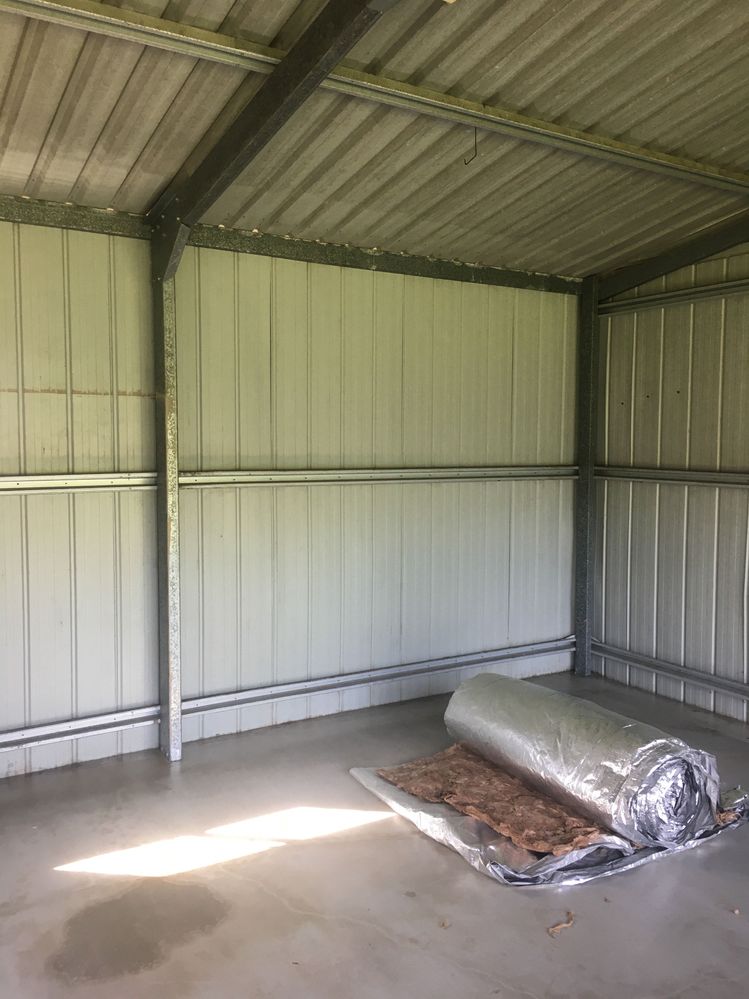
Would be grateful for suggestions and/or confirmation of any of my current ideas.


- Mark as New
- Bookmark
- Subscribe
- Mute
- Subscribe to RSS Feed
- Highlight
- Report Inappropriate Content

- Mark as New
- Bookmark
- Subscribe
- Mute
- Subscribe to RSS Feed
- Highlight
- Report Inappropriate Content
Re: How to insulate walls for an existing steel framed shed?
Gday
Just wondering what you ended up doing for the insulation?
I have the same type of shed.
Cheers
- Mark as New
- Bookmark
- Subscribe
- Mute
- Subscribe to RSS Feed
- Highlight
- Report Inappropriate Content
Re: How to insulate walls for an existing steel framed shed?
Hi @mhk33,
Welcome to the Bunnings Workshop community, it is fantastic to have you with us.
Please allow me to tag @mshed65 so they are notified of your question. Hopefully, they will respond shortly.
If you'd like some guidance from the community, please share some photos. I am sure we can find a solution that will work for you.
Jacob

- Mark as New
- Bookmark
- Subscribe
- Mute
- Subscribe to RSS Feed
- Highlight
- Report Inappropriate Content
Re: How to insulate walls for an existing steel framed shed?
Good afternoon @mhk33
Wierdest thing, I just watched a video from "Spray Foam Australia" on their page in Facebook land about spray foam insulation on a large tin shed. Id suggest to go have a look as it looked pretty interesting and might be enough to have a further look into.
Dave
- Mark as New
- Bookmark
- Subscribe
- Mute
- Subscribe to RSS Feed
- Highlight
- Report Inappropriate Content
Re: How to insulate walls for an existing steel framed shed?
Gday
Have looked at spray foam which would be ideal in this situation however, its quite a costly solution....the joys of living rural.
Cheers

- Mark as New
- Bookmark
- Subscribe
- Mute
- Subscribe to RSS Feed
- Highlight
- Report Inappropriate Content
Re: How to insulate walls for an existing steel framed shed?
Welcome to the Bunnings Workshop community @mhk33. It's brilliant to have you join us, and many thanks for jumping into the discussion.
Let me tag @mshed65 so they’re alerted to your comment. I’m sure others coming across this discussion will also find your suggestion useful.
We look forward to hearing all about your projects and plans around the house and garden. Don’t hesitate to reach out anytime you need assistance or have something to share with the community.
Mitchell


- « Previous
-
- 1
- 2
- Next »
Why join the Bunnings Workshop community?
Workshop is a friendly place to learn, get ideas and find inspiration for your home improvement projects
You might also like





We would love to help with your project.
Join the Bunnings Workshop community today to ask questions and get advice.