
Bunnings Workshop is under maintenance and read-only.
The Bunnings Workshop community can help with your home improvement projects.
- Bunnings Workshop
- >
- Discussion
- >
- Whole of House
- >
- Re: Attic roof storage, walkway and ladd...
Attic roof storage, walkway and ladder
- Subscribe to RSS Feed
- Mark Topic as New
- Mark Topic as Read
- Float this Topic for Current User
- Bookmark
- Subscribe
- Mute
- Printer Friendly Page
Share


- Mark as New
- Bookmark
- Subscribe
- Mute
- Subscribe to RSS Feed
- Highlight
- Report Inappropriate Content
Attic roof storage, walkway and ladder
Utilising unused roof space into a storage area & creating an easier to traverse roof walk space.
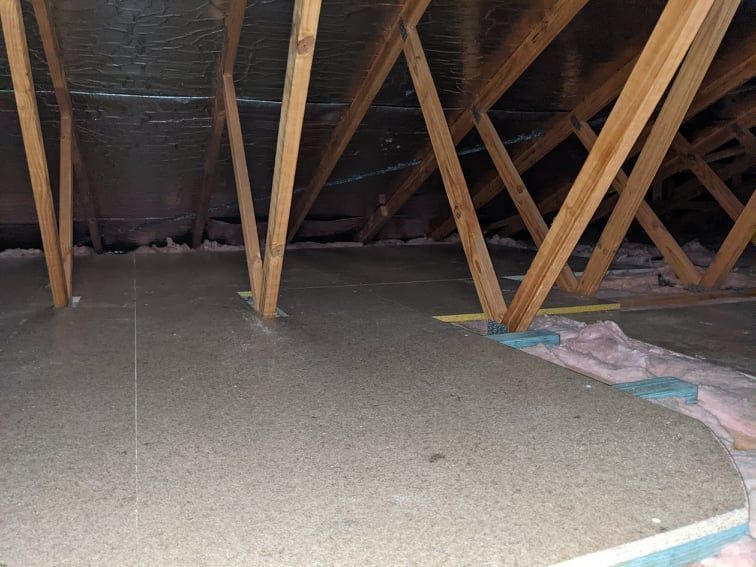
THE SCENARIO
Storage has always been an issue throughout our history in our previous rentals, but when we purchased a home we had the opportunity to utilise and improve on unused spaces. When we purchased this home, one of the defining features left out by the realtors was the amount of clearance inside the roof, at 1.8 meters at its peak, it easily allows for one to walk around without hassle and has plenty of room for storage, but the positioning of the beams made this difficult. Enter, an Attic space.
THE GOAL
The goal is simple, create a working Attic space where we can store items that we don't use often (such as camping gear) so that our primary storage always has a use. This is the primary area we came up with and what will be stored there.
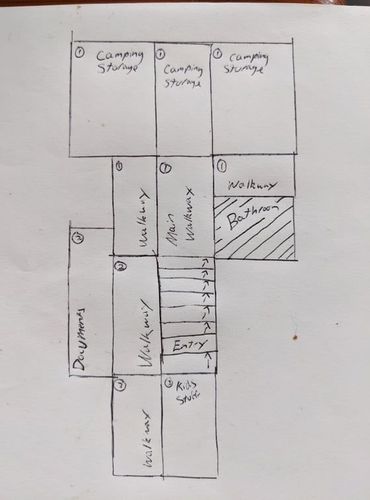
(Note: Number 1 indicates the storage we are building now, Number 2 indicates the first expansion).
The completed version will end up looking like this:
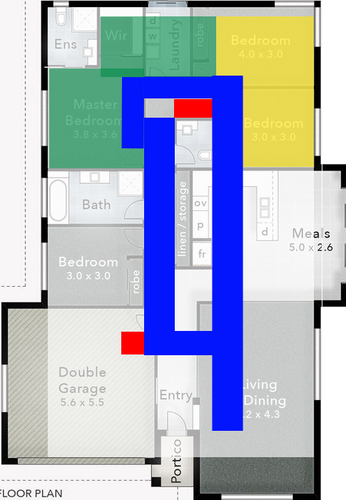
Red: Access Ports
Yellow: The first Storage Area
Green: The Second Storage Area
Blue: The Walkway
Why a walkway? One of the most annoying things I've done in any house is setting up stuff through the roof, having to carefully walk on beams gets old after a while, so the Blue Walkway is for us if we ever wanted to create additional storage areas, to connect our two access ports (the original one in the house is in our garage) and for trades to be able to access and walk through our roof much easier when they are here.
FIRST STEP - LADDER
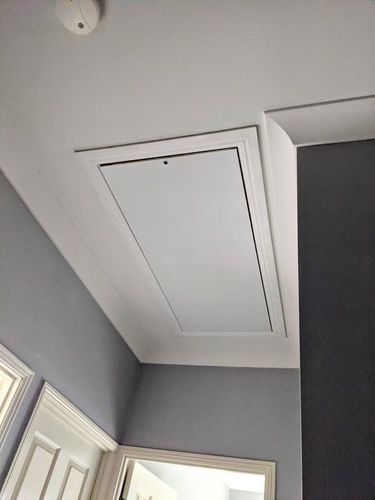
First up is the ladder, we didn't do anything too special with this, Bunnings do a really good Attic ladder Install video that you can follow to get an idea of how to do it, my dad has put hundreds of these things in so it was a 1 hour job for him. We placed it here to be out of sight, as we didn't want it to be noticeable down our long hallway.
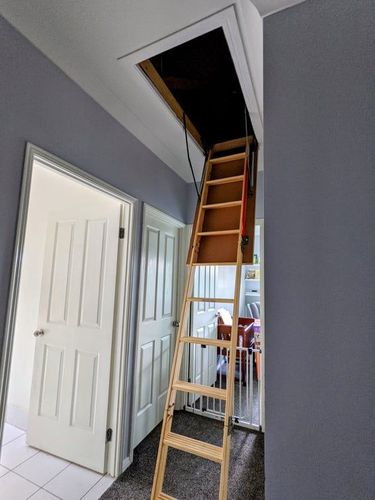
SECOND STEP - ATTIC
The next step is the Attic, we used various lengths of Blue Pine that were installed in the opposite direction to create a bit of a gap between ceiling timbers (allowing for cables to run underneath) and so the attic itself was more stable. Once these were in the places we wanted, we measured the sections and cut our Flooring Particleboard Yellow Tongue to size. As soon as the first bit is down and secured, the rest of the build is a breeze.
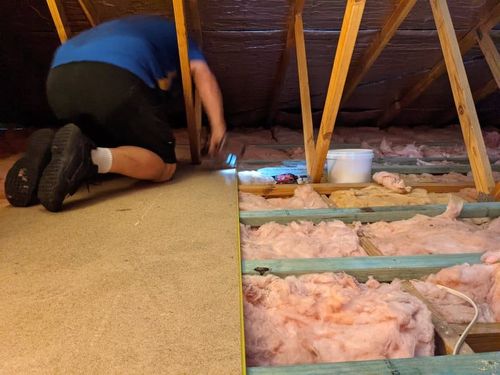
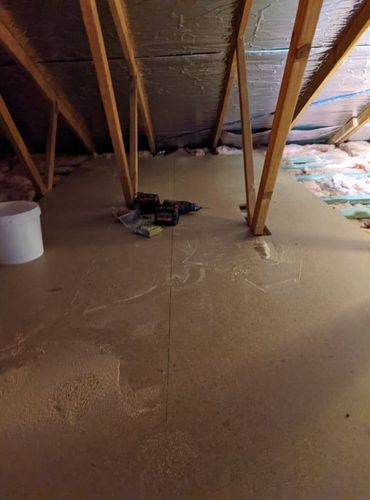
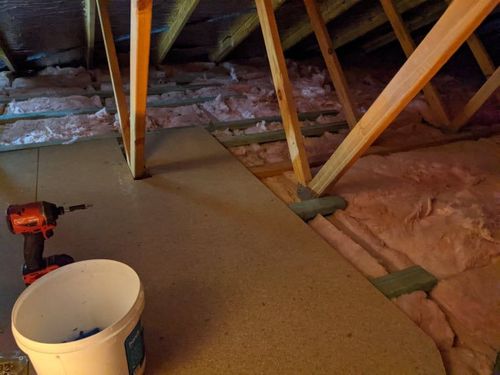
After about 3 hours of cutting, moving and installing, our first storage area was done.
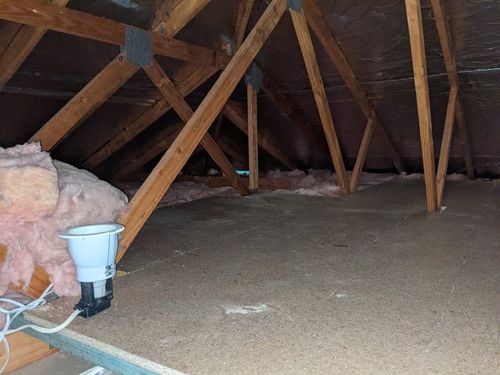
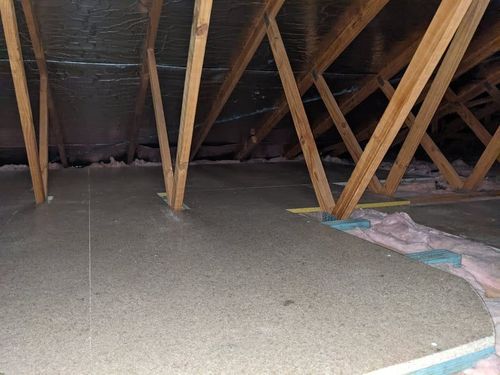
Again, this is the hardest part. With this completed (stage 1), I can now complete the rest of this project in stages, so every Bunnings trip I grab a length of blue pine and some yellow tongue, cut to size and just place it down according to our diagram. In time, it'll be complete, but as our focus was the first storage area, it's not a priority to do in one day.
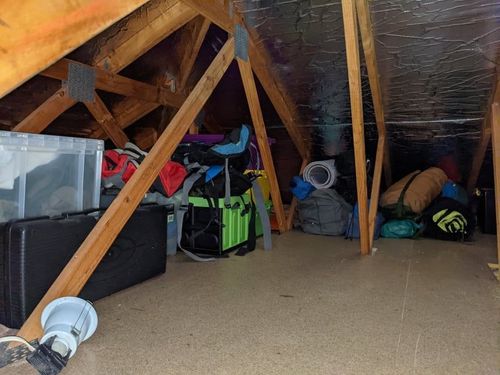
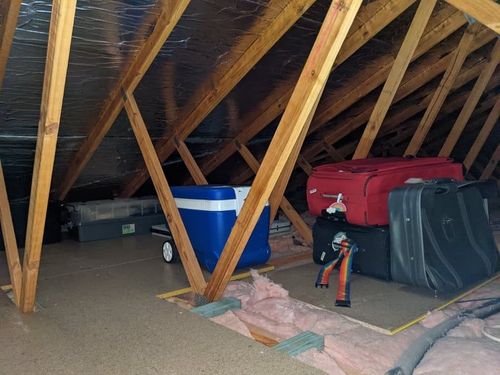
The first storage area ending up being more than what we needed, as we thought we had more stuff than we actually had, but I've been expanding since these photos regardless. I bought a wireless lighting system from Ikea that is used for lighting up here and will expand it along the house as we go.
An extra benefit from this project has been a noticeable decrease in temperature below the yellow tongue, with my baby room and 2nd bedroom a few degrees cooler than it has been previously, which is great.


- Mark as New
- Bookmark
- Subscribe
- Mute
- Subscribe to RSS Feed
- Highlight
- Report Inappropriate Content
Re: Attic roof storage, walkway and ladder
Hi Matt (@mtd_10csa),
Welcome to the Bunnings Workshop community, it is fantastic to have you with us.
I should start by noting that converting a roof cavity to an attic will place additional load on the roof trusses that they were not originally designed to support. For this reason, it would be worthwhile to have things inspected by a builder or structural engineer prior to commencing work to ensure that the trusses are capable of supporting the additional load, and if not, what would be required to bring them up to a standard where they are.
Allow me to tag @Remarka6le so he is notified of your question. I am sure he will jump in to assist.
The major components that I can see are YELLOWtongue Flooring, H2 framing pine and an attic ladder, which are all available at Bunnings. Along with these, you would need timber screws and liquid nails to secure the Yellowtongue sheets to the timber, framing nails for any additional timber framing and any hardware required to install the ladder.
Let me know what you think, and if you have further questions, please don't hesitate to ask.
Jacob
- Mark as New
- Bookmark
- Subscribe
- Mute
- Subscribe to RSS Feed
- Highlight
- Report Inappropriate Content
Re: Attic roof storage, walkway and ladder
Hey @mtd_10csa ,
@JacobZhas already covered the materials and general setup really well, so I won’t repeat too much of that. Everything listed was easy to organise via click & collect or delivery, which made the process pretty painless.
Just to reiterate the builder side of things as it’s already been addressed earlier, this setup was reviewed and approved for this specific use by a licensed builder with over 30 years’ experience, and the installation sits within the standards accepted by our local council. It wasn’t a guess-and-go job either, you can literally see our builder in one of the photos assisting during the install.
Also, in hindsight, do this sort of work in winter. Working in a roof space during summer is brutal and genuinely unsafe, even with breaks. Any time I need to get back up there in summer, even with the changes we’ve made to manage heat, improve airflow and insulation, I still moan every single time.

- « Previous
- Next »
Why join the Bunnings Workshop community?
Workshop is a friendly place to learn, get ideas and find inspiration for your home improvement projects
You might also like







We would love to help with your project.
Join the Bunnings Workshop community today to ask questions and get advice.