The Bunnings Workshop community can help with your home improvement projects.
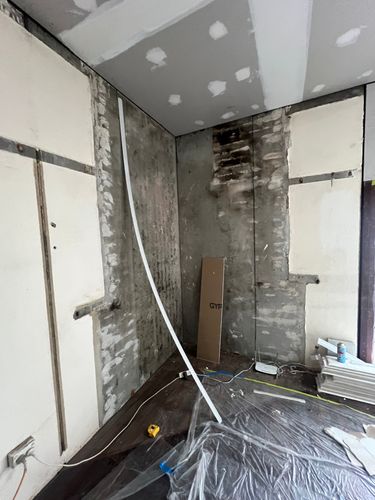
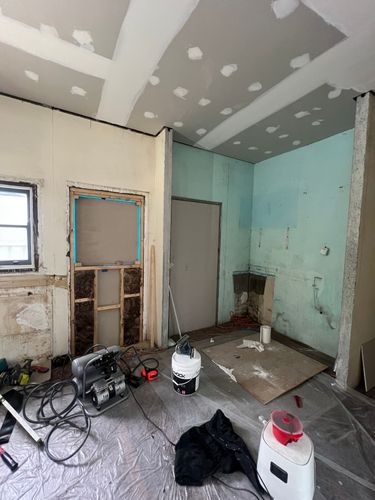
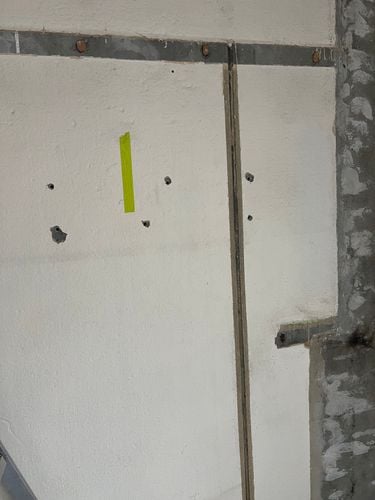
Hey. Sorry for the multi layered question but I bought a 1950s house wich has tilt up concrete panels for all interior and exterior walls.
we are searching for a way for get a decent finish for the interior walls as at the moment it looks disgusting.
we researched dot and dab with drywall but the house is tiny and we can’t afford to loose that much space especially in our hallway as it only 800mm wide. And also concerned about moisturiser being trapped behind the drywall and starting to mould on the outside walls.
so we decided on skim coating and wondering what products would be best and what the preparation would look like. The walls have previously been painted.
we were thinking cornice cement or base coat for the first layer and multi purpose compound for the next layers and then sanding before priming and painting.
Any special considerations for the transition from concrete to drywall exept tape?
Thank you for your help!
lisa
Hi @Piffi2703,
Welcome to the Bunnings Workshop community, it is fantastic to have you with us.
The product typically used to skim coat concrete and masonry surfaces is Gyprock CSR Hardwall Plaster, which is mixed with hydrated lime following the Hardwall Plaster - Product Data Sheet.
The basic process would be to thoroughly clean the walls to remove any dirt, dust or grease that is built up on the walls, then mix the plaster and lime, following the directions in the product data sheet, then apply the hardwall plaster with a trowel and drywall skimmer.
You would then allow the plaster to dry and then sand the whole surface using a drywall sander or pole sander. You would then brush it down to remove plaster dust before priming with a sealing primer and painting.
You'll have to let me get in touch with CSR's technical team when they reopen tomorrow to see what they would recommend for the transition between concrete and plasterboard, as I am not certain whether the hardwall plaster can be used for this. I will also have to check whether they'd require all the paint to be stripped and if there are issues with moisture transfer through the wall that would need to be considered.
Please bear with me, I will reach out to the supplier when they open tomorrow.
In the meantime, if you have any further questions or comments, please let me know.
Jacob
Hi @Piffi2703,
I spoke with the Technical Support team at CSR Gyprock, who unfortunately mentioned that there are quite a few issues with applying plaster compounds or even using the dot and dab method over tilt panels, which makes them not great options.
The first issue is down to moisture transfer through the panel. Unless you can confirm that the outside of the tilt panel has been completely waterproofed to prevent any moisture passing through, then no adhesive dabs, plaster or render can be applied directly, as this moisture will cause them to fail prematurely.
The next issue is that precast tilt panels are coated with a release agent that makes them smooth and removes the porosity of the surface. This porosity is what allows things like Hardwall Plaster or Masonry Adhesive to cling to the surface. If you were to plaster or render straight over the surface, then you would need to grind back the surface to entirely remove this release agent, which is a massive amount of work.
Realistically, the best option is to batten out the wall and then install plasterboard sheeting over them. These Gyprock CSR 16mm Rondo® 308 Furring Channels, which are 16mm thick, when combined with a sheet of 10mm Plasterboard, would only reduce the space in the room by 26mm on each wall, which is not a lot in the grand scheme of things.
This would take away a massive amount of complexity and turn what I can tell you from experience, would be an incredibly difficult job, into a relatively easy one.
Let me know what you think and if you have further questions, please don't hesitate to ask.
Jacob
Hey thank you very much for your advice! Appreciated!
Workshop is a friendly place to learn, get ideas and find inspiration for your home improvement projects
We would love to help with your project.
Join the Bunnings Workshop community today to ask questions and get advice.